
Complete These 8 Important Tax Tasks Before March 31, 2026 to Avoid Penalties and Maximize Tax Savings
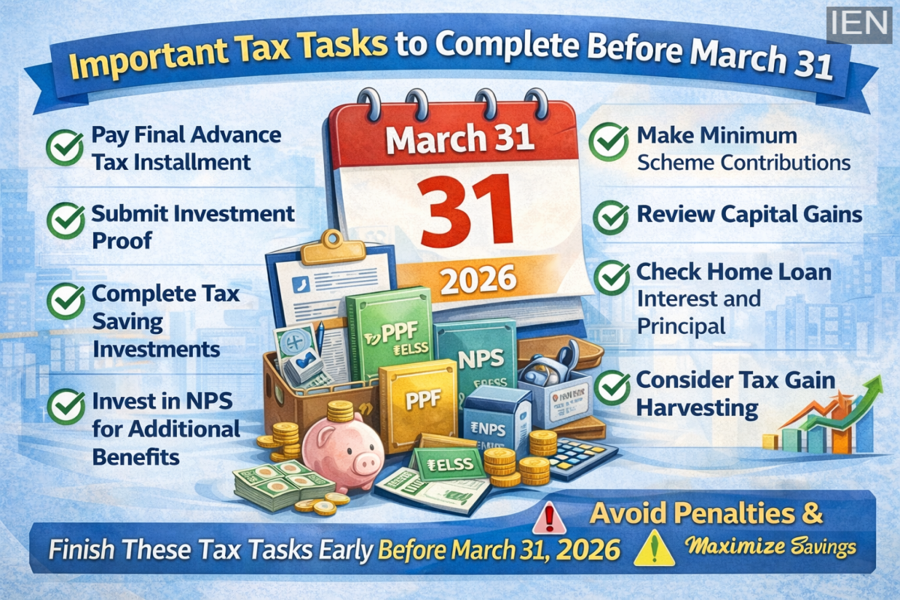
Financial Year-End Tax Checklist: 8 Essential Tasks to Complete Before March 31
As the financial year 2025–26 approaches its end on March 31, 2026, taxpayers should review their finances, investments, and tax obligations carefully. Taking a few timely steps before the deadline can help avoid penalties and ensure that you claim all available tax benefits.
Experts advise that individuals complete certain key financial tasks before the financial year closes. Missing these steps could result in higher tax deductions or missed opportunities to save money.
Here are eight important tax-related actions that taxpayers should complete before the end of the financial year.
1. Pay the Final Installment of Advance Tax
If your income is not limited to salary and includes other sources such as business income, freelance work, interest income, or capital gains, you may be required to pay advance tax.
Under the rules of the Income-tax Act, 1961, taxpayers must pay 100% of their advance tax liability by March 15.
If advance tax is not paid on time or the amount paid is insufficient, interest may be charged under Sections 234B and 234C of the tax law.
2. Submit Investment Proof to Your Employer
Many companies close the process for submitting investment proofs during February or March.
If you declared tax-saving investments earlier in the financial year, you must now submit the relevant documents to your employer. These documents usually include:
-
Life insurance premium receipts
-
ELSS investment statements
-
PPF contribution records
-
Home loan interest certificates
-
Health insurance premium receipts
-
Rent receipts for HRA claims
These deductions are typically claimed under Sections 80C, 80D, and 80CCD(1B) of the Income Tax Act.
Failure to submit these documents may result in higher TDS deductions from your March salary.
3. Complete Tax-Saving Investments
For taxpayers who have chosen the old tax regime, the end of the financial year is the last opportunity to complete tax-saving investments.
Under Section 80C, individuals can claim tax deductions of up to ₹1.5 lakh through eligible investments.
Popular tax-saving options include:
-
Public Provident Fund
-
Equity Linked Savings Scheme
-
Sukanya Samriddhi Yojana
Completing these investments before March 31 ensures you can claim the deduction for the current financial year.
4. Invest in NPS for Additional Tax Benefits
Taxpayers looking for additional tax savings can invest in the National Pension System.
Under Section 80CCD(1B), investors can claim an extra deduction of up to ₹50,000 for contributions to NPS. This benefit is separate from the ₹1.5 lakh limit available under Section 80C.
For taxpayers under the old regime, NPS can be an effective way to reduce taxable income at the end of the year.
5. Ensure Minimum Contributions to Government Savings Schemes
Some government-backed savings schemes require minimum annual contributions to keep accounts active.
For example:
-
PPF accounts require a minimum deposit of ₹500 per year.
-
Sukanya Samriddhi accounts require at least ₹250 annually.
If the minimum amount is not deposited, the account may become inactive, and additional charges may apply to reactivate it.
6. Review Capital Gains from Investments
The end of the financial year is a good time to evaluate your investment transactions.
If you have sold assets such as equity shares, mutual funds, or property, you should calculate your short-term and long-term capital gains. This helps estimate the tax liability and prepare for filing your income tax return later.
Keeping track of these gains early can prevent last-minute surprises during tax filing.
7. Check Home Loan Interest and Principal Payments
If you have taken a home loan, download the annual loan statement or interest certificate from your lender.
Under Section 24(b) of the Income Tax Act, taxpayers can claim deductions of up to ₹2 lakh on home loan interest for a self-occupied property.
Submitting these documents to your employer before the financial year ends helps ensure the correct tax deductions are applied.
8. Consider Tax Gain Harvesting
Investors who have held equity shares or equity mutual funds for more than 12 months may consider a strategy called tax gain harvesting.
Under Section 112A of the Income Tax Act, long-term capital gains up to ₹1.25 lakh in a financial year are tax-free. Gains exceeding this limit are taxed at 12.5%.
By strategically selling and reinvesting assets before the financial year ends, investors can utilize this exemption more efficiently.
Final Thoughts
With the financial year ending on March 31, taxpayers should review their financial records and ensure all tax-related tasks are completed in time. Taking these steps early can help avoid last-minute stress, reduce tax liability, and ensure full use of available deductions and exemptions.
Proper planning before the deadline allows individuals to maximize tax savings and remain compliant with tax regulations, making the year-end financial review an important part of responsible financial management.
