
CNG and PNG to Get Costlier! Government Hikes Natural Gas Prices
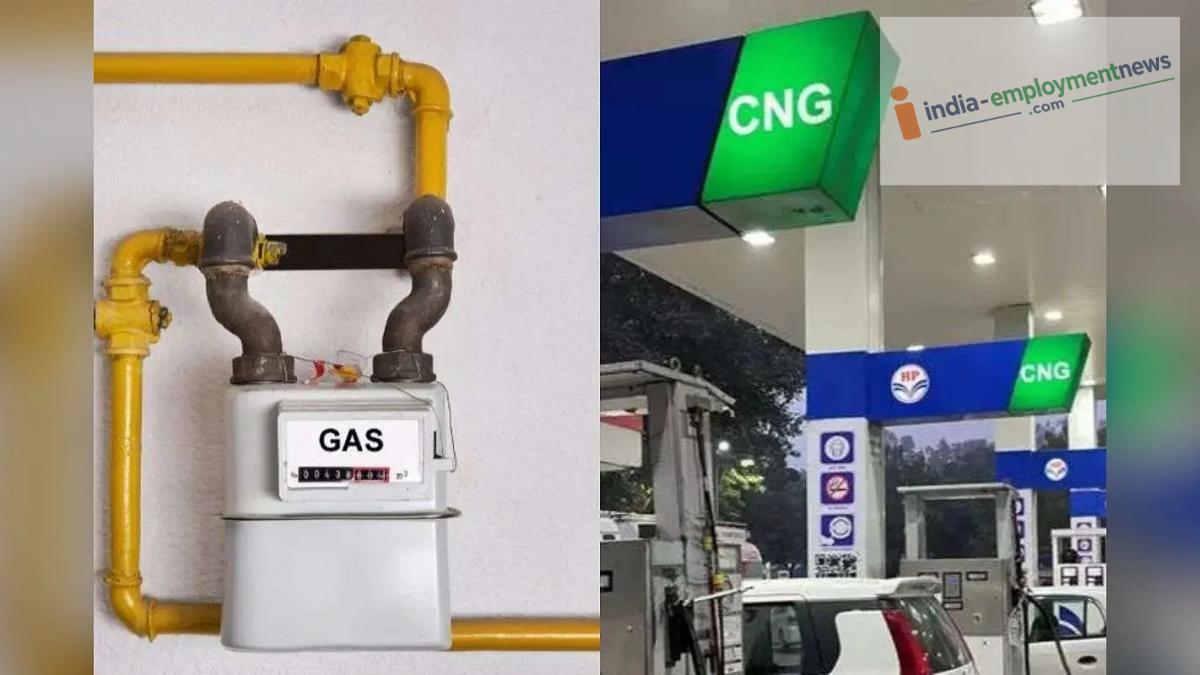
The government has raised the price ceiling for natural gas extracted from deep-water and ultra-deep-water fields. The new rates will be effective from October 1, 2026, to March 31, 2027, potentially impacting sectors such as CNG, PNG, and fertilizers.
The government has increased the maximum price limit for natural gas produced in challenging deep-sea areas. The new pricing comes into effect on October 1, 2026, and will remain applicable for the subsequent six months, until March 31, 2027. Natural gas is utilized in various sectors—including power generation and fertilizer production—in addition to being used as CNG and PNG. Consequently, this change in gas pricing could impact these sectors in the near future.
The Ministry of Petroleum and Natural Gas has raised the price ceiling for gas extracted from deep-water, ultra-deep-water, and high-pressure-high-temperature (HP-HT) fields from $8.90 to $9.89 per MMBtu. In Indian currency terms, this represents an increase from approximately ₹930 per MMBtu to around ₹1,030 per MMBtu. If you use CNG or PNG, this adjustment in natural gas prices could affect your expenses.
Why did the government raise natural gas prices?
This change specifically applies to gas fields where extraction costs are higher compared to conventional areas. However, it also benefits companies extracting natural gas from challenging offshore regions. Blocks such as KG-D6 in the Krishna-Godavari basin fall under this pricing framework.
What will be the impact on CNG and PNG?
Natural gas is used to supply CNG and PNG in urban areas. Additionally, it serves as a crucial raw material for fertilizer production and power generation. Therefore, changes in domestic gas prices could impact the cost of gas in these sectors. However, a hike in the maximum price of gas does not necessarily mean that CNG and PNG prices will immediately rise in the same proportion.
Which sectors could be affected?
Natural gas is used in several key sectors in India. Beyond its use as CNG in vehicles and PNG in households, it is also utilized for power generation and fertilizer production. Consequently, an increase in natural gas prices could impact these sectors as well.
CNG and PNG supply
Fertilizer production
Power generation
City gas distribution
Investment in new natural gas sectors
