
CIBIL Score: Is your CIBIL score not increasing? Has it hit a brake? Just do these 5 things...
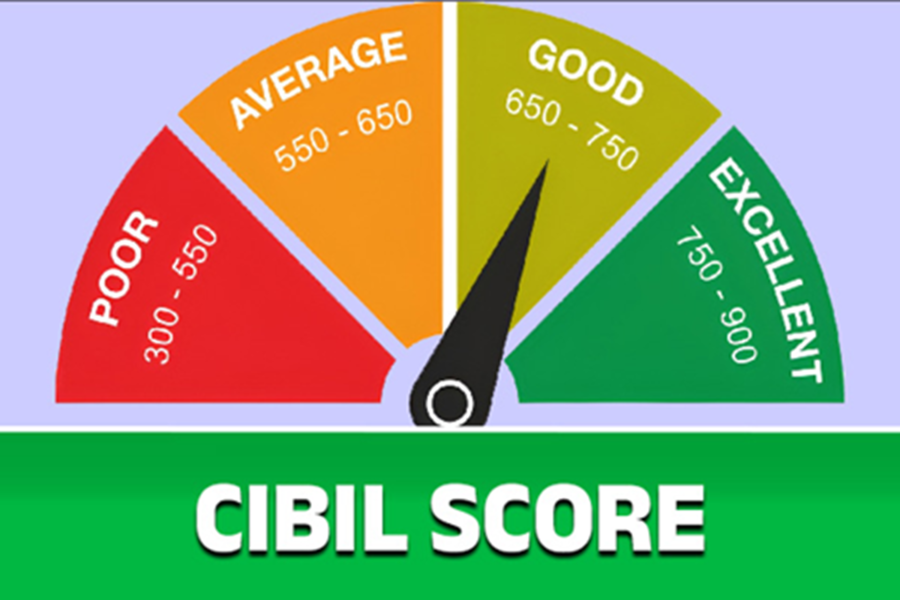
In today's world, a credit score (CIBIL Score) is not merely a number; it serves as your financial identity. Whether you are applying for a home loan or a new credit card, your creditworthiness is measured by this very number at every turn. However, people often complain that despite paying all their bills on time, their score remains stuck—hovering stubbornly around 720 or 750.
This situation feels akin to suddenly having shackles clamped onto your legs while you are in full stride. If your score, too, hasn't budged an inch for several months, there may be some subtle psychological and technical factors at play. Let's explore how to break this "deadlock."
1. Credit Utilization: Know Your Limits
The primary reason behind a stagnant credit score is the "Credit Utilization Ratio" (CUR). The percentage of your assigned credit limit that you actually utilize holds significant weight.
The Mistake: If your credit limit is ₹100,000 and you consistently generate bills amounting to ₹70,000 each month—even if you pay them off on time—the credit bureau will perceive you as "credit-hungry."
The Solution: Always keep your spending below 30% of your total available credit limit. If you restrict your monthly expenditure to within ₹30,000, you will see your credit score begin to climb rapidly.
2. 'Settled' vs. 'Closed': Heal Old Wounds
People often resolve past disputes with a bank by making a partial payment to put the matter to rest. In banking parlance, this status is referred to as "Settled."
The Bitter Truth: If your credit report lists any account as "Settled," it acts as a "blemish" on your credit profile. The credit bureau interprets this as a negative indicator—signaling that you did not repay the full amount of the debt.
What to Do: Check your credit report. If you find any account listed as "Settled," contact the bank, pay off the remaining outstanding balance, and request that the account status be updated to "Closed." It is actually closed accounts that provide the opportunity for your score to rise.
3. Credit Mix: A Balancing Act
If you possess only 3–4 credit cards and have no secured loans, the credit bureau may deem your profile 'risky.'
The Magic Formula: A healthy credit score is achieved through a balanced mix of secured loans (such as Home or Car Loans) and unsecured loans (such as Credit Cards or Personal Loans).
Tip: If your credit profile currently consists solely of credit cards, consider taking out a small secured loan (such as a loan against a Fixed Deposit) and repaying it on time. This variety in your credit portfolio will help elevate your score to new heights.
4. Avoid Frequent 'Hard Inquiries.'
Whenever you apply for a loan or a credit card, the bank requests a copy of your credit report. This action is referred to as a 'Hard Inquiry.'
The Downside: Making 4–5 applications within a span of just 1–2 months can cause your credit score to stagnate or even begin to decline. This pattern suggests to lenders that you may be facing financial distress.
The Solution: Apply for credit only when it is necessary. To check your eligibility, utilize third-party apps that perform 'Soft Inquiries' (which do not negatively impact your credit score).
5. Errors in Your Credit Report
Surprisingly, a significant number of credit reports contain some form of error or inaccuracy.
How Errors Occur: It is possible that you have fully repaid and closed a loan, yet the bank has failed to update this information with the credit bureau. Alternatively, another individual's PAN card data may have been erroneously linked to your profile.
Action Plan: Pull your detailed credit report once every few months. If you spot any discrepancies, immediately file an online complaint with the CIBIL Dispute Resolution cell. Once the error is rectified—typically within 30 to 45 days—you will likely see a sudden surge in your credit score.
A 'Quick Chart' for Boosting Your Credit Score
Step: What to Do? Impact on Score
Usage: Utilize less than 30% of your credit limit. High
Make payments before the due date. Critical
Old Accounts Do not close old credit cards Medium
Check-up, correct errors in your credit report Immediate
Conclusion
A credit score does not change overnight; it is a reflection of your financial habits. If your score remains stagnant, it indicates that the system perceives something "risky" in your financial behavior. Consistently implement the improvements mentioned above for 3 to 6 months, and you will observe that your score not only rises but also surpasses the magical figure of 800.
Disclaimer: This content has been sourced and edited from Zee Business. While we have made modifications for clarity and presentation, the original content belongs to its respective authors and website. We do not claim ownership of the content.
