
CIBIL Score: Is Your CIBIL Score Low? Experts Reveal 5 Tips That Will Rapidly Boost Your Score...
In today's times, simply earning a good salary is not enough. Indeed, if your CIBIL score is poor, a bank may outright refuse to grant you a loan. This is precisely why your credit score has now become the most critical report card of your financial life.
It often happens that people panic when their home loan gets rejected, they are unable to obtain a credit card, they face high interest rates, or the bank repeatedly requests documentation.
In this context, according to banking expert Ashwani Rana, a CIBIL score is not merely a number; it is a mirror reflecting your financial habits. If you, too, wish to improve your score, here are 5 expert tips you should understand.
**What exactly is a CIBIL Score?**
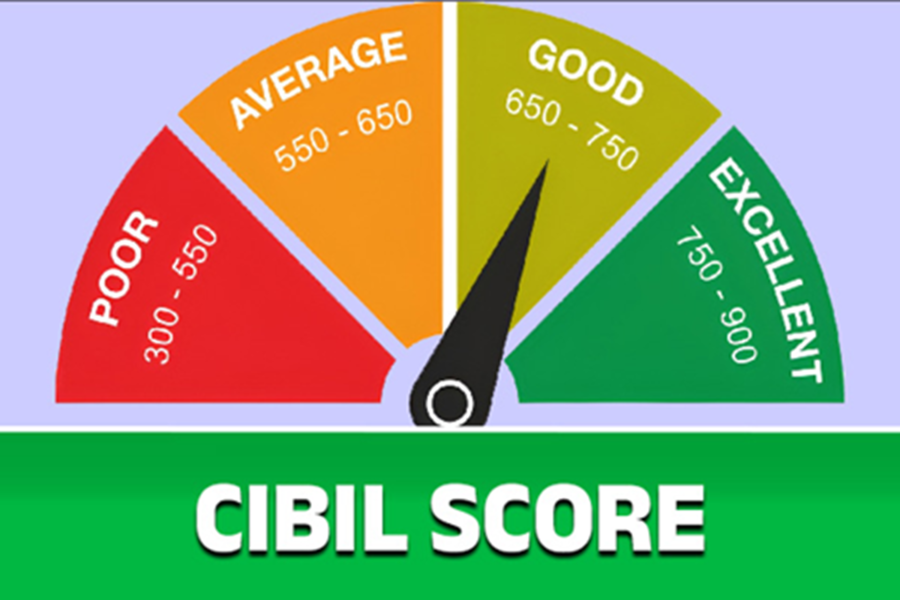
A CIBIL Score is a three-digit number that typically ranges from 300 to 900.
It indicates whether or not you have repaid your loans on time.
It also reflects how you manage and utilize your credit cards.
**Which score is considered good?**
**Score** | **Status**
------- | --------
750+ | Excellent
700-750 | Good/Fair
650-700 | Risky
Below 650 | Difficulty in obtaining loans
According to Ashwani Rana: If your score exceeds 750, banks consider you a highly trustworthy customer.
**Why does a score deteriorate?**
**The most common mistakes:**
Paying your EMIs late.
Missing credit card payment deadlines.
Taking on excessive debt (more loans than necessary).
Applying for loans too frequently.
Utilizing an excessively high percentage of your credit card limit.
**Understand the Expert's Advice**
Continue paying your loan EMIs on time.
Pay your outstanding credit card dues before the due date.
The RBI has provided a 3-day grace period after the due date, but do not wait until then to make the payment.
Before taking out a loan, ensure that you have sufficient funds to cover the EMIs.
If, for any reason, you are unable to pay an EMI, visit your bank *before* the due date to request a reduction in the EMI amount or an extension of the loan tenure.
Do not take out multiple loans simultaneously; furthermore, avoid taking out a second loan simply to repay the first one.
**What are the consequences of a late EMI payment?**
Does missing just a single EMI make a difference?
Yes, it does.
It can cause your credit score to drop rapidly.
It can create a negative history in bank records.
It can make future loans more expensive.
That is why experts advise keeping your EMIs on Auto-Debit at all times.
Which credit card rule is the most important?
According to expert Ashwani Rana, paying your credit card bill *before* the due date is the single most important habit.
People often think they can pay it 2-3 days later, or they simply pay the "Minimum Amount Due."
However, this very habit gradually damages one's credit score.
Does taking out too many loans also cause harm?
Absolutely... If a large portion of your income is going towards EMI payments, banks may perceive you as being under financial stress.
Experts advise that your total EMI payments should not exceed 30-40% of your net monthly salary.
What should you do if you face difficulties in paying your EMIs?
Do not hide from your bank—in fact, that is the biggest mistake one can make.
If you lose your job, face a medical emergency, or suffer a loss in your business, reach out and talk to your bank.
Does checking your eligibility for loans repeatedly also cause harm?
Yes, it does.
Every time you apply for a Personal Loan, a Credit Card, or a "Buy Now, Pay Later" facility, a "Hard Inquiry" is recorded.
Excessive inquiries can cause your credit score to drop.
It signals to banks that you are in urgent need of funds.
What does this mean for the average person?
If you plan to buy a home...
If you are about to take out a car loan...
Or if you intend to take out a large loan in the future...
...then it is crucial to ensure your CIBIL score is in good standing right now.
Because:
A good score means faster loan approval.
A good score means lower interest rates.
A good score means greater trust and credibility.
5 Golden Rules to Improve Your CIBIL Score
(Advice from Expert Ashwani Rana)
1. Never delay your EMI payments.
2. Pay your credit card bills on time.
3. Do not take out more loans than you actually need.
4. Maintain open communication with your bank.
5. Avoid making frequent inquiries for loans.
Disclaimer: This content has been sourced and edited from Zee Business. While we have made modifications for clarity and presentation, the original content belongs to its respective authors and website. We do not claim ownership of the content.
