
CIBIL Score Calculation: Starting April 1st, the score will change every 7 days and be updated 5 times a month..
If you are planning to take out a home loan, a car loan, or apply for a new credit card in the near future, news has emerged from the banking sector that is set to completely transform your 'financial game.'
Until now, the process worked like this: even after you repaid a loan or settled a hefty credit card bill, it would take 15 to 30 days for that activity to be reflected in your CIBIL score. During this interim period, if you approached a bank, you would either be denied a loan or be required to pay higher interest rates due to your outdated, lower credit score.
Starting April 1, 2026, this entire process will become a thing of the past. Your credit score will now be as fast and transparent as your bank statement. Let us delve into every intricate detail of this monumental shift.
**What is the RBI’s New 'Weekly' Update Plan?**
Under its new draft guidelines titled "Credit Information Reporting (1st Amendment) Directions, 2025," the Reserve Bank of India (RBI) has laid down stringent rules for Credit Information Companies (CICs)—such as TransUnion CIBIL and Experian.
**Update Frequency:** Previously, data was updated only once or twice a month. Now, it will be refreshed five times a month.
**Key Dates:** Data will now be updated on the 7th, 14th, 21st, and 28th of every month, as well as on the last day of the month.
**Accelerated Data Flow:** Banks and NBFCs will be required to report any new activity (such as the closure of a loan or an EMI payment) to the CICs within just two days.
**How Will This New System Work?**
This new mechanism has been divided into two components to ensure that the data remains both accurate and up-to-date:
**1. Monthly Full Report (The Big Picture):** Banks will compile a comprehensive financial dossier covering your activities up to the last day of each month and submit it to all credit information companies by the 3rd of the following month. This report will contain details regarding all your active loans and credit cards. 2. Weekly 'Incremental' Updates (The Fast Track): In the middle of the month (on the 7th, 14th, 21st, and 28th), banks will transmit *only* the information that has changed during that specific week. For instance:
You acquired a new credit card.
You cleared an overdue EMI payment.
You 'closed' an old loan account.
You updated your name, address, or guarantor details.
5 Major Benefits for Borrowers
This change will directly save you both money and time:
1- Instant Rewards: If you have cleared your outstanding dues, you will no longer have to wait for the next 15 days. Your credit score will improve within 7 days, making you eligible for new loans sooner.
2- Accelerated Loan Approvals: Banks will now be able to view your 'fresh' credit score rather than relying on outdated data. This will significantly reduce the time required to secure emergency loans.
3- Access to Lower Interest Rates: Many banks employ 'risk-based pricing' models (i.e., a good score translates to lower interest rates). Now, as soon as your score moves into a better category, you can immediately request your bank to reduce your EMI or lower your interest rate.
4- Transparency and Rectification: If any incorrect information has been recorded in your report, the process for correcting it will now also take place every week.
5- Easier Credit Repair: Individuals with poor credit scores can now improve small financial habits and watch their scores rise week after week—a process that will serve as a strong source of encouragement.
Increased Accountability for Banks and NBFCs
Banks will no longer be able to update data solely at their own discretion. The RBI has decided to keep a strict watch over this process through its 'DAKSH' portal:
If a bank delays the submission of data, credit bureaus will report the lapse directly to the RBI.
Banks found guilty of negligence may face heavy fines and punitive action.
The ultimate goal is to ensure that credit reports become as accurate and precise as 'real-time bank statements.
' Understand the CIBIL Score 'Range'
Since your score will now be updated every week, you should know exactly which zone you fall into:
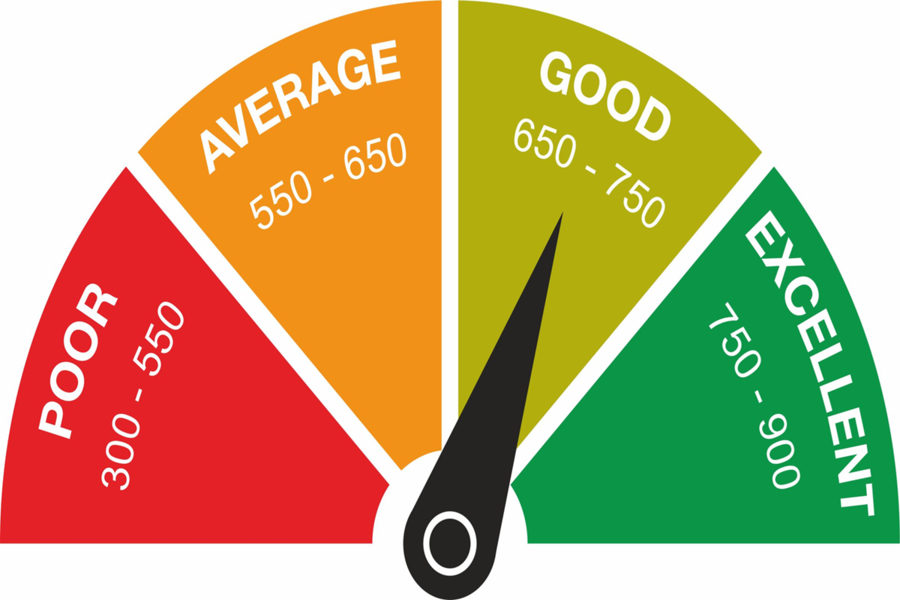
300-550 (Poor): Obtaining a loan is extremely difficult. Interest rates will be very high.
550-650 (Average): Some NBFCs may grant loans, but the terms and conditions will be strict.
650-750 (Good): A good probability of securing a loan. Interest rates will remain standard.
750-900 (Excellent): You are a 'preferred' customer for banks. You will receive the lowest interest rates and the fastest approval.
'Golden Rules' to Improve Your Score in 7 Days
Since updates will now be more frequent, adopt these habits starting today:
The 30% Rule: Utilize only 30% of your credit card limit. If you bring this usage down before the 7th-of-the-month update, your score will rise immediately.
Pay Before the EMI Due Date: Aim to make your payment 2-3 days before the actual due date so that an 'on-time payment' is recorded in the weekly reporting.
Preserve Old Cards: Do not close your old credit cards, even if you no longer use them. This increases the 'age' of your credit history.
Avoid Multiple Applications: Do not apply for loans at 4 different banks simultaneously. Each application generates a 'hard inquiry,' which can drag your score down with every weekly update.
Disclaimer: This content has been sourced and edited from Zee Business. While we have made modifications for clarity and presentation, the original content belongs to its respective authors and website. We do not claim ownership of the content.
