
Charges on UPI: Will using credit or debit cards become cheaper? NPCI explains
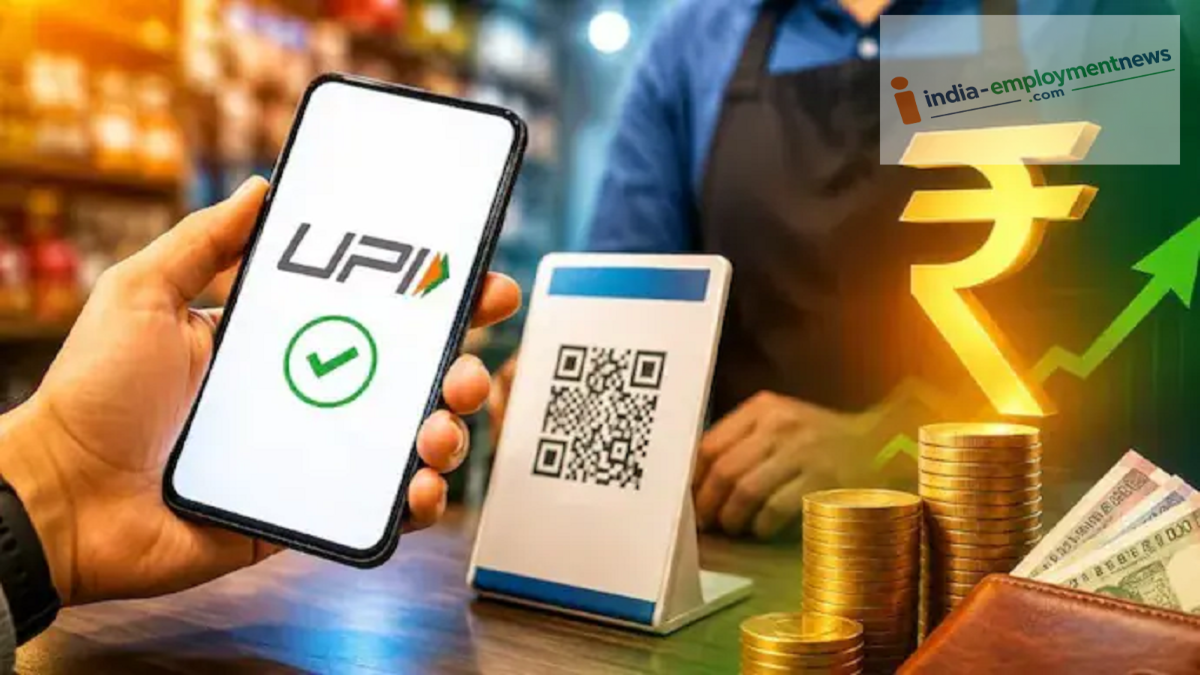
The NPCI states that no Merchant Discount Rate (MDR) will be levied on routine UPI payments. Similarly, no MDR will apply to Person-to-Merchant (P2M) transactions of up to ₹2,000. This will have no impact on the general public. Here is the full breakdown.
Amid the ongoing debate regarding UPI payment charges, many customers are unsure about the best course of action. They are wondering whether they should reduce their UPI usage or revert to using credit or debit cards. Customers who rely on UPI for daily transactions are concerned about whether using the Unified Payment Interface (UPI) will end up costing them more. Here is the answer.
Starting next month—specifically from October 15—a Merchant Discount Rate (MDR) of 0.4% will be applied to certain UPI transactions exceeding ₹2,000. Crucially, this MDR will not apply to peer-to-peer payments (where customers pay each other); it applies only to Person-to-Merchant (P2M) payments.
Understanding Person-to-Merchant (P2M) transactions:
A Person-to-Merchant (P2M) payment occurs when a customer makes a transaction via UPI to a business owner or shopkeeper.
Customers making UPI payments exceeding ₹2,000 at a shop or merchant outlet will be subject to a 0.4% MDR.
Person-to-Merchant (P2M) Transactions
The National Payments Corporation of India (NPCI) has clarified this matter in a post on the social media platform X. It stated that even with the 0.4% MDR, using UPI will remain cheaper than using credit or debit cards. According to the NPCI, even with the new MDR applicable to UPI, it remains cheaper than the charges levied on debit and credit card payments. Here is the breakdown:
For regular P2M (Person-to-Merchant) transactions:
On routine daily transactions: No MDR
On UPI transactions up to ₹2,000: Zero MDR
On UPI transactions above ₹2,000: 0.4% MDR
On transactions of ₹75,000 or above: ₹300 MDR
Small shopkeepers or business owners will not be charged any MDR.
This MDR will also not apply to street vendors or other small-scale business operators.
Understanding payment methods and the differences between them:
The NPCI has stated that for a transaction of ₹10,000, the MDR cost would amount to ₹40.
Payment via credit card would incur a charge of ₹200 (calculated at 2%).
Payment of ₹10,000 via debit card would incur a charge of ₹90 (calculated at 0.9%).
Source: NPCI post
The NPCI is the organization responsible for operating retail payment and settlement systems across India.
Will paying via UPI become expensive?
No, it will not, because this is a processing fee exchanged between merchants, and customers will not have to pay this charge.
The government has instructed banks to ensure that shopkeepers do not pass the burden of this MDR on to customers.
The NPCI states that no MDR will be levied on routine daily UPI payments. Similarly, no MDR will apply to P2M transactions of up to ₹2,000. This will have no impact on the general public. It is worth noting that such regular payments account for approximately 96% of total UPI transactions. Only shopkeepers and business owners (merchants) will be required to bear this MDR cost. This will not increase the financial burden on customers.
To put it simply:
If you make a UPI payment of ₹10,000 to a merchant, a charge of ₹40 would apply based on an MDR of 0.4%. However, for a UPI transaction of ₹1 lakh, the maximum MDR charged would be ₹300, and this cost would have to be borne by the merchant.
