
Can taking pregnancy or maternity leave lead to demotion? Understand the High Court's ruling.
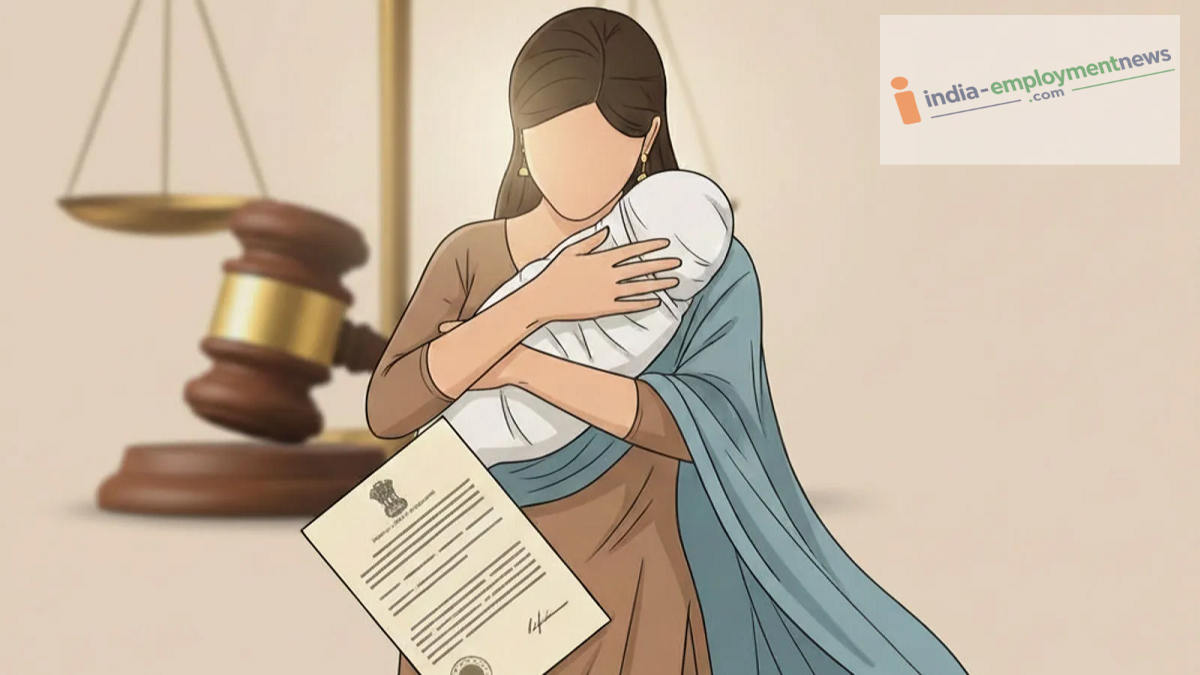
A woman cannot be demoted during or after taking maternity leave for pregnancy. This is not our assertion, but a ruling by the High Court itself. Let us understand the full details of the case.
The journey of pregnancy is unique for everyone. Questions are often raised about whether a woman's career ends after pregnancy. While that is not the case, maternity leave or pregnancy is sometimes treated as a major issue within the workplace, leading to instances where women are even demoted. The High Court recently delivered a verdict in one such case.
What is the case about?
Rakhi Bisht, a Chartered Accountant, began working as an Accounting Manager at a company in June 2022. At the time, her monthly salary was approximately ₹2.6 lakh. She took maternity leave in December 2023. Upon returning to work, she was transferred to the company's treasury department. Rakhi objected to this because the assigned role was significantly lower in rank than her previous position—a job typically performed by staff accountants.
Rakhi forced to quit her job
Subsequently, Rakhi resigned in October 2024 and approached the Delhi High Court. She sought ₹50 lakh in compensation from the company and demanded the formulation of strict rules to prevent discrimination against women in private sector companies.
High Court awards compensation
The matter was heard by the Delhi High Court, and on August 31, the court ordered the company to pay Rakhi ₹10 lakh in compensation. The court stated that pregnancy or maternity leave cannot be grounds for causing professional detriment, demotion, or stalling career progression for a woman. Justice Sachin Datta stated that, under no circumstances, should motherhood become a source of embarrassment or disadvantage for a woman in the workplace.
What should happen after maternity leave?
The High Court further observed that a woman returning from maternity leave should generally be reinstated in the same position she held prior to going on leave. If that position is unavailable due to genuine organizational reasons, she must be offered an equivalent position. This equivalent role should entail comparable terms regarding salary, rank, responsibilities, authority, and prospects for promotion.
Additionally, the company is required to explain why the original position is unavailable and provide full details—such as salary, responsibilities, and reporting structure—regarding the new position. Should the woman raise objections to the new role, the company must consider her concerns and provide a reasoned response.
