
Can elderly parents evict their daughter or daughter-in-law from their home? The High Court clarifies.
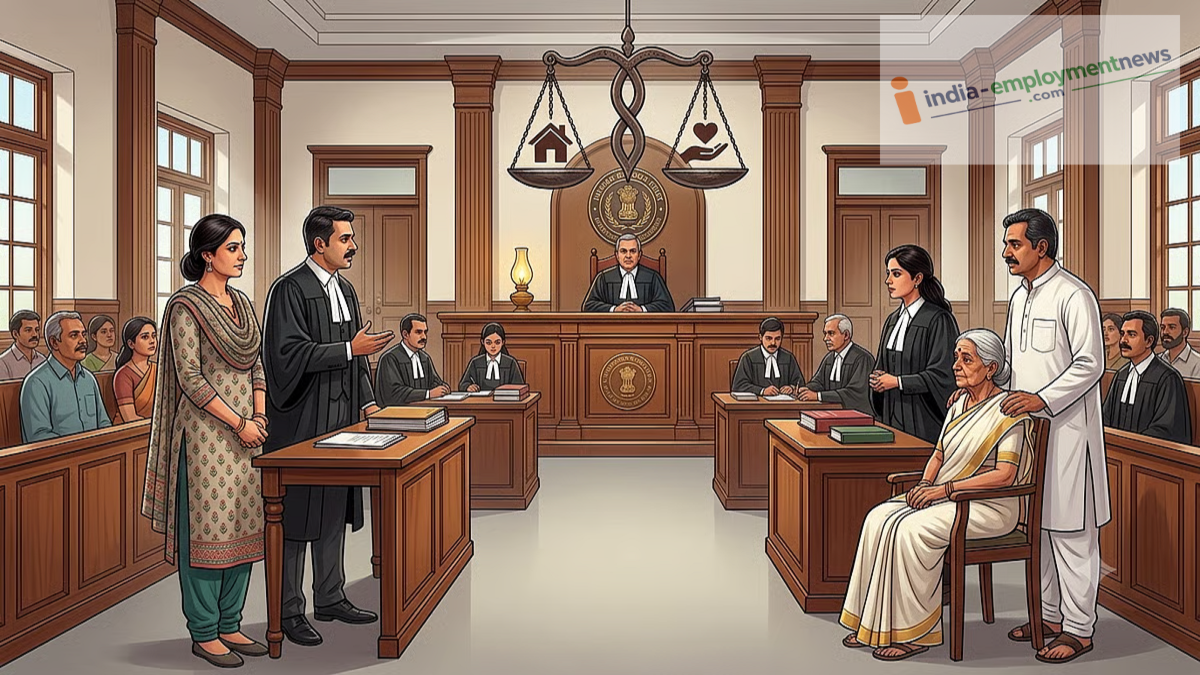
The Delhi High Court has ruled that senior citizens can seek the eviction of their children or legal heirs from their property. The Court emphasized the rights of the elderly to safety and a peaceful life.
The Delhi High Court has issued a significant ruling regarding the property of elderly parents. The order establishes that elderly parents can approach the concerned authority to have their children or other legal heirs evicted from their property.
This provision applies primarily in cases where the elderly are facing a lack of care or any form of mistreatment.
Court upholds 2009 rules.
A bench comprising Chief Justice Devendra Kumar Upadhyaya and Justice Tejas Karia upheld the validity of Rule 22(3)(1) of the 'Maintenance and Welfare of Parents and Senior Citizens Rules, 2009', as applicable in Delhi.
The Court stated that the provision was enacted with the aim of protecting the property and ensuring a dignified life for senior citizens. This mechanism is based on the legal provisions established under the 'Maintenance and Welfare of Parents and Senior Citizens Act, 2007'.
Context of the ruling
The case involved a woman named Poonam, who challenged an eviction order issued by her mother-in-law in the Delhi High Court. Poonam was married to the son of the senior citizen, and the couple has children.
However, following a family dispute, she sought the right to reside in her in-laws' property under the Domestic Violence Act; subsequently, her mother-in-law filed an application seeking her eviction from the property.
Initially, the District Magistrate had rejected the said application. However, the Divisional Commissioner of Delhi later accepted an appeal and ordered Poonam to vacate the house, a decision that was subsequently challenged in the High Court.
What did the Court say?
The High Court held that a woman's claim to reside in a shared household cannot be considered absolute in every situation. Considering the facts of the case, the court noted that Poonam was employed and also owned a separate house.
The Court observed that senior citizens have the right to live peacefully in their own properties. Therefore, it is essential to consider the rights of both parties in light of the specific circumstances of the case.
What are the provisions under Rule 22?
Under Delhi's Rule 22, senior citizens can seek assistance from the district administration regarding grievances related to their safety and property. The rule was subsequently amended in 2016 to include a procedure for evicting children or other legal heirs from a senior citizen's property; a further amendment was made in 2017.
Under this provision, a senior citizen or parent can file an application against their son, daughter, or legal heir before the appropriate authority or the District Magistrate. Such action can be initiated if they are being denied care or subjected to mistreatment.
Notice issued after property verification
Upon receiving the application, the concerned official may refer the matter to the Sub-Divisional Magistrate to verify property ownership and the facts of the case. In accordance with the rules, a written notice is issued to the concerned individuals after the inquiry is completed, asking them to show cause as to why an eviction order should not be issued against them.
Court dismissed the petition
The Delhi High Court dismissed Poonam's petition and upheld the eviction order issued by the Divisional Commissioner. The court clarified that these rules, framed to safeguard the rights of senior citizens regarding their safety and property, cannot be invalidated merely on the ground that the procedure for eviction has not been separately detailed in the parent Act.
