
Buying a Home? Understand Circle Rates First or You May End Up Paying a Higher Down Payment
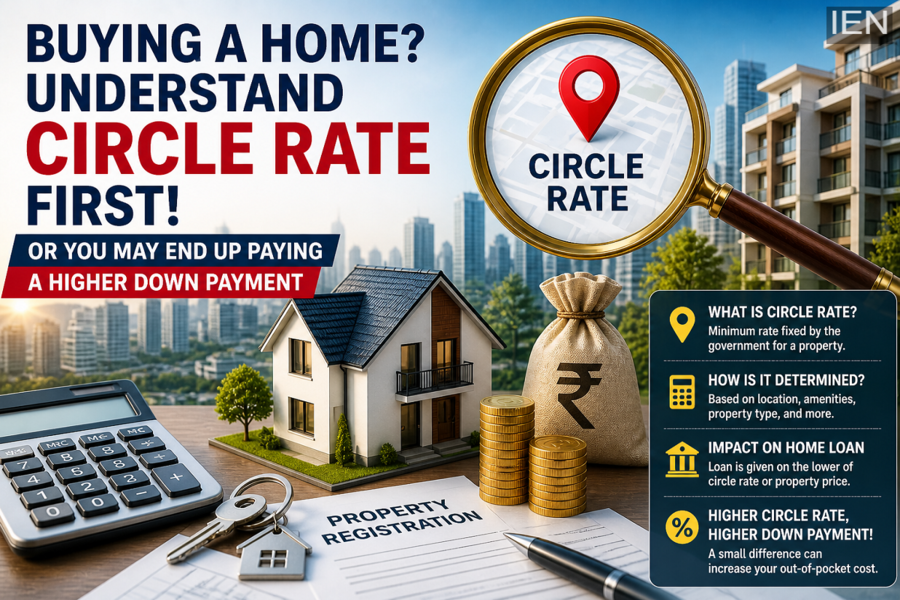
Planning to purchase a house or plot? While most buyers focus only on the market price, there is another critical factor that can significantly impact your budget—circle rate. Ignoring it could lead to higher costs, unexpected taxes, and even a bigger down payment on your home loan.
Let’s break down what circle rate means, how it is decided, and why it plays a crucial role in your property purchase.
What Is a Circle Rate?
In simple terms, the circle rate—also known in some states as the ready reckoner rate—is the minimum property value fixed by the state government for a particular area. This rate is used as the base value for property registration and for calculating stamp duty and registration charges.
Even if you buy a property at a lower price, you cannot register it below the circle rate. This ensures transparency in real estate transactions and helps prevent underreporting of property values.
What Determines the Circle Rate?
Circle rates are not random figures. Governments review and update them periodically—usually every one to three years—based on several factors. Here’s a simplified breakdown:
| Factor | How It Affects Rates |
|---|---|
| Location | Premium and well-connected areas have higher rates |
| Property Type | Commercial properties are costlier than residential ones |
| Amenities | Proximity to schools, hospitals, or metro boosts rates |
| Ownership Type | Freehold and leasehold properties have different values |
| Age & Size | Older or smaller properties often have lower rates |
These factors collectively determine the minimum value at which a property can be legally registered.
Why Circle Rate Matters So Much
The primary purpose of circle rates is to curb black money transactions in real estate. Earlier, buyers and sellers would often show a lower value on paper to save on stamp duty. Circle rates act as a benchmark—ensuring that property deals are not registered below a certain threshold.
For example, if a property’s market value is ₹1 crore but the circle rate in that area is ₹1.5 crore, then stamp duty and taxes will be calculated on ₹1.5 crore—not the actual deal value. This directly increases your overall cost.
How It Impacts Your Total Budget
Many buyers assume that the property cost ends with the price agreed with the seller. In reality, stamp duty and registration charges, calculated on the higher of the circle rate or transaction value, form a significant portion of your expenses.
Additionally, the circle rate also serves as a reference point to check whether the property is overpriced. If the builder’s quoted price is far above the circle rate, it may indicate inflated pricing.
The Connection Between Circle Rate and Home Loan
This is where many buyers get caught off guard. Banks determine your loan eligibility based on the Loan-to-Value (LTV) ratio. Importantly, they consider the lower value between the circle rate and the actual transaction price.
Here’s what that means:
- If the circle rate is lower than the market price, the bank will calculate your loan based on the lower value.
- As a result, the loan amount sanctioned will be reduced.
- You will have to pay a higher down payment from your own pocket.
For instance, if you buy a house for ₹1 crore but the circle rate is ₹80 lakh, the bank may calculate the loan on ₹80 lakh. This means you will need to arrange the remaining amount yourself, increasing your upfront financial burden.
Why Every Buyer Must Check Circle Rates
Before finalizing any property deal, checking the circle rate of that area is essential. It helps you:
- Estimate the true cost of ownership
- Avoid unexpected tax liabilities
- Plan your loan and down payment more accurately
- Negotiate better with builders or sellers
Final Takeaway
Circle rate is more than just a government number—it directly affects your property cost, loan eligibility, and financial planning. Ignoring it can lead to major budget miscalculations and higher upfront payments.
So, before you lock in your dream home, take a few minutes to check the circle rate. This small step can save you from big financial surprises and help you make a smarter investment decision.
