
Bullet Train News: Delhi–Siliguri bullet train planned via UP, Bihar, and Bengal; travel time may drop to just 6 hours.
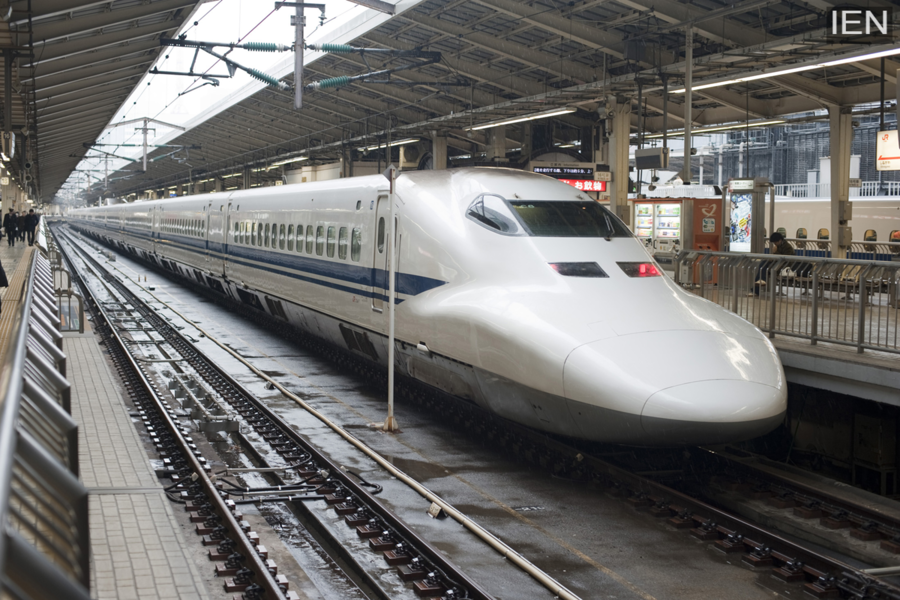
Train News: Upon completion of the Delhi-Siliguri bullet train project, a journey that currently takes 20 hours will be completed in just 6 hours, while trains running at speeds of 300–320 km/h will boost connectivity across North India.
Delhi-Siliguri Bullet Train: The Ministry of Railways has announced a new bullet train project. In the coming years, the travel experience for the lakhs of people traveling between Delhi and Siliguri is set to undergo a complete transformation. The Central Government has taken steps to connect the national capital, Delhi, with Siliguri—a major city in North Bengal—via a high-speed rail network.
Once the proposed Delhi-Siliguri bullet train project is completed, the distance—currently covered in about 20 hours—will be traversed in merely 6 hours. This ambitious plan will not only bring relief to passengers but is also expected to provide a fresh boost to economic activities in several cities across Uttar Pradesh, Bihar, and West Bengal.
Bullet train to run at 320 km/h
The proposed corridor will not be developed as an upgrade to existing railway lines; instead, a completely separate and dedicated high-speed rail network will be constructed. The bullet trains will operate at speeds of 300 to 320 km/h, significantly reducing long-distance travel time.
These trains will feature a modern aerodynamic design to minimize air resistance, ensuring a more comfortable journey for passengers. Advanced collision-avoidance technology will be installed for safety, while passengers will enjoy amenities such as extra legroom and rotating seats.
High-speed corridor to connect four states
The Delhi-Siliguri bullet train route will span over 1,000 kilometers, passing through Delhi, Uttar Pradesh, Bihar, and West Bengal. A key feature of this route is that it is being designed not merely to shorten the distance, but to provide connectivity to the maximum number of people.
According to the plan, the train will originate in New Delhi and travel via major cities such as Lucknow, Varanasi, and Patna to reach Siliguri. This will establish fast and convenient connectivity between North India and East India.
Cities set to benefit directly
New Delhi will serve as the starting point of this corridor. The central region of Uttar Pradesh will be linked to the high-speed network via Lucknow. Major religious and tourism hubs like Varanasi will also benefit from this project. There are plans to develop Patna, the capital of Bihar, into a major passenger hub, while Siliguri will serve as the terminal station, acting as a gateway to North Bengal and Northeast India.
Project currently in the initial stage
Following the announcement by Railway Minister Ashwini Vaishnaw, the project is currently in the preliminary planning and study phase. The task of preparing the Detailed Project Report (DPR) will be entrusted to the National High-Speed Rail Corporation Limited (NHSRCL).
The DPR process will involve drone surveys, determination of the potential route, study of land conditions, and assessment of environmental impacts. While the Central Government has granted initial approval, necessary clearances must also be obtained from the concerned states to proceed further.
Cost could exceed ₹1.5 lakh crore
Constructing such a long-distance elevated high-speed rail network will require massive investment. Initial estimates suggest the project cost could exceed ₹1.5 lakh crore; however, the actual cost figure will only be determined after detailed surveys and technical studies.
To finance the project, the government may rely on a combination of central and state government funds and low-interest loans from international development institutions.
Construction to be completed in four phases
The construction work is planned to be executed in multiple phases. The first phase will involve land surveys and the acquisition of the necessary land. Subsequently, elevated pillars and bridges will be constructed to ensure the train does not come into direct contact with roads or conventional railway lines. In the third phase, specialized high-speed tracks and electrical systems will be installed. The final phase will involve comprehensive testing of the trains to fully verify safety standards.
When might the service begin?
Drawing on experiences from the Mumbai-Ahmedabad bullet train project, plans are in place to implement various processes for this project in a more streamlined manner. However, construction work will commence only after the Detailed Project Report (DPR) is approved. Current estimates suggest that this ambitious project could take several years to complete, with operations likely to begin by the mid-2030s.
Major shift likely in the real estate sector
Experts believe that major infrastructure projects like the bullet train steer the real estate market in surrounding areas in a new direction. Demand for land and residential projects is likely to rise around key stations such as Delhi, Lucknow, Varanasi, Patna, and Siliguri.
Improved connectivity is expected to boost investment, employment, and business activities in these cities. This could accelerate new residential and commercial development in the vicinity of the stations.
New opportunities could open up for Siliguri
Siliguri is already considered a major commercial hub for North Bengal, Sikkim, and Bhutan. The establishment of a high-speed rail link with Delhi could create new opportunities in sectors such as hospitality, logistics, corporate investment, and other services. This is expected to yield long-term economic benefits for the entire region.
A major shift in connectivity for Eastern India
If this project is completed within the stipulated timeframe, the nature of travel between Delhi and Eastern India could undergo a complete transformation. The ability to cover long distances in less time will strengthen trade, tourism, and social ties. Although it will take time for the project to materialize on the ground, its announcement has certainly sparked new hope for future high-speed rail connectivity.
