
Build a Strong Investment Portfolio in FY 2026: 7 Smart Strategies to Handle Market Volatility
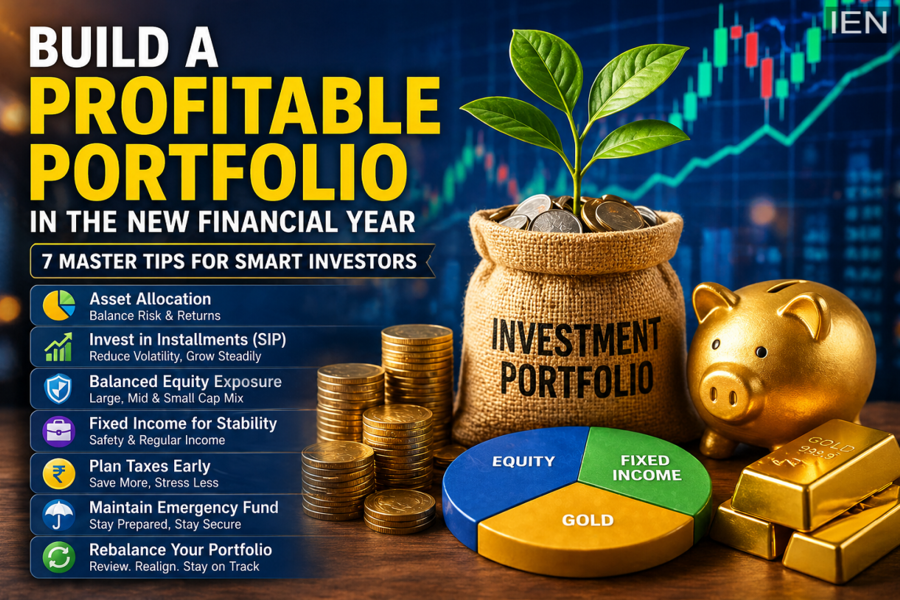
The start of a new financial year offers investors a fresh opportunity to reset their financial goals and build a resilient portfolio. With evolving economic signals from institutions like the Reserve Bank of India and global outlooks shaped by the International Monetary Fund, 2026 demands a thoughtful and disciplined investment approach.
Market fluctuations are inevitable, but experts believe that consistency, diversification, and effective risk management are the real drivers of long-term wealth creation. If you want to build a profitable and stable portfolio this year, here are seven proven strategies you should consider.
1. Start with Smart Asset Allocation
The foundation of any successful investment plan lies in proper asset allocation. Instead of putting all your money into a single category, divide your investments across equity, fixed income, and gold.
This balanced approach reduces dependence on the performance of individual assets and helps maintain stability in your portfolio. The allocation ratio should depend on your financial goals, risk tolerance, and investment horizon.
2. Invest Gradually to Reduce Risk
Timing the market perfectly is nearly impossible. Instead of investing a large sum at once, consider spreading your investments over time through a Systematic Investment Plan (SIP).
SIPs allow you to invest regularly, helping you average out market costs and reduce the impact of short-term volatility. This disciplined approach is especially useful in uncertain market conditions.
3. Balance Your Equity Exposure
Equity investments are essential for growth, but they must be diversified wisely. A mix of large-cap, mid-cap, and small-cap stocks can help you strike the right balance between stability and returns.
Large-cap stocks provide reliability and steady performance, while mid- and small-cap stocks offer higher growth potential. However, since smaller companies tend to be more volatile, limit your exposure based on your risk appetite.
4. Include Fixed Income for Stability
With interest rates remaining relatively high and inflation concerns persisting, fixed-income instruments are once again gaining importance.
Options like Fixed Deposits (FDs), Public Provident Fund (PPF), and other savings schemes offer predictable returns and act as a cushion during market downturns. Including these in your portfolio ensures financial stability and steady income.
5. Plan Your Taxes Early
Tax planning should not be left until the last moment. Starting early in the financial year allows you to distribute your investments efficiently and avoid last-minute financial pressure.
Instruments such as Equity Linked Savings Schemes (ELSS), PPF, and the National Pension System (NPS) can help you save taxes while building long-term wealth.
6. Maintain an Emergency Fund
An often overlooked but critical aspect of financial planning is maintaining an emergency fund. Ideally, you should keep funds equivalent to at least 6–9 months of your expenses in liquid or low-risk investments.
This ensures that unexpected situations—such as medical emergencies or job loss—do not force you to withdraw from long-term investments prematurely.
7. Rebalance Your Portfolio Regularly
Market movements can change the composition of your portfolio over time. Assets that perform well may occupy a larger share, while others may shrink.
Periodic rebalancing helps restore your portfolio to its original target allocation. This ensures that your investment strategy stays aligned with your financial goals and risk profile.
Final Thoughts
Building a profitable portfolio is not about chasing quick gains but about staying disciplined and strategic over time. By following these seven key principles—diversification, gradual investing, balanced exposure, and regular review—you can navigate market ups and downs with confidence.
As the financial landscape continues to evolve in 2026, staying informed and proactive will be your biggest advantage. Before making any major investment decisions, it is always wise to consult a certified financial advisor and align your strategy with your long-term objectives.
