
Budget 2026–27: Will Nirmala Sitharaman Phase Out the Old Income Tax Regime? Here’s What Experts Expect
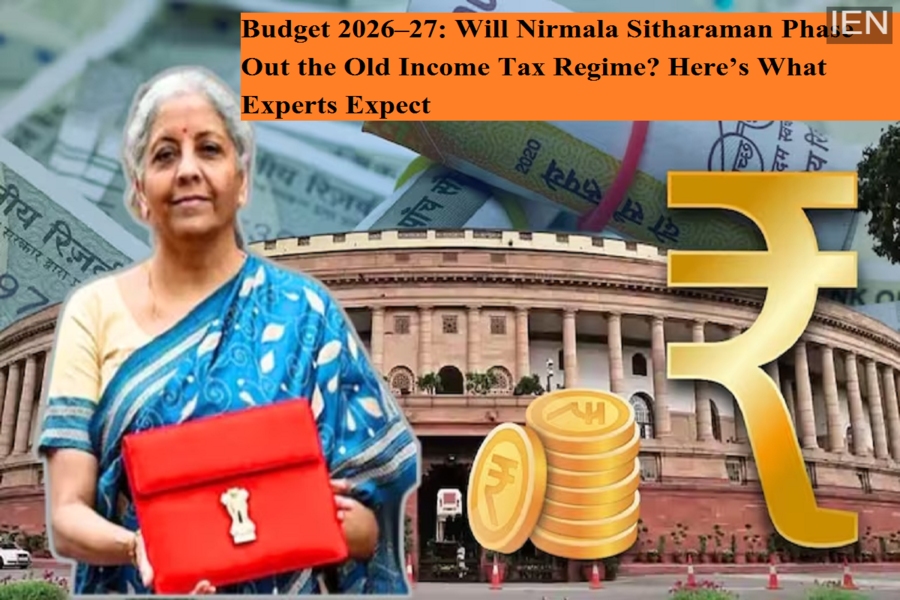
As discussions around Budget 2026–27 intensify, one key question continues to concern individual taxpayers: Will the government discontinue the old income tax regime? Since the introduction of the new tax regime, speculation has grown that the government may eventually eliminate the old system. However, experts believe such a move is unlikely in the near term.
The new income tax regime was announced by Finance Minister Nirmala Sitharaman in the Union Budget 2020 with the objective of simplifying taxation. It offers lower tax rates and a cleaner structure, but comes at the cost of foregoing most deductions and exemptions. Over the past few years, the government has consistently pushed the adoption of this simplified regime.
New Tax Regime: Simpler Structure, Lower Rates
The new tax regime is designed to reduce complexity in income tax filing. It features lower slab rates and fewer compliance requirements. However, taxpayers opting for this regime cannot claim popular deductions such as Section 80C, Section 80D, House Rent Allowance (HRA), home loan interest, or education loan benefits.
Initially, taxpayer response to the new regime was muted, as many individuals were accustomed to planning their savings and investments around tax deductions. Over time, however, adoption has increased significantly. A growing number of salaried and individual taxpayers now prefer the new regime for its simplicity and predictable tax liability.
Despite this shift, the old tax regime remains relevant for a sizable segment of taxpayers.
Why Many Taxpayers Still Prefer the Old Regime
According to Nitin Bajaj, Executive Director at Deloitte India, around 28–29 percent of taxpayers are still using the old tax regime. This group primarily includes individuals who actively claim deductions on insurance premiums, provident fund contributions, home loans, education loans, and health insurance.
For salaried employees with structured compensation packages and higher incomes, the old regime often results in lower overall tax liability due to multiple exemptions. In contrast, the new regime does not offer these benefits, making it less attractive for taxpayers with significant long-term financial commitments.
Can the Government Abruptly End the Old Regime?
Tax experts largely agree that abolishing the old tax regime overnight would be challenging. For decades, India’s tax system has encouraged household savings through incentives linked to insurance, retirement funds, and housing. Products such as PPF, life insurance, and home loans have been deeply integrated into personal financial planning.
An abrupt withdrawal of the old regime could disrupt the long-term financial strategies of millions of households. It could also impact sectors such as insurance, housing, and long-term savings instruments that rely heavily on tax incentives.
The government itself has repeatedly stated that taxpayers will continue to have a choice between the two regimes, allowing them to select the one that best suits their financial situation.
Government’s Strategy: Gradual Shift, Not Sudden Change
While maintaining the old regime, the government’s broader strategy remains focused on popularizing the new tax regime. The intent is not to force taxpayers into a sudden transition, but to gradually increase comfort and acceptance of a simplified tax structure.
From a political and administrative standpoint, offering both options helps maintain taxpayer confidence. It ensures that individuals with existing financial commitments are not penalized mid-way through their planning cycles.
Over time, as new taxpayers enter the system and fewer people rely heavily on deductions, the balance may naturally tilt toward the new regime.
What Can Taxpayers Expect in Budget 2026–27?
Most experts believe that Budget 2026–27 will not announce the removal of the old tax regime. According to Sudhakar Sethuraman, Partner at Deloitte India, both regimes are expected to coexist for the foreseeable future. Any major policy shift, if planned, would likely be communicated well in advance.
Instead of abolishing the old regime, the government may continue to make incremental tweaks to the new regime to improve its attractiveness, such as rationalizing slabs or further simplifying compliance.
Final Outlook
For now, taxpayers should not expect any abrupt changes in Budget 2026–27. Both the old and new income tax regimes are likely to remain in place, giving individuals the flexibility to choose based on their income structure, savings habits, and long-term goals.
While the government’s long-term vision clearly favors a simpler tax system, the transition is expected to be gradual and balanced, ensuring minimal disruption to taxpayers. As always, individuals should review their tax planning annually and consult financial experts before switching between regimes.
