
Budget 2026: The only budget in India's history when Halwa was not prepared; find out why?
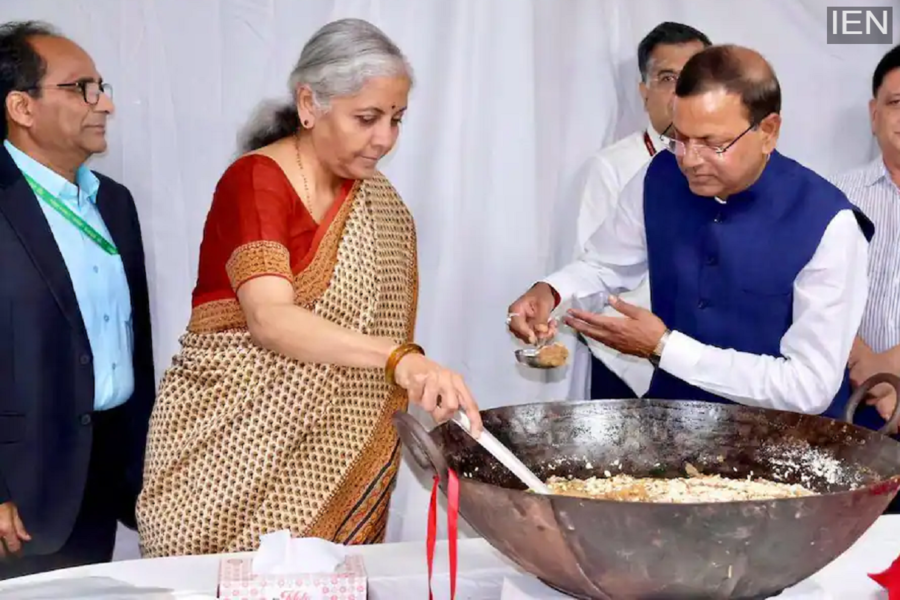
Budget 2026: This year, the country's budget is scheduled to be presented on a Sunday, but the Halwa ceremony is a very special ceremony before the budget. Let's find out in which year this ceremony was not performed and the reasons behind it.
Budget 2026: The country's General Budget 2026 is approaching, and this time it will be presented in Parliament on Sunday, February 1st. Finance Minister Nirmala Sitharaman will present this important budget for the government led by Prime Minister Narendra Modi. Budget preparations are in the final stages, and as always, the traditions associated with it are also in the news. One of these is the Halwa ceremony, which usually takes place just before the budget. However, there has been one year when this tradition was broken.
What is the Halwa ceremony?
The Halwa Ceremony is a symbolic yet crucial part of the budget process. When the draft budget is fully prepared and printing is about to begin, this ritual is performed in the Finance Ministry's North Block. Halwa is prepared in a large pan, and the Finance Minister herself serves it to officials and employees. This is considered an auspicious beginning.
A Tradition Since Independence
The tradition of the Halwa Ceremony before the budget has been continuously observed in India since independence. Every government has followed it for decades. Regardless of the circumstances, this ritual of distributing sweets before the budget has never been broken. This is why, when this tradition was not observed one year, it earned a special place in history.
When a 52-Year-Old Tradition Was Broken
The year 2022 was the first time the Halwa Ceremony was not held before the budget. This decision was made not due to any administrative negligence or a departure from tradition, but due to the serious health crisis that was raging in the country. At that time, India was grappling with the third wave of the COVID-19 pandemic, and the infection was spreading rapidly.
COVID-19 became the reason
During the third wave, the government implemented several strict measures to avoid crowds and prevent infection. Keeping this in mind, the Finance Ministry decided to cancel the Halwa Ceremony. Gathering officials and employees in the North Block was deemed unsafe at that time. Therefore, the ceremony was not held in 2022.
The sweetness is gone, but the tradition is not.
Although the Halwa Ceremony was not held, the spirit of tradition was not completely abandoned. The Finance Ministry sent sweets to the homes or offices of officials and employees involved in the budget. This meant that the symbol of sweetness remained, but its form changed. This step was an attempt to strike a balance between safety and tradition.
Why is the Halwa Ceremony special?
The Halwa Ceremony is not just a program of distributing sweets. With this ceremony, the confidential budget process also begins. Following this ceremony, officials and staff associated with the budget go into complete isolation. They are not allowed to use mobile phones or access the internet. This is intended to ensure that no information related to the budget is leaked.
Symbol of Budget Secrecy
From the Halwa Ceremony until the budget is presented, the relevant officials remain in North Block. Special arrangements are made for medical treatment and essential amenities, but contact with the outside world is completely cut off. Thus, the Halwa Ceremony symbolizes both the secrecy and solemnity of the budget.
