
Budget 2026: Taxpayers to get major relief! Nirmala Sitharaman may change these rules, which will directly impact your finances..
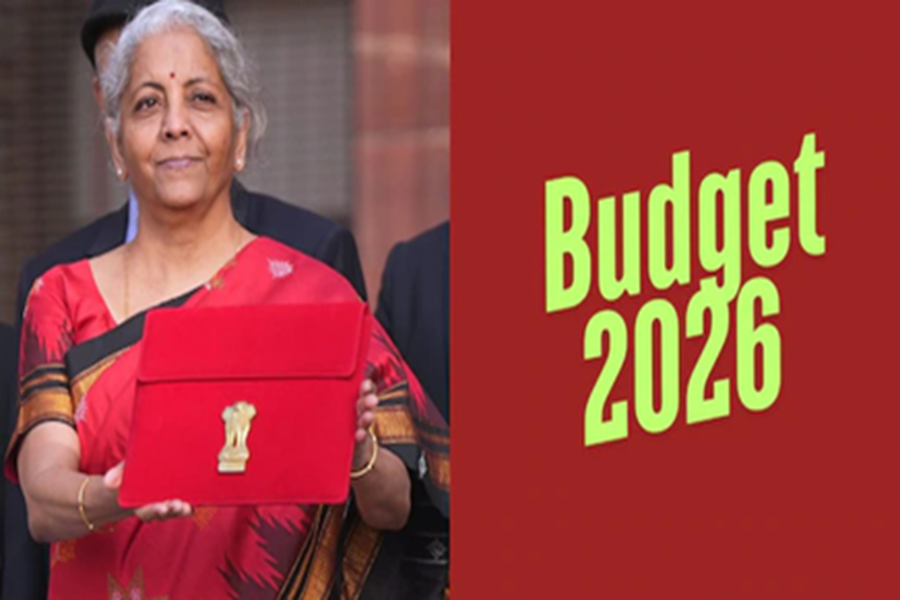
Budget 2026: The countdown to Budget 2026 has begun, and as always, the eyes of millions of taxpayers across the country are fixed on Finance Minister Nirmala Sitharaman. Amidst inflation and changing economic conditions, the common man and stock market investors are hoping that the government will provide some relief to their pockets. The most discussed topic is 'Capital Gains Tax'. The changes in tax rules over the past few years have raised many questions in the minds of investors. In this budget, the government may take some major steps to simplify the complex tax system, which could make the tax burden on your earnings a little less sharp.
There was a time when the government did not levy LTCG tax.
To understand the tax rules, we need to go back a bit. There was a time when long-term capital gains (LTCG) were taxed at 20 percent with indexation. Indexation means adjusting the purchase price according to inflation, which reduces the tax burden. But a major change came in 2004. The government introduced the 'Securities Transaction Tax' (STT). In return, a complete exemption from LTCG tax was given on shares of listed companies and equity mutual funds. This was nothing short of a golden era for investors.
However, this happiness was not to last forever. In 2018, the government reintroduced LTCG. Under Section 112A of the Income Tax Act, a 10 percent tax was levied on profits exceeding Rs. 1 lakh. That is, now investors had to pay both STT and LTCG. This is where the complexity in the rules began, and the demand to simplify them continues even today.
The shock of 2024, the rules changed.
Last year, in the 2024 budget, the changes the government made to the capital gains rules disrupted the calculations of many people. The tax on listed shares and equity mutual funds has been increased from 10 percent to 12.5 percent. While the tax rate on immovable property was reduced to 12.5 percent, the biggest blow came with the elimination of the 'indexation benefit'. However, due to strong opposition and concerns, the government also offered the option of the old rules (20% tax with indexation) for properties purchased before July 23, 2024.
The government argued that it wanted to simplify the rules and introduce a single rate instead of different rates. But the reality is that there is still considerable disparity in tax rules. The holding period for different assets is still different, which makes it difficult for the average investor to understand.
Will the burden of double taxation finally end this time?
The biggest expectation from this budget is regarding the Securities Transaction Tax (STT). When STT was introduced in 2004, it was as an alternative to Long-Term Capital Gains Tax (LTCG). But now that LTCG has been reintroduced and its rates have also increased, there seems to be no logical basis for retaining STT. Market experts believe that removing or gradually reducing STT will increase liquidity in the stock market and prevent investors from facing a double burden.
In addition, addressing the discrepancy in the holding period is also a pressing need. Currently, this limit is 12 months for listed shares, while it is 24 months for unlisted shares. If the government standardizes this, tax filing will become easier.
Debt fund investors will also benefit
This budget is also important for mutual fund investors. Currently, the rules for equity funds are largely in favor of investors, with a 12-month holding period and tax exemption on profits up to Rs 1.25 lakh, but this is not the case with debt funds. There, your earnings are taxed according to the tax slab, regardless of how long you have held the fund. The complete elimination of the long-term capital gains (LTCG) benefit from debt funds is a major blow to conservative investors. It is hoped that the Finance Minister will address this disparity and encourage the middle class to invest.
Disclaimer: This content has been sourced and edited from TV9. While we have made modifications for clarity and presentation, the original content belongs to its respective authors and website. We do not claim ownership of the content.
