
Budget 2026: Big Boost Expected for PM Surya Ghar Scheme, Millions of Households to Benefit from Free Solar Power
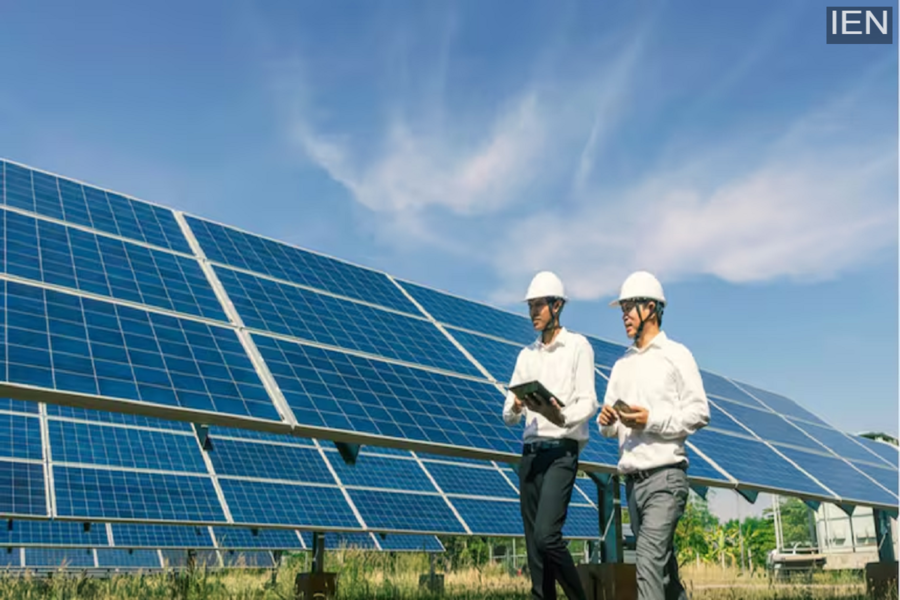
As preparations for Union Budget 2026 gather pace, expectations are rising around a major announcement related to the PM Surya Ghar: Muft Bijli Yojana. Launched in February 2024 and formally inaugurated by Prime Minister Narendra Modi on February 13, 2024, this flagship rooftop solar scheme is emerging as a key pillar of India’s renewable energy transition. Government sources indicate that Budget 2026 could bring enhanced financial support and fresh incentives to accelerate its rollout.
What Is the PM Surya Ghar Scheme?
The PM Surya Ghar scheme aims to promote rooftop solar installations for residential households, enabling families to generate their own electricity and significantly reduce power bills. The government’s long-term vision is to bring one crore households under the scheme by 2027, strengthening energy self-reliance while cutting carbon emissions.
Officials have stated that the focus is not just on expanding solar adoption but also on removing grid-related bottlenecks that slow down rooftop solar integration. Faster approvals, better transmission support, and smoother disbursal of subsidies are all part of the broader plan.
Strong Progress So Far
The scheme has already shown impressive traction. As of December 9, 2025, around 19.45 lakh rooftop solar systems had been installed under PM Surya Ghar. These installations are benefiting more than 24.35 lakh households across the country.
One of the most striking outcomes has been the reduction in electricity bills. Data suggests that over 7.7 lakh consumers recorded zero electricity bills for at least one billing cycle, highlighting the scheme’s immediate financial impact. So far, the government has disbursed approximately ₹13,926 crore in subsidies under the programme.
Big Targets Set for 2026 and Beyond
According to Union Renewable Energy Minister Pralhad Joshi, the government has set an ambitious target of installing 50–55 lakh rooftop solar systems in 2026 alone. In a recent interaction, he indicated that higher budgetary allocation for the scheme is likely, as rooftop solar plays a critical role in boosting renewable energy capacity.
By March 2026, the government aims to cover 40 lakh households, and by 2027, the target is to reach one crore families. Officials believe that increasing rooftop solar adoption will not only lower household electricity expenses but also help power distribution companies manage peak demand more efficiently.
Budget 2025 Laid the Foundation
Union Budget 2025 had already provided a strong push to the scheme, allocating ₹20,000 crore specifically for PM Surya Ghar. The government has repeatedly emphasized that renewable energy, rooftop solar, and the National Green Hydrogen Mission are among its top priorities.
Minister Joshi has underlined that the Finance Ministry is fully backing the Ministry of New and Renewable Energy to ensure smooth execution of these initiatives, describing PM Surya Ghar as a direct reflection of the Prime Minister’s long-term energy vision.
Transmission Infrastructure Also in Focus
Alongside rooftop solar, Budget 2026 is expected to place strong emphasis on power transmission infrastructure, which is crucial for integrating renewable energy into the national grid. According to the Central Electricity Authority (CEA), India requires more than 50,000 circuit kilometres of new inter-state transmission lines.
Additionally, by 2030, large-scale substation capacity must be upgraded to support renewable energy integration. Government estimates suggest that over ₹2 lakh crore may be required for Green Energy Corridor projects alone, underscoring the scale of investment planned in the coming years.
Why PM Surya Ghar Matters for India
Experts say the PM Surya Ghar scheme is not just about free electricity—it is about energy security, affordability, and sustainability. Rooftop solar reduces dependence on conventional power sources, cuts household expenses, and supports India’s climate commitments.
With rising electricity demand and growing emphasis on clean energy, the scheme is fast becoming a cornerstone of India’s green growth strategy. If Budget 2026 delivers a major expansion, millions more households could soon benefit from lower bills and cleaner power.
As February 1 approaches, all eyes will be on whether the government announces enhanced funding, simplified processes, and new incentives under PM Surya Ghar—moves that could significantly accelerate India’s rooftop solar revolution.
