
Budget 2026 and the 8th Pay Commission: Will It Influence Salary Hikes for Central Government Employees?
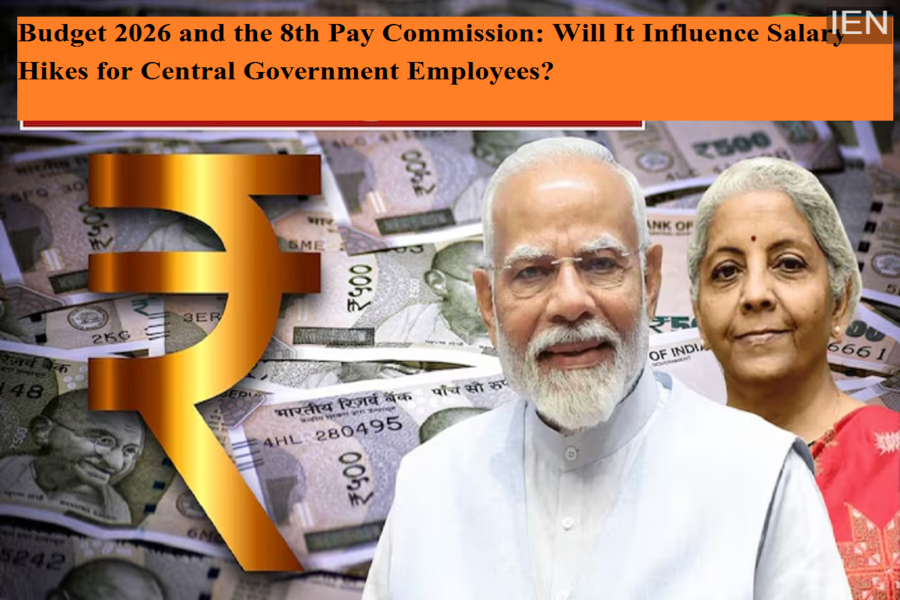
As Budget 2026 approaches, questions around the 8th Pay Commission have once again come into focus, especially among central government employees awaiting a long-anticipated salary revision. Traditionally, a new pay commission is implemented every ten years, and based on this cycle, the 8th Pay Commission was widely expected to come into effect from January 1, 2026. However, recent developments suggest that this timeline is unlikely to be met.
According to a report by credit rating agency ICRA, the recommendations of the 8th Pay Commission may take 15 to 18 months to be finalized. This has made it clear that a new salary structure for central government employees is unlikely to be implemented anytime soon. With January 2026 already behind us, expectations of an immediate salary hike have effectively faded.
Delay in the 8th Pay Commission: What Has Changed?
The delay in implementing the 8th Pay Commission does not affect employees alone. It also has significant implications for the government’s fiscal planning and budget management. Despite earlier expectations, the government has neither received a final report nor announced a clear decision regarding the commission’s rollout.
Historically, the 7th Pay Commission was implemented from January 1, 2016, setting a precedent for the next revision in 2026. However, the absence of concrete progress this time indicates that the process may extend well beyond the expected deadline.
Possibility of Retrospective Implementation
ICRA’s analysis suggests that whenever the 8th Pay Commission is eventually implemented, the government may choose to apply it retrospectively from January 1, 2026. If this happens, employees could receive a substantial arrears payout in one go.
The report estimates that arrears could cover 15 months or more, depending on the final implementation date. While this would be beneficial for employees, it would also place a significant one-time financial burden on the government’s finances.
Impact on Government Expenditure
The implementation of a pay commission traditionally leads to a sharp rise in salary and pension expenses. ICRA estimates that in the year the 8th Pay Commission is enforced, the government’s expenditure on salaries and pensions could increase by 40 to 50 percent.
Past experiences underline this concern. During the rollout of the 7th Pay Commission, even with arrears limited to six months, salary-related expenditure surged by over 20 percent. The 6th Pay Commission imposed an even heavier burden, as arrears exceeding two and a half years had to be paid, putting sustained pressure on government budgets for several years.
Budget 2026: A Strategic Balancing Act
Given the potential fiscal stress, the 8th Pay Commission is no longer seen as a routine administrative exercise. Instead, it has become a factor that could significantly influence upcoming Union Budgets, including Budget 2026 and beyond.
To prepare for this future liability, ICRA believes the government may adopt a strategic fiscal approach. One such strategy could be increasing capital expenditure (capex) ahead of time to maintain economic momentum before salary-related costs spike.
Capital Expenditure as a Cushion
The rating agency estimates that in FY2027, the government’s capital expenditure could rise by around 14 percent, reaching approximately ₹13.1 lakh crore. Higher capex spending would help sustain infrastructure development and growth-oriented projects during a period when revenue expenditure is expected to increase sharply due to salary and pension obligations.
This approach would allow the government to balance growth priorities while preparing for the eventual financial impact of the 8th Pay Commission.
What Should Employees Expect?
For central government employees, the key takeaway is that salary hikes under the 8th Pay Commission are not imminent. While the possibility of retrospective benefits remains, the waiting period may be longer than initially anticipated. Employees may need to factor this delay into their financial planning, especially those who were expecting a revision early in 2026.
Final Outlook
The 8th Pay Commission is shaping up to be a critical element in the government’s medium-term fiscal strategy rather than an immediate reform. Budget 2026 is unlikely to announce a direct salary hike, but it may offer signals on how the government plans to manage future pay commission-related expenses. Until clearer decisions emerge, both employees and policymakers will be closely watching budget announcements and fiscal cues in the months ahead.
