
Birth and Death Certificates: Registration rules changed, Bill passed in Parliament—how will certificates be issued now?
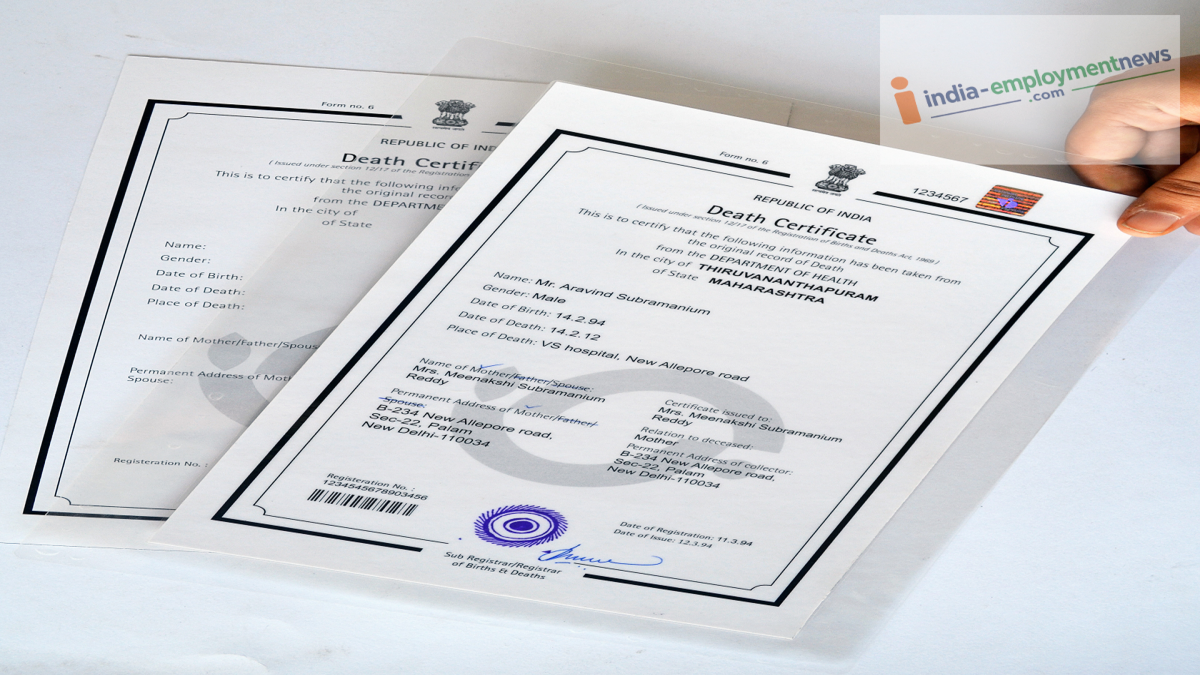
Birth and Death Registration Bill: If you wish to obtain a birth certificate or a death certificate for a family member, the registration rules have changed. Find out how these certificates will be issued now.
Birth and Death Registration New Rules: Major changes are being made to the rules for obtaining birth and death certificates. The 'Birth and Death Registration (Amendment) Bill' has been passed during the Monsoon Session of Parliament. After clearing the Lok Sabha, the Bill has also been passed by the Rajya Sabha. Amendments have now been made to the original Birth and Death Registration Act of 1969; simply put, the regulations for obtaining these certificates have undergone significant changes.
Regarding these changes, the government states that the primary objective is to tighten rules for delayed registration and to prevent fraud and the issuance of identity documents based on false information.
Rules changed for delays of 1 to 2 years or more.
If the birth of a child or the death of an individual is not registered on time, the rules for obtaining the certificate have changed. Specifically...
If information regarding a birth or death is reported after one year but within two years, registration will only be possible following an inquiry and with the permission of the District Magistrate (DM), Sub-Divisional Magistrate (SDM), or an Executive Magistrate authorized by them.
If more than two years have elapsed since the birth or death, registration can only take place upon the order of a First Class Judicial Magistrate; this means that for delays exceeding two years, the matter moves out of administrative offices and must be verified directly through the courts.
Why did the government make this change?
The government informed Parliament that this system was introduced to curb instances where registration was not done on time and identity documents were later obtained using forged papers. In fact...
In many cases, fake birth certificates were obtained by providing incorrect names or ages, leading to discrepancies in government welfare schemes and issues regarding civic identity. The lack of accurate death records meant that names often remained on the voter list, creating scope for fraudulent voting.
Currently, approximately 3.5 lakh registration units are operational across the country. The government's objective is to maintain accurate and transparent records for every child and citizen.
How much have registration figures improved over the last 10 years?
What did the ruling and opposition parties say in Parliament?
During the parliamentary debate on this bill, BJP MP Darshana Singh stated that birth and death certificates are no longer merely administrative documents but the foundation of citizenship and identity; their digitization would ensure the security of records.
Meanwhile, BJD MP Dr. Santrupt Misra expressed concern regarding the provision to refer cases to a First Class Judicial Magistrate if there is a delay of more than two years. He argued that courts are already overburdened with litigation, and such a rule could force ordinary citizens to make repeated rounds of the courts. Conversely, YSRCP MP Meda Raghunath Reddy supported the government's move, describing it as essential for curbing identity-related fraud.
What do these rules mean for the general public?
Reporting a birth or death on time to hospitals or local bodies—such as municipal corporations or gram panchayats—is the easiest approach. However, if you delay registration for years, you may have to undergo a lengthy legal process in the future to obtain documents required for tasks like school admissions, passports, Aadhaar cards, or property succession. In short, any delay will now require you to make rounds of government offices and, subsequently, the courts.
