
Beyond just loans, public sector banks are reaping huge profits from selling insurance; SBI leads the pack.
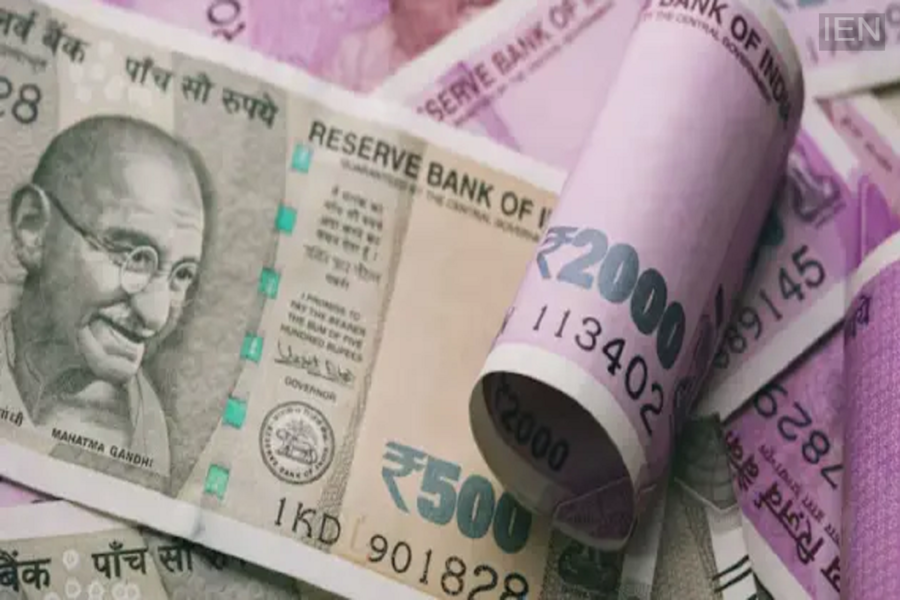
You have often heard that banks earn revenue through interest on loans. However, the sale of financial products like insurance and mutual funds has now become a major source of income for public sector banks.
In the 2025-26 financial year, most public sector banks earned crores of rupees in commissions by selling insurance policies. However, the picture regarding earnings from mutual fund distribution was not uniform across all banks; while some saw an increase in income, others experienced a decline. This information emerged from an analysis of the banks' annual reports.
How did SBI achieve the highest earnings?
SBI, the country's largest public sector bank, emerged as the leader in insurance commission earnings.
Insurance commission income rose by 19.26% to reach ₹2,795.01 crore, up from ₹2,345.36 crore the previous year.
Commission from mutual fund distribution increased by 7.05% to ₹1,617.52 crore, compared to ₹1,511.06 crore in the preceding financial year.
SBI's earnings at a glance
| Category | FY25 | FY26 | Change |
|---|---|---|---|
| Insurance Commission | ₹2,345.36 crore | ₹2,795.01 crore | +19.26% |
| Mutual Fund Commission | ₹1,511.06 crore | ₹1,617.52 crore | +7.05% |
Where did the largest share of SBI's earnings come from?
Out of SBI's total insurance commission income of ₹2,795.01 crore, ₹2,384.63 crore—approximately 85%—was derived from selling SBI Life policies. Similarly, regarding mutual fund distribution, SBI (which has over 22,000 branches) generated ₹1,209.33 crore—about three-quarters of its total earnings in this segment—from SBI Mutual Fund products. However, amidst this rise in commission income, the Ministry of Finance has advised banks to avoid the mis-selling of financial products and to focus more on their core banking services, namely accepting deposits and extending loans. Additionally, public sector banks earned commissions by distributing government insurance schemes such as the Pradhan Mantri Jeevan Jyoti Bima Yojana (PMJJBY) and the Pradhan Mantri Suraksha Bima Yojana (PMSBY).
Which banks saw their earnings rise, and which faced a setback?
Apart from SBI, several other public sector banks also earned significant revenue from insurance sales, though their performance varied when it came to mutual fund distribution.
| Bank | Insurance Commission | Mutual Fund Commission |
|---|---|---|
| Canara Bank | Increased 15.67% to ₹566.36 crore | Increased 8.41% to ₹72.84 crore |
| Bank of Baroda | Increased 3.76% to ₹368.93 crore | Decreased 0.82% to ₹142.52 crore |
| Punjab National Bank (PNB) | Decreased 8.61% to ₹438.67 crore | Decreased 13.14% to ₹163.41 crore |
| Union Bank of India | Decreased 10.77% to ₹475.45 crore | Increased 7.93% to ₹29.66 crore |
Did smaller public sector banks lag behind?
Not at all. Mid-sized and smaller public sector banks also generated substantial earnings from this business.
Indian Bank’s insurance commission rose by 8.21% to ₹190.65 crore, while its mutual fund commission increased by 7.73% to ₹4.74 crore.
UCO Bank’s insurance commission grew by 6.53% to reach ₹66.08 crore; meanwhile, commission from mutual fund distribution surged by 42.04% to ₹2.23 crore.
Central Bank of India’s insurance commission rose by 13.57% to ₹160.90 crore.
Punjab & Sind Bank’s insurance commission increased by 17.92% to reach ₹31.98 crore.
