
Beware! Bank accounts can be drained via OTP scams and fake offers
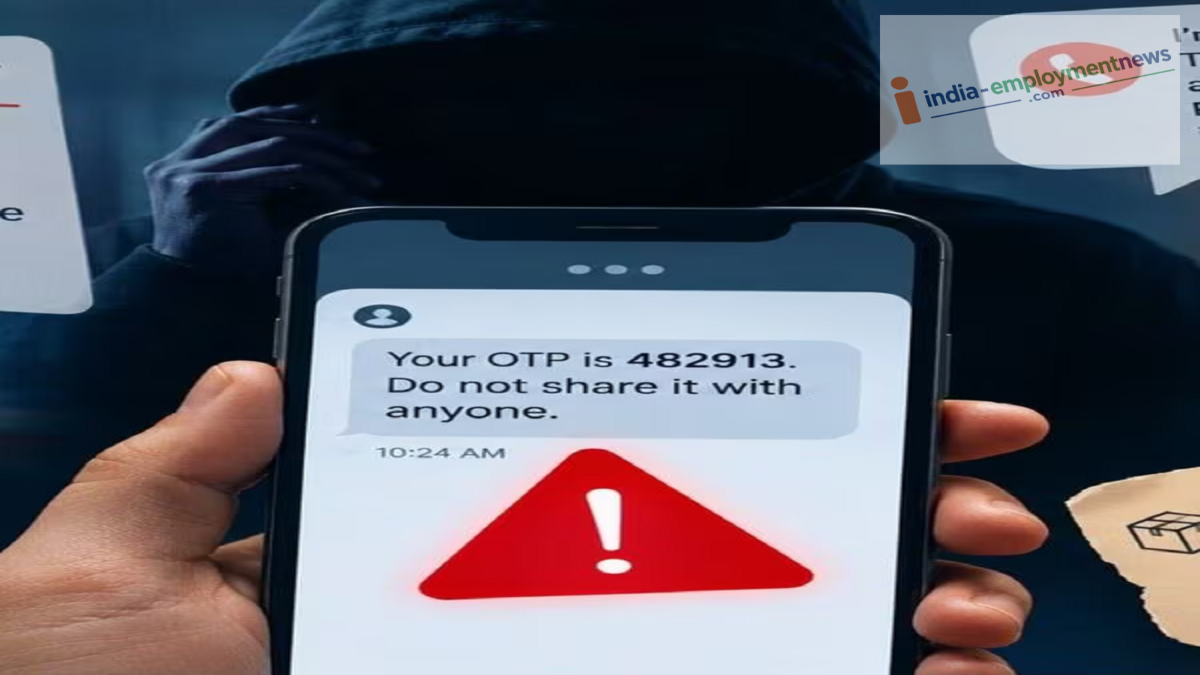
Cyber fraudsters are employing tactics such as fake offers, requests for OTPs to cancel parcels, and creating panic to force hasty payments. Do not share OTPs, UPI PINs, or banking details; if you fall victim to fraud, report it by calling 1930.
In today’s digital age, cyber fraudsters are constantly devising new schemes to entrap people. Sometimes, they lure victims with enticing offers; at other times, they pressure individuals over the phone to claim a prize so quickly that the victim has no time to think or verify the facts. Recent incidents reveal that even educated and digitally savvy individuals can fall prey to these traps.
In fact, cyber fraudsters no longer rely solely on suspicious links or fake messages to ensnare people; they are now targeting individuals by exploiting fear, urgency, and trust.
Lure of winning an iPhone after a ₹4,000 purchase
According to reports, a working woman named ‘Prerana’ was told she had a chance to win an iPhone after making a purchase worth approximately ₹4,000 from a skincare website. While the offer sounded attractive, it turned out to be a potential fraud attempt.
Subsequently, she received a call from an unknown person. The caller claimed that her father had provided her number and asked her to transfer a specific amount of money. However, she did not send money in either instance.
The ‘unsolicited delivery’ ruse
In another surprising incident, a man claiming to be a ‘Walmo’ delivery partner contacted a woman. He stated that a ‘Cash on Delivery’ package had arrived at her address and insisted that an OTP was required to cancel the order.
When the woman checked her shopping app, she found no such order. Despite this, the alleged delivery partner refused to take the package back and kept insisting on the cancellation OTP. They shared the OTP, but upon informing their family about the incident later, they realized that such OTPs could be used to gain access to bank accounts or sensitive financial information. They immediately changed their banking passwords and UPI PINs.
Even the educated are falling prey
The threat of cyber fraud is not limited to those with limited digital literacy. A recent study by researchers at IIT Madras revealed that even digitally savvy and highly educated individuals can fall victim to financial cyber fraud.
Fraudsters often create situations that compel individuals to make decisions out of fear, stress, or haste. Under this mental pressure, victims often overlook standard precautions.
Millions of complaints between 2021 and 2025
According to data from the Ministry of Home Affairs, over 6.58 million (65.89 lakh) complaints related to financial fraud were registered on the National Cyber Crime Portal between 2021 and 2025. These cases involved a total sum exceeding ₹55,050 crore. The report indicates that while approximately 262,000 complaints were registered in 2021, the figure rose to 2.4 million (24.02 lakh) by 2025. During the same period, the monetary value of the reported financial fraud surged from around ₹551 crore to ₹22,495 crore.
Various methods used for fraud
Cybercriminals ensnare people by fabricating various scenarios. These include intimidation tactics like “digital arrest,” issues regarding fake couriers or parcels, UPI collect requests, requests for information under the guise of KYC updates, and fraudulent investment or stock trading schemes. A common thread in these cases is that fraudsters pressure the victim into taking immediate action.
How to protect yourself from cyber fraud? Experts advise against sharing OTPs, banking passwords, UPI PINs, or other sensitive information with strangers. It is also crucial to avoid clicking on suspicious links. Vijay Pal Dalmia, a lawyer and senior partner at Vaish Associates, recommends immediately reporting any instance of cyber fraud to the National Cyber Crime Helpline (1930) or via the National Cyber Crime Reporting Portal.
Enabling multi-factor authentication can also enhance security. In the event of fraud, preserve evidence such as SMS messages, chats, emails, phone numbers, transaction receipts, and suspicious links. Additionally, immediately change your banking passwords and associated PINs.
Never provide an OTP for an unordered parcel.
If a cancellation OTP is requested for the delivery of an item you did not order, do not accept the package and under no circumstances share the OTP. Most importantly, regardless of how trustworthy the caller seems or how much they urge you to act quickly, verify the information independently first. Pausing and verifying details before sharing an OTP is one of the simplest precautions to avoid falling victim to cyber fraud.
