
Before building a house in Ghaziabad, familiarize yourself with the GDA's new rules; otherwise, your building plan could get stalled..
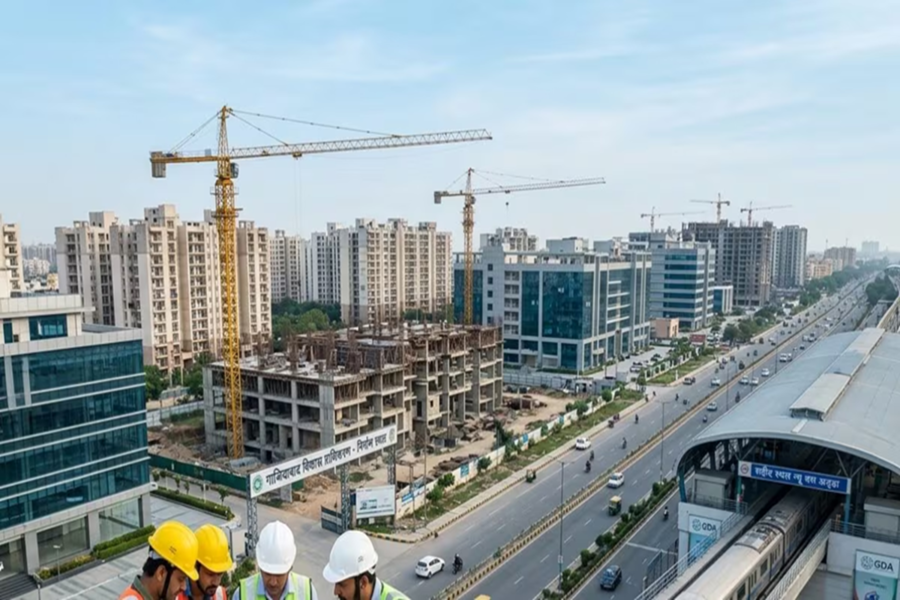
Ghaziabad News: If you are planning to build a house in Ghaziabad, it is now crucial to be aware of a new regulation. The Ghaziabad Development Authority (GDA) has implemented a major decision effective from April 1st. Under this new rule, the installation of rooftop solar panels has been made mandatory for the construction of houses on plots measuring 200 square meters or larger.
**What is the New Rule?**
According to the GDA, any individual or builder seeking approval for a building plan (map) for a plot of 200 square meters or more must designate a specific space for the installation of solar panels in advance. If the submitted plan does not clearly indicate a designated area for solar panels, it will be rejected outright.
**Security Deposit Required**
Applicants seeking plan approval will also be required to deposit a security amount. This amount has been determined based on the size of the plot, as follows:
* ₹20,000 for plots between 200 and 500 square meters.
* ₹50,000 for plots between 500 and 1,000 square meters.
* ₹100,000 (₹1 Lakh) for plots between 1,000 and 5,000 square meters.
* ₹200,000 (₹2 Lakhs) for plots exceeding 5,000 square meters.
The good news is that this security deposit will be refunded once the solar panels have been successfully installed.
**Relief for Owners of Smaller Plots**
The GDA has clarified that plots measuring less than 200 square meters do not fall under the purview of this regulation. This means that those building smaller homes are neither required to install solar panels nor are they liable to pay any additional fees.
**Why Was This Decision Taken?**
This initiative has been undertaken with the aim of transforming the city into a 'Solar City.' According to the Uttar Pradesh New and Renewable Energy Development Agency (UPNREDA), Ghaziabad possesses a solar energy generation potential of approximately 2,858 megawatts. Consequently, the government aims to ensure that by 2027, the city meets at least 10% of its total electricity demand through solar energy.
**How Will People Benefit?**
Electricity bills will be reduced. Surplus electricity can be sold back to the grid to generate income.
The environment will benefit.
Furthermore, solar energy is approximately 30% cheaper than conventional electricity.
In other words, this decision by the GDA is not only beneficial for the environment but also lighter on people's pockets. Therefore, if you are planning to build a new home, keep this regulation in mind and plan for solar panels well in advance to avoid any complications during the approval of your building plan.
Disclaimer: This content has been sourced and edited from NDTV India. While we have made modifications for clarity and presentation, the original content belongs to its respective authors and website. We do not claim ownership of the content.
