
Banking: When and how did the scam happen in IDFC First Bank, why did AU Bank face the wrath?
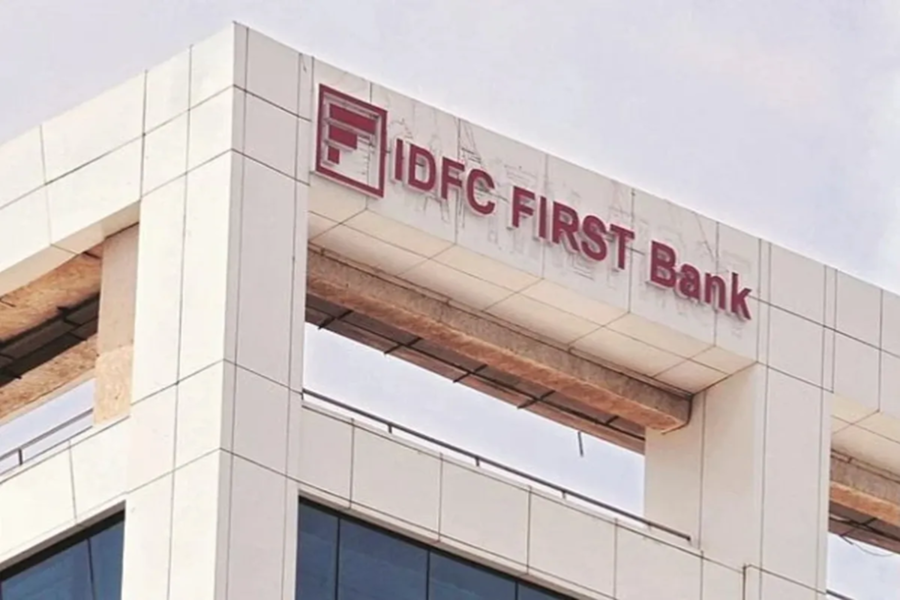
IDFC First Bank shares today recorded a massive drop of nearly 17 percent. Shares that traded at ₹83.51 a day earlier fell to ₹70 today. The reason for this significant decline is a suspected massive ₹590 crore scam. Following the discovery of this massive fraud, the bank's CEO, V. Vaidyanathan, took charge. He clarified the situation in a special conference call with analysts. He assured them that the bank would thoroughly investigate the matter. He emphasized that the fraud was confined to a single branch.
Vaidyanathan sternly clarified that they would get to the root of the matter and no culprits would be spared. Given the seriousness of the matter, the bank has appointed the world-renowned auditing firm, KPMG, to conduct an independent and impartial forensic audit of the entire matter.
Meanwhile, in a joint press conference with Finance Minister Nirmala Sitharaman regarding the IDFC First Bank fraud, RBI Governor Sanjay Malhotra stated that they are continuously monitoring the situation and that there are currently no major or system-level problems. The bank maintains sufficient capital.
How was the ₹590 crore scam revealed?
On Sunday, IDFC First Bank itself disclosed the details of this massive ₹590 crore fraud. This fraud was committed by bank employees and some outsiders. Most shockingly, this fraud occurred in accounts opened by the Haryana government.
Immediately following this revelation, the Haryana government took strict action. The government has blacklisted (de-empanelled) IDFC First Bank for government work with immediate effect. The state's Finance Department has issued an official circular clarifying that no government transactions will be conducted with this bank until further notice.
This entire fraud was exposed when a Haryana government department requested the closure of its accounts. The department had also instructed the account closures to be completed and funds transferred. During this fund transfer and account closure process, the bank discovered significant discrepancies in the account balances.
Haryana government institutions had been complaining to the bank since February 18th about mismatches in their account balances. Addressing the situation, IDFC First Bank has suspended four officials with immediate effect. The bank has informed all regulators about the entire matter.
The bank has also filed a formal police complaint. The process of lien marking, or freezing, accounts in other banks where the fraudulent funds were transferred has also been initiated. The bank is working to compensate for this loss and take action against the culprits in every possible way.
This amount is significant for IDFC First Bank.
International brokerage firm Nomura has released a detailed analytical report on this matter. Nomura states that the amount under investigation is significant for the bank. This amount represents approximately 28 percent of IDFC First Bank's projected profit for FY 2026, representing a significant setback.
According to Nomura, this scam will also impact the bank's CET-1 capital ratio, which measures its financial strength. It is expected to decline by 19 basis points (bps). It should be noted that as of December 2025, this ratio was at a strong level of 14.23 percent.
The final financial loss will depend on how much money is recovered through legal proceedings and how much is recovered from the entities whose accounts have been frozen. Nomura has expressed serious concerns about the bank's governance and branch-level controls following this incident.
While this case appears to be limited to a single branch, it certainly raises questions about internal control systems. Banks typically protect their customers' interests in deposit fraud cases like this. Banks offset this loss from their profit and loss accounts, requiring full provisioning.
For banks with a business model based on retail deposits, their market reputation is crucial. Nomura believes that the bank's shares may remain under significant pressure until a clear forensic audit report is released. However, the bank has assured its customers that their accounts are completely safe.
AU Small Finance Bank is also in trouble, shares fall sharply
The impact of this strict action by the Haryana government is not limited to IDFC First Bank. The government has also removed AU Small Finance Bank from government business with immediate effect. As soon as this news reached the market, the bank's shares fell by nearly 7 percent on the BSE by 11:20 am on Monday.
Shares of AU Small Finance Bank fell to ₹957.25. However, AU Small Finance Bank has categorically denied any involvement in fraud or wrongdoing. The bank clarified its position in a regulatory filing late Sunday night. It stated that the matter has not had any financial impact on the bank.
What will be the impact on AU Bank customers?
The bank has informed that the disputed account was closed on January 15, 2026, on the instructions of a government department. Following the closure, the remaining ₹25 crore (approximately $250 million) and all interest accrued on the account were returned to the original private bank. The bank is fully prepared to cooperate.
AU Small Finance Bank has clarified that, based on the facts received so far, there is no indication of any fraud on the bank's part. Nevertheless, to ensure transparency in the entire process, the bank has initiated an internal review. Some employees have also been removed from duty during the investigation.
According to data, the Haryana government's total deposits with AU Small Finance Bank were ₹735 crore (approximately $735 million). Following the blacklisting, this amount has decreased to ₹538 crore (approximately $538 million) by February 21, 2026. This amount is only 0.4 percent of the bank's total deposits as of December 31, 2026, which is not a big risk for the bank.
Disclaimer: This content has been sourced and edited from TV9. While we have made modifications for clarity and presentation, the original content belongs to its respective authors and website. We do not claim ownership of the content.
