
Bank Account Safety: If money is automatically deducted from your account, take these steps immediately..
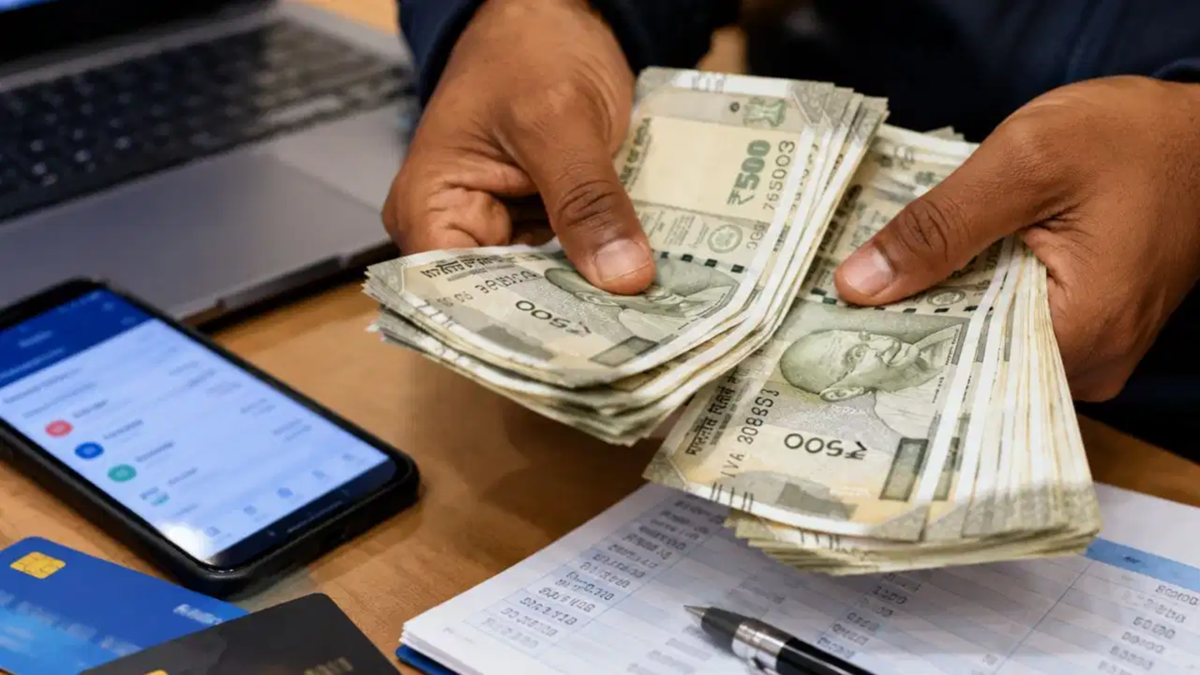
Banking Fraud Refund Process: In this era of digital banking, cases of fraud involving bank accounts are frequently coming to light. A highly alarming incident recently occurred at a branch of Punjab National Bank (PNB) in Greater Noida, where crores of rupees vanished from customers' accounts—including funds held in fixed deposits (FDs)—without any prior notification or alert. If money is deducted from your bank account without your consent, there is no need to panic. Under the regulations of the Reserve Bank of India (RBI), customers are guaranteed protection and a full refund in such instances—provided they take the right steps at the right time.
Take these three immediate actions if money is deducted from your account:
If funds are suddenly stolen from your account, notify your bank immediately. File a fraud complaint through the bank’s official customer care number, mobile app, or website. Simultaneously, request the bank to freeze your account or block debit transactions to prevent any further unauthorized withdrawals. Secondly, ensure you preserve all evidence. Keep a record of the reference number provided upon filing the complaint, any SMS or email alerts regarding the transactions, your bank statements, and relevant screenshots. Thirdly, reach out to the cyber helpline. Report the financial fraud immediately by calling the National Cyber Crime Helpline at 1930, or by registering your complaint on the portal: cybercrime.gov.in. If you are unable to get through to 1930, notify your bank immediately without wasting any time.
According to RBI guidelines, a customer's liability in cases of fraud depends on how promptly they report the incident. If the fraud occurs due to the bank's negligence or a system malfunction—such as the internal irregularities seen in the recent PNB case—the customer is not held at fault. In such scenarios, the customer’s liability remains zero, regardless of when the complaint is filed. In cases where fraud occurs due to a third-party lapse—for which neither the bank nor the customer is at fault—the customer bears no liability. The only condition is that the customer must notify the bank within 3 working days of receiving an alert. In such instances, the bank is required to refund the entire amount.
What happens if a complaint is delayed or an OTP is shared?
If a customer reports the fraud between 4 and 7 working days after it occurs, their liability becomes limited. In such cases, the customer may have to bear a loss ranging from a maximum of ₹5,000 to ₹25,000—depending on the type of account—or the actual amount of the fraud, whichever is lower. If the complaint is filed after 7 working days, the customer's liability is determined according to the bank’s board-approved policy. However, if the loss results from the customer's own negligence—such as sharing an OTP, PIN, or password with someone else—the customer must bear the entire loss incurred up to the point the complaint is filed. Nevertheless, any further loss occurring after the complaint has been lodged with the bank will be covered by the bank.
How long does it take to recover funds deducted from an account?
The RBI’s guidelines regarding refund timelines are very clear. In cases involving zero or limited liability, the bank must provide a 'provisional credit'—a temporary deposit—into the customer's account within 10 working days of receiving the complaint. This credit is considered effective from the date the funds were originally deducted from the account. Furthermore, in cases of fraud involving savings accounts or debit card accounts, the bank must ensure that the customer does not suffer any loss of interest. The bank is required to complete its investigation and reach a final resolution of the complaint within a maximum of 90 days. If the bank fails to resolve the matter within this 90-day period, it must provide full compensation to the customer.
Disclaimer: This content has been sourced and edited from TV9. While we have made modifications for clarity and presentation, the original content belongs to its respective authors and website. We do not claim ownership of the content.
