
Are You Making These 4 Financial Mistakes? Why Middle-Class Families Struggle to Save Money
For many middle-class families, earning a stable income and working hard for years does not always translate into strong savings or financial security. Despite regular salaries and occasional bonuses, bank balances often remain low. The reason is rarely luck—it’s usually spending habits and financial decisions.
In the pursuit of a comfortable lifestyle or social status, many people unknowingly fall into financial traps that prevent wealth creation. Understanding these common mistakes can help you take better control of your money and build long-term financial stability.
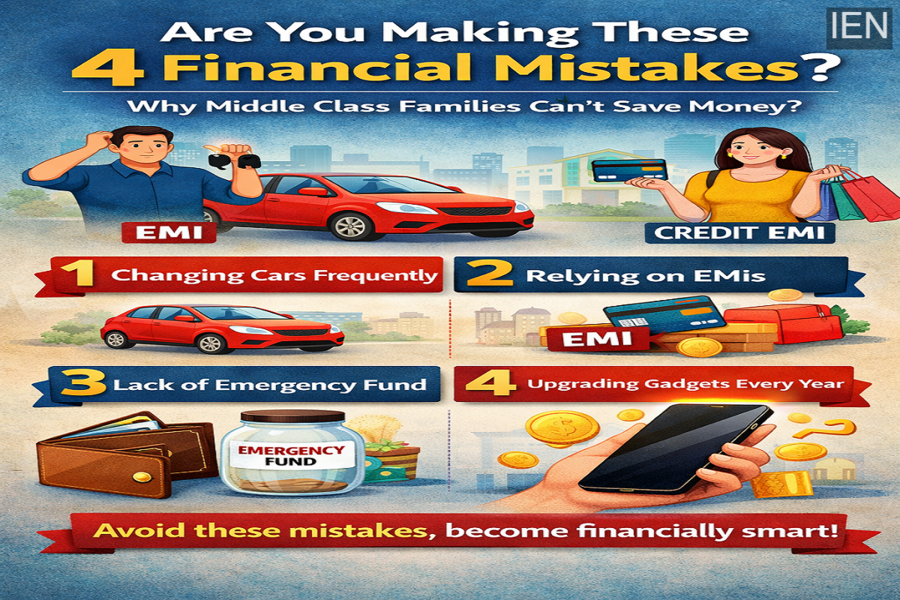
Here are four major financial mistakes that often stop middle-class families from growing their wealth.
1. Frequently Upgrading Cars Without Need
One of the most common mistakes is treating cars as a status symbol rather than a necessity. As soon as income increases or a bonus arrives, many people rush to upgrade their vehicle by taking a large loan or EMI.
However, a car is a depreciating asset. The moment it leaves the showroom, its value drops by 20–30%. Over time, its worth keeps declining, while you continue paying EMIs and interest.
Instead of upgrading frequently, it is wiser to use a vehicle for a longer period and avoid unnecessary debt. This simple step can significantly improve your financial health.
2. Over-Reliance on EMI and Credit Purchases
“Buy now, pay later” has become extremely popular, making it easy to purchase everything—from electronics to vacations—on monthly installments.
While small EMIs may seem manageable, they add up quickly. When you rely heavily on credit cards or installment plans:
-
You pay additional interest and processing fees
-
Your future income gets locked into repayments
-
Your savings potential decreases
Over time, this habit drains your finances without you realizing it. It’s always better to prioritize savings first and avoid unnecessary debt.
3. Not Having an Emergency Fund
Many middle-class households spend most of their income on daily expenses and EMIs, leaving no room for emergency savings.
An emergency fund is essential for unexpected situations like:
-
Medical emergencies
-
Job loss
-
Urgent family needs
Without a financial cushion, people often turn to high-interest personal loans or gold loans, which can push them into long-term financial stress.
Experts recommend maintaining at least 3–6 months’ worth of expenses as an emergency fund to stay financially secure.
4. Spending on Unnecessary Gadget Upgrades
In today’s digital age, gadgets like smartphones have become a status symbol. Many people upgrade their phones every year—even when the current device is working perfectly fine.
High-end gadgets, especially smartphones, lose value quickly. A phone worth ₹1 lakh today may be worth half within a year. This means:
-
You lose money due to depreciation
-
You miss out on potential investment opportunities
If the same amount were invested wisely, it could grow over time instead of losing value.
Why Middle-Class Savings Often Struggle
The root cause behind these mistakes is often the desire to maintain a certain lifestyle or appear financially well-off. However, real financial stability comes from:
-
Controlled spending
-
Smart investments
-
Long-term planning
Avoiding these common errors can help you build wealth gradually and achieve financial independence.
Final Thoughts
Financial success is not just about how much you earn—it’s about how wisely you manage your money. By avoiding unnecessary expenses, limiting debt, and prioritizing savings, middle-class families can significantly improve their financial future.
Start by identifying your spending habits and making small changes today. Over time, these decisions can make a big difference in building lasting wealth.
