
Are paper notes a thing of the past? RBI Governor reveals when plastic notes will be introduced in the country..
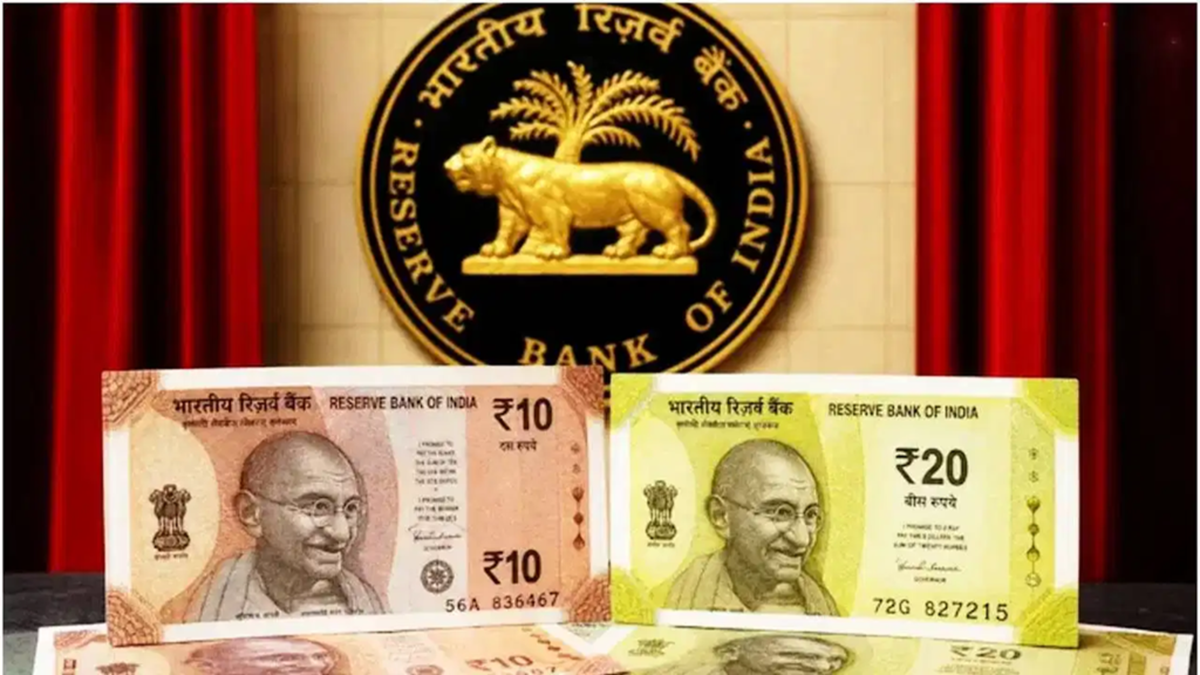
RBI official Sanjay Malhotra stated on Wednesday that plastic currency notes could enter circulation in India by the beginning of the next financial year, provided the field trials proceed according to plan. Speaking at a media briefing following the Monetary Policy Committee (MPC) meeting, Malhotra mentioned that the RBI plans to introduce polymer banknotes early in the next fiscal year once the field trials are concluded.
Malhotra stated that the target is to have these notes in circulation by the start of the next financial year, in line with the plan. Following government approval, the RBI has proposed introducing polymer notes in denominations of ₹10 and ₹20 on a trial basis. This move revives a plan that was announced over a decade ago but never implemented.
Why is the RBI introducing plastic notes?
Explaining the rationale behind this move, Malhotra noted that polymer notes are more durable than traditional paper currency, making them particularly suitable for low-denomination notes that change hands frequently. He highlighted that polymer notes offer greater durability and a longer lifespan. They are especially important for low-denomination notes, which circulate rapidly and consequently have a shorter life. Notes of lower denominations, such as ₹10 and ₹20, deteriorate much faster than high-value notes due to their frequent use in daily transactions. Polymer notes are expected to last significantly longer, thereby reducing the need for frequent replacements.
What approval has the government granted?
Last month, the government approved the RBI's proposal to introduce one billion polymer notes each of the ₹10 and ₹20 denominations for field trials. If the trials prove successful, regular issuance will be considered. The proposal moved forward when the RBI's subsidiary, Bharatiya Reserve Bank Note Mudran Private Limited (BRBNMPL), issued a tender for the polymer substrate required to print trial banknotes. The government has clarified that this move is intended solely for field trials, and there is currently no proposal to replace all existing paper currency with polymer banknotes.
Why are polymer notes being considered?
Unlike current Indian currency, which is printed on cotton-based paper, polymer notes are printed on a durable plastic substrate. International studies cited by the RBI indicate that polymer notes last longer than standard paper notes. Although they are initially more expensive to produce, their longevity means fewer notes need to be printed, transported, and replaced over time, thereby reducing the overall cost of currency management. The RBI has also noted that polymer notes are particularly suitable for low-denomination notes, as these circulate more frequently than high-value currency.
Which countries are already using them?
Polymer banknotes are already in use in over 60 countries, including Australia, the United Kingdom, Canada, New Zealand, Singapore, Malaysia, Thailand, and Vietnam. Australia became the first country to introduce polymer banknotes in 1988. Since then, many central banks have adopted this technology due to its durability, lower replacement costs, and resistance to rapid wear and tear. The International Monetary Fund (IMF) has also stated that polymer notes have a longer lifespan than paper currency and can reduce the environmental impact of currency production by minimizing the need for replacement and transportation.
Will paper notes be discontinued?
No. The government has clarified that polymer notes will coexist with the existing paper currency. The objective of these field trials is to evaluate the performance of polymer notes under Indian conditions before making any decision regarding a large-scale rollout. If the trials prove successful, the RBI is expected to begin the regular issuance of polymer ₹10 and ₹20 notes. According to the timeline outlined by Governor Malhotra, the first of these notes could enter circulation at the beginning of the next financial year.
Disclaimer: This content has been sourced and edited from TV9. While we have made modifications for clarity and presentation, the original content belongs to its respective authors and website. We do not claim ownership of the content.
