
Antyodaya Anna Yojana May Shift to Per-Person Ration System; Government Proposes New Food Distribution Rules
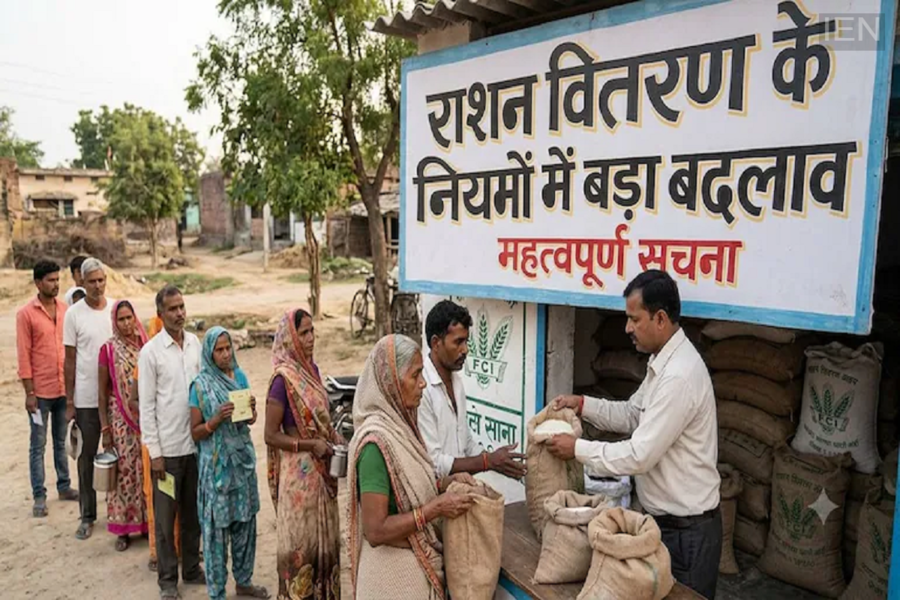
Antyodaya Anna Yojana: The Central Government is considering a major overhaul of the food grain distribution system under the Antyodaya Anna Yojana (AAY). A draft amendment to the National Food Security Act (NFSA), 2013 proposes replacing the existing fixed family quota with a per-person allocation of 7 kg of food grains every month, while retaining the maximum monthly limit of 35 kg per household.
Government Seeks Public Feedback on Proposed Changes
The Ministry of Consumer Affairs, Food and Public Distribution has released the draft National Food Security (Amendment) Bill, 2026, inviting public comments and suggestions until July 13, 2026.
If approved, the proposal would significantly change the way subsidized food grains are distributed to Antyodaya Anna Yojana beneficiaries. Instead of providing a uniform quantity of food grains to every eligible family, the revised system would calculate entitlement based on the number of family members.
The proposed amendment aims to make food distribution more equitable, particularly for households with fewer members, while maintaining the existing maximum monthly allocation.
How Does the Current System Work?
At present, every family covered under the Antyodaya Anna Yojana (AAY) receives 35 kilograms of food grains per month, regardless of whether the household has one member or several.
In contrast, beneficiaries classified under the Priority Households (PHH) category receive 5 kilograms of food grains per person every month under the National Food Security Act.
This difference has often led to concerns about fairness, as larger Antyodaya families effectively receive less food per person than many Priority Household beneficiaries.
What Is the Government Proposing?
Under the draft amendment, the government plans to shift to a per-person entitlement model for Antyodaya families.
Each eligible family member would receive 7 kilograms of food grains every month, but the total allocation for any household would remain capped at 35 kilograms.
This means that ration distribution would be calculated individually instead of assigning the same quantity to every family.
Here's How the New Formula Would Work
If the proposal is implemented, ration allocation would be calculated as follows:
-
1-member family: 7 kg of food grains
-
2-member family: 14 kg
-
3-member family: 21 kg
-
4-member family: 28 kg
-
5 or more members: Maximum 35 kg per month
In practical terms, families with five or more members will continue receiving the existing monthly entitlement of 35 kg. However, households with fewer members will receive food grains strictly according to the number of eligible individuals.
Why Does the Government Want to Change the Rules?
According to the Food Ministry, the current family-based system does not adequately reflect differences in household size.
Providing the same quantity of food grains to both small and large families can create disparities in per-person benefits. Larger households often receive a lower quantity of food per individual, while smaller families effectively receive more on a per-capita basis.
The proposed per-person model is intended to make food grain allocation more balanced and transparent by linking entitlement directly to the number of beneficiaries in each household.
Officials believe this approach would ensure a fairer distribution of subsidized food while improving the effectiveness of the National Food Security framework.
Part of a Broader Food Security Strategy
The proposed amendment is also being presented as part of the government's broader efforts to strengthen food and nutrition security across the country.
The ministry says the initiative aligns with a "Human Life Cycle Approach," which focuses on ensuring that every eligible individual has access to sufficient and nutritious food at every stage of life.
The objective is to improve the efficiency of welfare schemes while ensuring that food assistance reaches beneficiaries in a more targeted manner.
Free Food Grains Continue Under NFSA
Currently, beneficiaries under both the Antyodaya Anna Yojana (AAY) and the Priority Household (PHH) categories continue to receive wheat and rice free of cost under the National Food Security Act.
The proposed amendment does not alter the availability of free food grains. Instead, it focuses on revising the method used to determine individual household entitlements.
Key Highlights of the Proposal
-
Food grain entitlement under AAY may shift from a family-based quota to a 7 kg per person model.
-
The maximum monthly allocation will continue to be 35 kg per household.
-
Public comments on the draft amendment have been invited until July 13, 2026.
-
The proposal requires amendments to the National Food Security Act, 2013.
-
The government says the new system is designed to improve fairness and ensure more balanced distribution among beneficiaries.
If the amendment is approved after the consultation process, it will mark one of the most significant reforms to the Antyodaya Anna Yojana since the implementation of the National Food Security Act, potentially changing the way millions of eligible families receive subsidized food grains across India.
