
Amarnath Yatra 2026 begins today; find out the full details here—which route to take and what to carry..
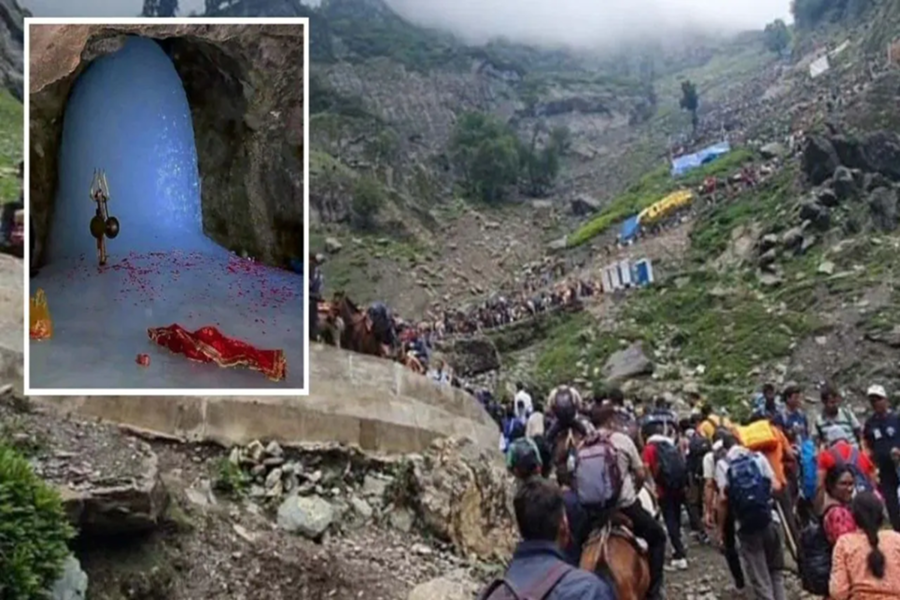
The Amarnath Yatra has commenced today, July 3rd. It will conclude on August 28, 2026; effectively, the pilgrimage will span 57 days this year. This provides ample time for devotees from across the country and abroad to seek the blessings of 'Baba Barfani'. Last year (2025), the Yatra was held from July 3rd to August 9th. Due to security concerns and heavy rainfall, the pilgrimage was limited to just 38 days last year; in contrast, devotees will have significantly more time this year.
**Two Main Routes for the Amarnath Yatra**
Devotees can travel to seek the blessings of Baba Barfani via two primary routes, depending on their convenience.
**Route 1: Jammu or Srinagar to Pahalgam (Traditional Route)**
This is considered the traditional and most popular route for the Amarnath Yatra. The distance from Jammu to Pahalgam is approximately 315 km, while the distance from Srinagar to Pahalgam is about 90–95 km.
**How to Reach?**
One can reach Pahalgam from Jammu via Udhampur, Banihal, and Anantnag; buses and taxis are easily available for this journey. Vehicles can travel up to Chandanwari (about 16 km) from Pahalgam. Beyond this point, the journey must be undertaken on foot, on a pony, or in a palanquin. Key stopovers along the way include Pissu Top, Sheshnag, and Panchtarni.
**Route 2: Jammu or Srinagar to Baltal (Shorter Route)**
If you wish to complete the pilgrimage in less time, the Baltal route is considered a better option. The distance from Jammu to Baltal is approximately 400 km, and from Srinagar to Baltal, it is about 95 km. The distance from Baltal to the holy cave is roughly 14 km. For this reason, younger pilgrims and those with limited time often prefer this route. However, while shorter, this route is also known for its relatively steeper ascent.
**RFID Tag Mandatory**
This year, an RFID (Radio Frequency Identification) tag has been made mandatory for every devotee. Entry onto the pilgrimage route will not be permitted without this.
What is an RFID tag?
It is a tag equipped with a special chip that operates on radio wave frequencies. It is used for real-time tracking. With its help, the control room can track the real-time location of pilgrims. It enables accurate crowd estimation at various locations and assists security forces and rescue teams in quickly reaching pilgrims stranded due to bad weather, landslides, or other emergencies.
Essential information before the pilgrimage
Food and *Langar* arrangements
*Langars* (community kitchens) are set up at various points along the route, providing pilgrims with free food, drinking water, and other essential amenities. Nevertheless, do carry the following items:
Biscuits or dry snacks
Toffees or chocolates
ORS packets
Regularly used medicines
Water bottle
Accommodation arrangements
Waterproof tents and insulated huts are available at the base camp and along the pilgrimage route. Pilgrims can stay in these by paying a prescribed fee.
Keep the weather in mind.
The Amarnath Yatra is entirely dependent on weather conditions. The administration opens the access control gates only when the weather is favorable. Therefore, adhere to the scheduled timings and follow the administration's instructions.
Checklist before setting out on the pilgrimage
Keep your registration and permit with you.
Ensure you obtain the RFID tag and wear it.
Carry warm clothes, a raincoat, and sturdy trekking shoes.
Pack light yet energy-rich food and essential medicines.
Begin the journey only after checking weather updates and administrative advisories.
Disclaimer: This content has been sourced and edited from NDTV India. While we have made modifications for clarity and presentation, the original content belongs to its respective authors and website. We do not claim ownership of the content.
