
AI Is Filing Tax Returns Now? Viral Claude Prompt Sparks Debate Over the Future of ITR Filing
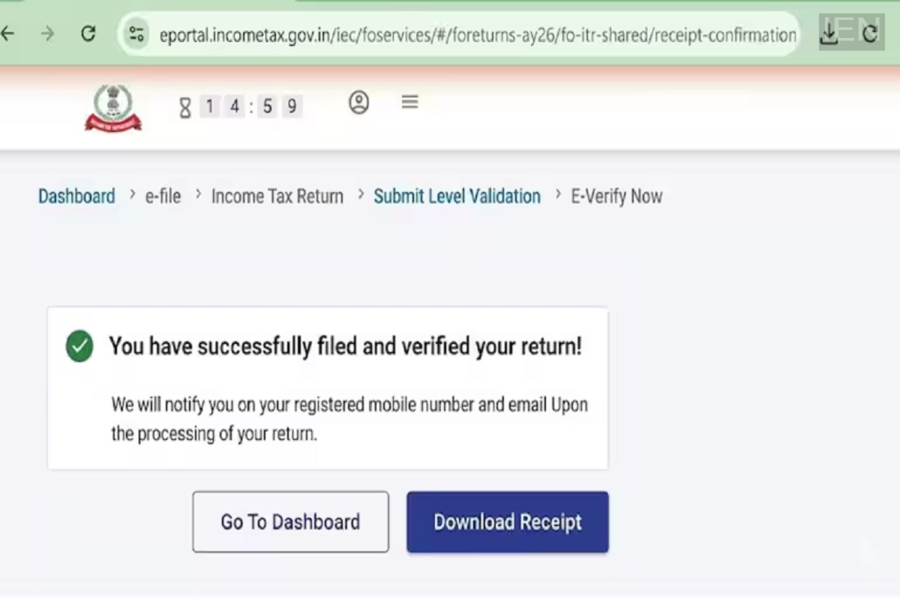
Professionals Turn to AI for Income Tax Returns, but Privacy Concerns Trigger Heated Discussion Online
Artificial intelligence is rapidly expanding beyond content creation and coding into areas once considered the exclusive domain of financial and tax professionals. During the ongoing tax filing season in India, several professionals have reported using AI assistants to prepare and file their Income Tax Returns (ITR), igniting a wider debate about whether AI could transform tax compliance in the future.
The discussion gained momentum after users shared detailed experiences of using Anthropic's AI assistant, Claude, to navigate complex tax procedures. While many praised the technology for simplifying the filing process, others raised concerns about data privacy, security, and the risks of relying too heavily on AI for financial decisions.
Professionals Describe AI as a Virtual Tax Consultant
One of the most talked-about experiences came from a data security professional who described using Claude to assist with tax filing.
According to the user, interacting with the AI felt similar to having a Chartered Accountant sitting alongside them throughout the process. Rather than simply providing answers, the AI reportedly explained tax concepts, guided users through filing requirements, and clarified the purpose of different sections within tax forms.
The experience has attracted attention because it highlights how AI tools are evolving from simple chatbots into interactive assistants capable of helping users understand complex administrative tasks.
NRI Executive Says AI Helped Him Understand the Entire Process
Another example came from a senior executive working in the United States who used an AI assistant while filing an Indian tax return.
The executive explained that filing taxes as a Non-Resident Indian (NRI) had traditionally been a frustrating experience involving document exchanges, multiple consultations, and unfamiliar tax terminology.
Instead of merely automating the filing process, the AI reportedly helped explain:
-
Why specific fields existed in the tax forms
-
What information needed to be entered
-
How different income categories are treated
-
Which details should be verified before submission
-
How to handle issues arising on the tax portal
The user noted that the experience felt educational rather than transactional, helping them better understand tax compliance instead of simply completing paperwork.
Advanced AI-Assisted Filing Draws Attention
The discussion intensified after a Bengaluru-based information security specialist shared a more advanced use case involving AI-assisted tax filing.
According to the professional, the AI was used to analyze Form 16 documents, compare information with the Annual Information Statement (AIS), identify discrepancies, handle income from multiple employers, and assist in navigating errors encountered during the filing process.
The user also shared details of a custom AI prompt used through an AI automation framework, sparking significant interest among technology enthusiasts and finance professionals.
The example fueled conversations about whether AI assistants could eventually become an accessible alternative for individuals with straightforward tax situations.
Data Privacy Concerns Quickly Surface
While many users were impressed by the capabilities of AI tools, others focused on a different issue: data security.
Tax returns contain highly sensitive personal information, including:
-
PAN details
-
Salary information
-
Bank account records
-
Investment disclosures
-
Property and asset information
-
Tax identification data
Critics argued that uploading such information to AI systems could create potential privacy risks if users are not fully aware of how their data is stored, processed, or protected.
Several social media users questioned whether sharing tax documents with AI platforms might expose confidential financial information to unnecessary risks.
What Users and AI Providers Say About Security
Supporters of AI-assisted filing responded by emphasizing that security practices vary depending on how the technology is used.
Some users noted that they retained full control of the process, reviewed every step manually, and did not blindly accept AI-generated recommendations.
Meanwhile, AI providers generally state that user conversations are encrypted and that customer data is not used for model training without appropriate consent or policy permissions. However, privacy policies can differ between platforms, making it important for users to understand the terms before sharing sensitive documents.
Experts recommend reviewing privacy settings carefully and avoiding the upload of confidential information unless users are confident about the platform's security standards.
Can AI Replace Chartered Accountants?
Most tax and technology experts believe the answer is not yet.
While AI can significantly improve productivity, explain tax concepts, organize documents, and identify common filing issues, it still has limitations.
Large language models can occasionally produce inaccurate information, misunderstand context, or overlook tax-specific nuances that experienced professionals would recognize.
As a result, experts recommend viewing AI as an assistant rather than a complete replacement for qualified tax advisors.
For straightforward returns such as salaried taxpayers filing simple ITR forms, AI may help streamline the process. However, cases involving business income, capital gains, foreign assets, tax disputes, or complex deductions may still require professional review.
Why More Taxpayers Are Exploring AI
Several factors are driving interest in AI-assisted tax filing:
Simplified Process
Users can receive guidance instantly without scheduling consultations or waiting for responses.
Better Understanding
AI can explain tax rules and compliance requirements in plain language.
Cost Savings
Individuals with simple tax situations may reduce reliance on paid professional services.
Faster Resolution
Many routine questions can be answered immediately, helping taxpayers navigate filing portals more efficiently.
Growing Digital Adoption
As tax systems become increasingly digital, AI tools are emerging as a natural extension of online financial services.
The Future of AI in Tax Compliance
The growing use of AI during the 2026 tax filing season highlights a broader shift in how individuals interact with financial services. While the technology is unlikely to replace tax professionals entirely, it is increasingly becoming a valuable support tool for research, document analysis, and compliance assistance.
As AI capabilities continue to evolve, the debate will likely focus not only on convenience and efficiency but also on privacy, accountability, and the need for human oversight in critical financial decisions.
For now, experts agree on one point: AI can be a powerful assistant, but taxpayers should always review information carefully and seek professional advice when dealing with complex tax matters.
