
A ₹2 lakh credit card bill or a ₹5 lakh personal loan? Find out which one you should pay off first..
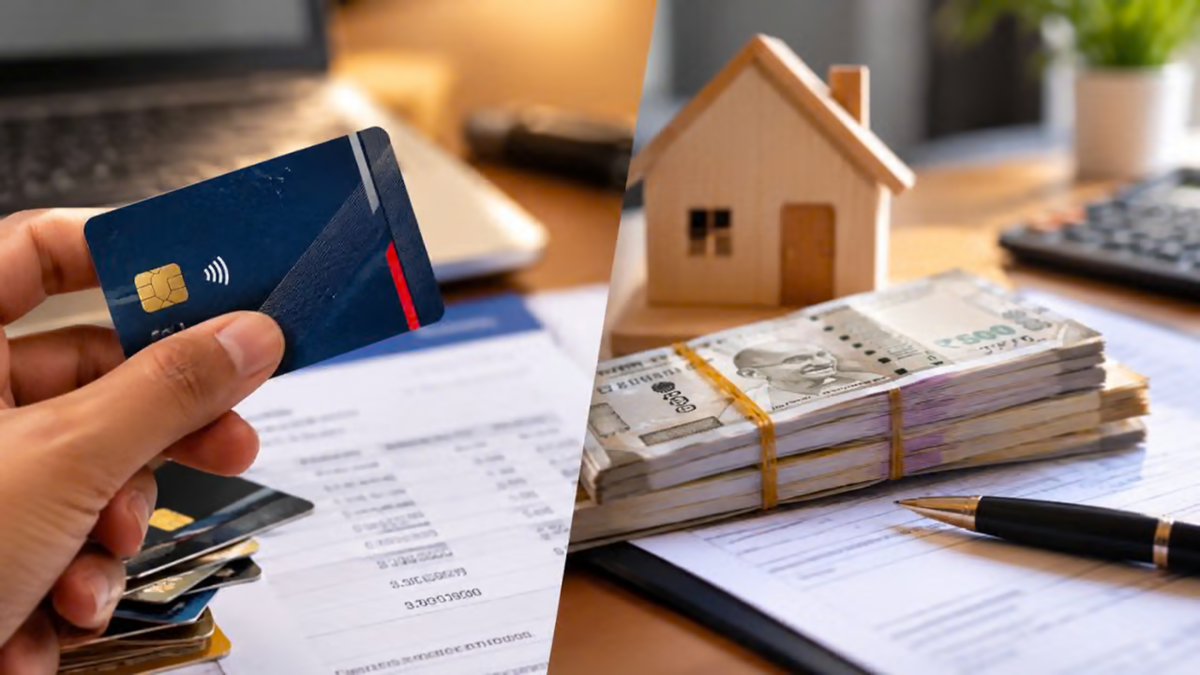
Personal Loan vs. Credit Card: Nowadays, people often borrow money to meet their financial needs, with the use of everything from personal loans to credit cards becoming commonplace. However, the real problem arises when you find yourself burdened with multiple types of debt simultaneously. Suppose you have an outstanding credit card bill of ₹2 lakh and, at the same time, a personal loan of ₹5 lakh to repay. When monthly EMIs and hefty bills come due, your entire monthly budget gets disrupted. In such a scenario, the biggest question is: which debt should you pay off first? Most people make this decision based on the loan amount; they assume that since the ₹5 lakh loan is larger, it should be cleared first. However, financial experts hold a completely different view. They believe that a debt repayment strategy should not rely solely on the outstanding amount; factors such as interest rates, repayment terms, and the impact on your credit profile are crucial.
Interest Rate Determines Your Priority
The first rule of repaying any debt is to understand its interest rate. Credit card debt is significantly more expensive than a personal loan. According to Raj P. Narayanan, Founder and Executive Chairman of Zaggle, the decision should be based on the interest rate rather than the outstanding amount. Personal loans typically carry an annual interest rate of 12% to 18%. In contrast, the cost of carrying an outstanding balance on a credit card is much higher. If you fail to pay the full credit card bill on time, you could be charged a steep annual interest rate ranging from 36% to 42%. Kapil Makhija, Founder and COO of MiniEMI.ai, notes that credit card debt accumulates rapidly; consequently, a ₹2 lakh credit card debt proves to be far more expensive than a ₹5 lakh personal loan. Therefore, the priority should be to eliminate high-interest debt first. This should be treated not merely as an option, but as a crucial task.
**Avoid the 'Minimum Payment' Trap**
Credit card users often make a major mistake. When faced with a hefty bill, they pay only the minimum amount—usually 5 percent—believing they have fulfilled their obligation. Kapil Makhija points out that this is a grave error. While you may feel you have met the minimum requirement, interest continues to accrue on the outstanding balance at a rate of around 40 percent. This interest accumulates so rapidly that you can become trapped in a debt cycle that seems nearly impossible to escape. Consequently, one should always avoid paying just the minimum amount; your goal should be to clear the entire outstanding credit card balance at once.
**Impact on CIBIL Score**
Your debt repayment habits directly affect your CIBIL score. Personal loans and credit cards impact your credit profile in different ways. Consistently utilizing a large portion of your credit card limit is considered 'high utilization'; maxing out your limit every month causes your credit score to plummet rapidly. Personal loans, however, are a different matter. Paying your personal loan EMIs on time strengthens your credit profile and improves your CIBIL score. Therefore, the prudent approach is to ensure your personal loan EMIs are paid without delay.
**A Smart Way to Get Out of Debt**
Developing a solid strategy is essential to avoid financial stress. Start by determining exactly how much money you have left over each month. Maximize your savings by cutting down on unnecessary expenses within your budget. Apply these leftover funds or any bonuses directly toward your credit card bill. If you do not have a lump sum available and your credit card bill has ballooned, you can consider another option: converting your substantial outstanding balance into low-interest EMIs. This will save you from steep interest rates—which can reach as high as 40 percent—and make repaying the debt easier.
Disclaimer: This content has been sourced and edited from Money Control. While we have made modifications for clarity and presentation, the original content belongs to its respective authors and website. We do not claim ownership of the content.
