
A Lucrative Career in the Merchant Navy After Class 12: High Salaries and Global Travel—Here’s How to Become an Officer
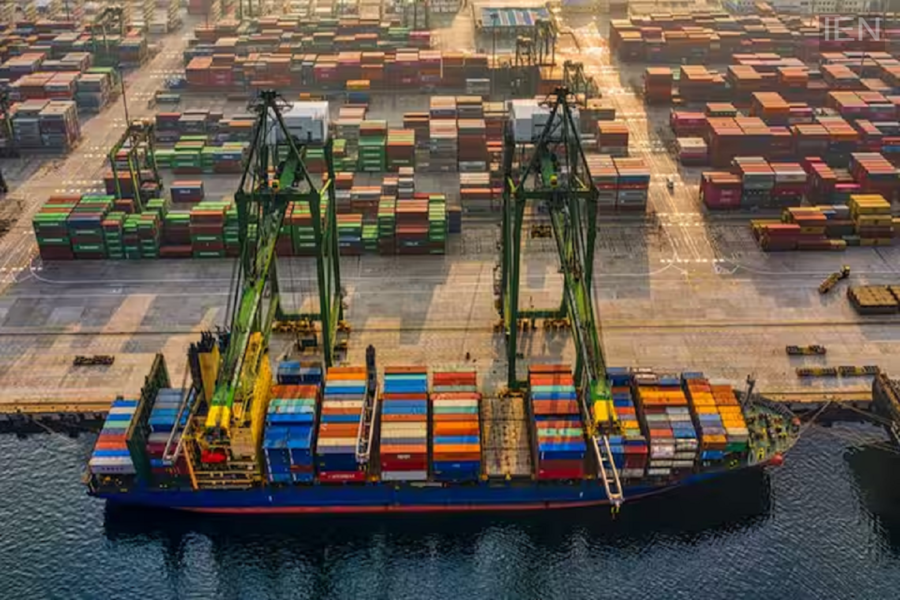
The Merchant Navy is a commercial sector, not a military service like the Indian Navy. Its officers are responsible for the operation and navigation of cargo ships, as well as the maintenance of electrical systems and overall ship safety.
Merchant Navy Career: If you are looking for a career after Class 12 that offers a handsome starting salary, the chance to work in various countries, and opportunities to build a career with international companies, the Merchant Navy is an excellent choice. India is one of the world's largest suppliers of trained seafarers, and a large number of Indian youths are building careers in this field every year.
Approximately 1.9 million seafarers work in the global shipping industry, and 80 to 90 percent of global trade is transported via ships. Consequently, there is a constant demand for trained Indian officers. If you wish to pursue a career in this field, here is everything you need to know about eligibility, courses, the admission process, salaries, and job opportunities.
The Merchant Navy is a commercial sector, not a military service like the Indian Navy. Its officers are responsible for the operation and navigation of cargo ships, as well as the maintenance of engine systems, electrical equipment, and ship safety. These ships transport goods—such as oil, containers, vehicles, food grains, chemicals, and other commodities—from one country to another.
There are primarily three types of officers in the Merchant Navy. The first is the Deck Officer, responsible for navigation, route planning, cargo operations, and safety. The second is the Marine Engineer, who oversees engine machinery, generators, and propulsion systems. The third is the Electro-Technical Officer, who manages the ship's electrical systems, automation, and communication divisions. To qualify for the Officer Training Entry Program, candidates must have passed Class 12 from a recognized board with Physics, Chemistry, Mathematics, and English as subjects. Additionally, they must meet the institute's specific criteria regarding minimum marks, age limits, and medical fitness.
Medical examinations assess vision (including color vision), hearing ability, and physical fitness. Direct officer entry programs are not available for students from Commerce or Humanities backgrounds.
To become an officer in the Merchant Navy, candidates must pursue courses such as B.Sc. in Nautical Science, Diploma in Nautical Science, B.E./B.Tech. in Marine Engineering, Graduate Marine Engineering, or the Electro-Technical Officer course. These courses are conducted at institutes recognized by the Indian Maritime University (IMU) and the Directorate General of Shipping (DG Shipping).
Admission to most Merchant Navy institutes is based on the IMU-CET (Common Entrance Test), although this is not mandatory for every institute. Some private institutes recognized by DG Shipping offer admission based on their own selection processes or through company-sponsored tests and interviews.
Furthermore, experts consider securing sponsorship from a shipping company prior to admission highly important. Under sponsorship, companies select students through written exams, interviews, and medical tests, and provide opportunities for mandatory on-board sea training upon course completion.
The Merchant Navy offers attractive salaries right from the entry level, with remuneration varying based on the company, the type of vessel, and experience. For instance, a Deck Cadet receives a monthly stipend of approximately ₹30,000 to ₹80,000. A Third Officer earns between ₹1 lakh and ₹3 lakh per month. Similarly, a Second Officer earns ₹2 lakh to ₹4 lakh, a Chief Officer ₹4 lakh to ₹8 lakh, and a Captain earns between ₹6 lakh and ₹10 lakh (or more) per month.
