
8th Pay Commission: Will Minimum Salary Jump to ₹69,000? Here’s What the Proposal Really Means
Big Salary Hike Demand Under 8th Pay Commission—Reality or Expectation?
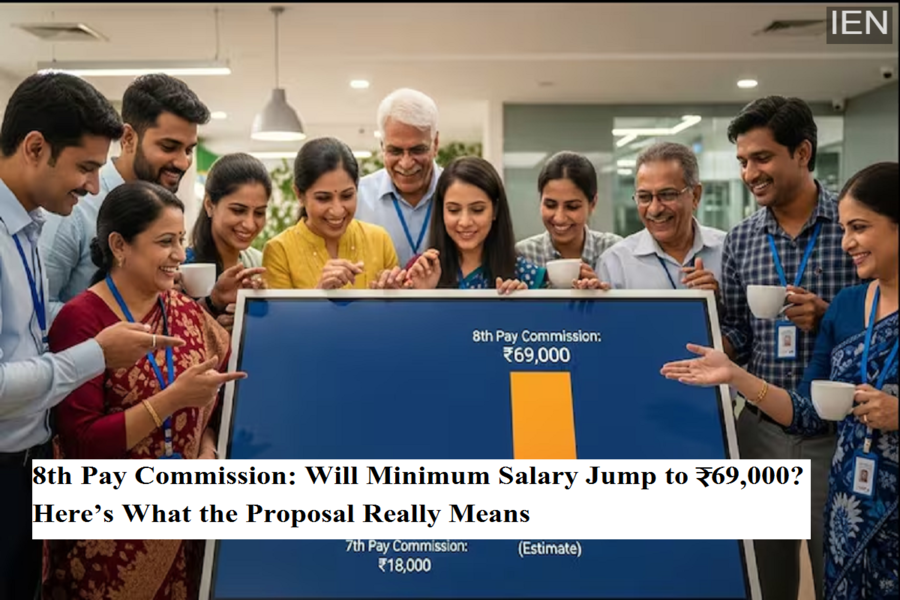
A major discussion is gaining traction around the upcoming 8th Pay Commission, with employee unions proposing a significant hike in the minimum basic salary of central government staff. The demand suggests increasing the current base pay from ₹18,000 to ₹69,000—a sharp jump that has sparked both excitement and skepticism.
If implemented, this would mean a direct increase of ₹51,000 in minimum basic pay, marking one of the biggest salary revisions in recent years. However, the big question remains: will the government approve such a substantial hike?
What Is the Basis of the ₹69,000 Salary Demand?
The proposal has been put forward by the National Council–Joint Consultative Machinery, which represents central government employees. The demand is based on a suggested fitment factor of 3.83, which plays a crucial role in determining salary and pension revisions.
A fitment factor essentially multiplies the existing basic salary to arrive at the revised pay. If the proposed 3.83 factor is accepted, the minimum salary could theoretically rise to ₹69,000.
Why Are Employees Seeking a Higher Pay Scale?
Employee organizations have cited two major reasons behind this demand:
- Revised Consumption Standards:
The calculation now considers dietary guidelines set by the Indian Council of Medical Research, which recommend a daily intake of around 3,490 calories. This has significantly increased the estimated cost of food and nutrition. - Larger Family Size Consideration:
Earlier, salary calculations were based on a three-member household. Now, the assumption has shifted to a five-member family, increasing overall living expenses such as food, housing, healthcare, and education.
These updated benchmarks reflect rising inflation and the growing financial burden on families, strengthening the case for higher wages.
Looking Back: What Happened in the 7th Pay Commission?
Under the 7th Pay Commission, the minimum basic salary was set at ₹18,000. At that time, employee unions had demanded a fitment factor of 3.71, but the government approved only 2.57.
This precedent indicates that while demands may be high, the final decision often involves a compromise. A similar pattern could emerge in the 8th Pay Commission as well.
How Is Minimum Salary Calculated?
To arrive at a realistic minimum wage, employee bodies analyze the cost of essential goods such as:
- Food items (grains, vegetables, fruits)
- Milk and dairy products
- Daily-use essentials and utilities
Prices are typically averaged across major cities like New Delhi, Mumbai, Pune, Hyderabad, and Bengaluru to estimate a fair cost of living.
Will the Government Approve the Full Hike?
While the proposal is ambitious, experts believe that the government may not fully accept the ₹69,000 figure. Fiscal constraints, budget considerations, and economic conditions will play a key role in the final decision.
A partial increase or a lower fitment factor is more likely, based on historical trends.
Timeline: When Will the New Salary Structure Be Implemented?
The 8th Pay Commission is expected to submit its report by mid-2027. Once submitted, the government may take an additional 3–6 months to review and implement the recommendations.
If everything proceeds as scheduled, the revised salary structure could come into effect in the second half of 2027.
What This Means for Employees
- Potential Salary Boost: Even if not ₹69,000, a notable increase is expected
- Impact on Pensions: Higher fitment factor will also benefit pensioners
- Inflation Adjustment: Revised salaries may better align with rising living costs
Bottom Line
The demand to raise the minimum salary to ₹69,000 under the 8th Pay Commission reflects growing concerns over inflation and cost of living. While the proposal has generated optimism among employees, the final outcome will depend on government approval and economic feasibility. For now, it remains a possibility—not a confirmed decision.
