
8th Pay Commission Update: Deadline Extended to May 31; Big Salary Hike Demands Under Review
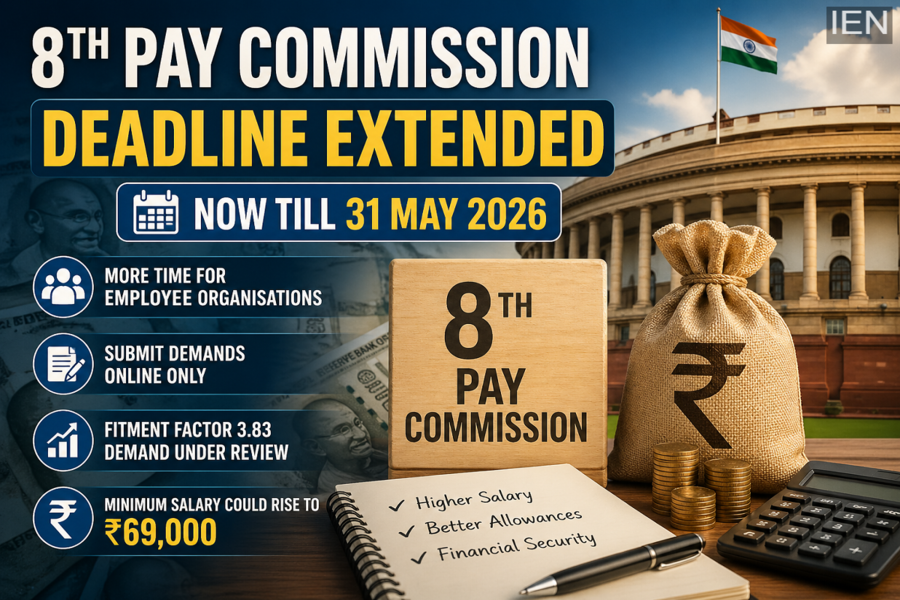
In a significant development for central government employees and pensioners, the 8th Central Pay Commission has extended the deadline for submitting memorandums to May 31, 2026. The move comes after multiple employee groups sought additional time to present their demands in detail, especially on key issues like salary revision and the fitment factor.
This extension is expected to give stakeholders—including employee unions, ministries, and pensioner associations—more time to prepare structured proposals. However, it may also delay the final decision on salary revisions, something millions of employees are eagerly awaiting.
Deadline Extended, But Rules Tightened
While the timeline has been relaxed, the process for submitting memorandums has been made more stringent. The commission has clearly stated that only online submissions through the official portal will be accepted.
This means:
- No physical (paper-based) memorandums will be considered
- Submissions via email or PDF files will be rejected
- Only authorized nodal officers from ministries, departments, and Union Territories can submit proposals in a structured format
The shift to a fully digital system aims to streamline the process, reduce paperwork, and ensure transparency. However, some organizations had initially faced technical challenges, prompting the request for more time.
Why Was the Deadline Extended?
The extension follows a meeting between the National Council (Joint Consultative Machinery) and the commission’s chairperson Ranjana Prakash Desai. Employee representatives highlighted difficulties faced by several groups in uploading memorandums within the earlier deadline of April 30.
Discussions held in Delhi between April 28 and April 30 played a crucial role in this decision. The commission acknowledged these concerns and granted an extension to ensure broader participation.
Fitment Factor in Focus: What Could Change?
Among all demands, the fitment factor has emerged as the most critical issue. This factor determines how much the basic salary will increase under the new pay commission.
The NC-JCM has proposed a fitment factor of 3.83, which could significantly raise salaries:
- Minimum Basic Salary: Expected to rise from ₹18,000 to around ₹69,000 if the demand is accepted
- Annual Increment: Proposal for a 6% yearly salary increase
- Promotion Benefits: Demand for two additional increments during promotions, potentially adding at least ₹10,000
- Gratuity: Suggestion to provide gratuity equal to one month’s salary
If implemented, these changes could lead to one of the most substantial salary revisions in recent years for central government employees.
What Happens After May 31?
Once the new deadline ends, the pay commission will begin a detailed review of all submitted proposals. The panel will analyze inputs from employee unions, government departments, and other stakeholders.
Under the leadership of Ranjana Prakash Desai, the commission is expected to:
- Conduct further consultations with key stakeholders
- Evaluate the financial impact of proposed salary hikes
- Balance employee expectations with the government’s fiscal capacity
After completing this process, the commission will submit its recommendations to the central government. The final decision on salary revisions, allowances, and implementation timelines will then be taken by the Union Cabinet.
Will Employees Have to Wait Longer?
While the extension provides more time for detailed submissions, it may also delay the final announcement of revised salaries. Employees hoping for quick implementation may need to wait longer as the review process becomes more comprehensive.
However, experts believe that a well-evaluated report could lead to more balanced and impactful reforms, benefiting both employees and the government in the long run.
Final Takeaway
The extension of the memorandum submission deadline to May 31 marks an important step in the 8th Pay Commission process. With major demands like a 3.83 fitment factor and a potential jump in minimum salary to ₹69,000 under consideration, the outcome could have a far-reaching impact on millions of employees.
For now, all eyes remain on the commission’s next steps, as stakeholders finalize their proposals and prepare for the crucial phase of evaluation that will shape future salary structures in India’s public sector.
