
8th Pay Commission: One year on—what has happened so far regarding salary, pension, and the fitment factor?
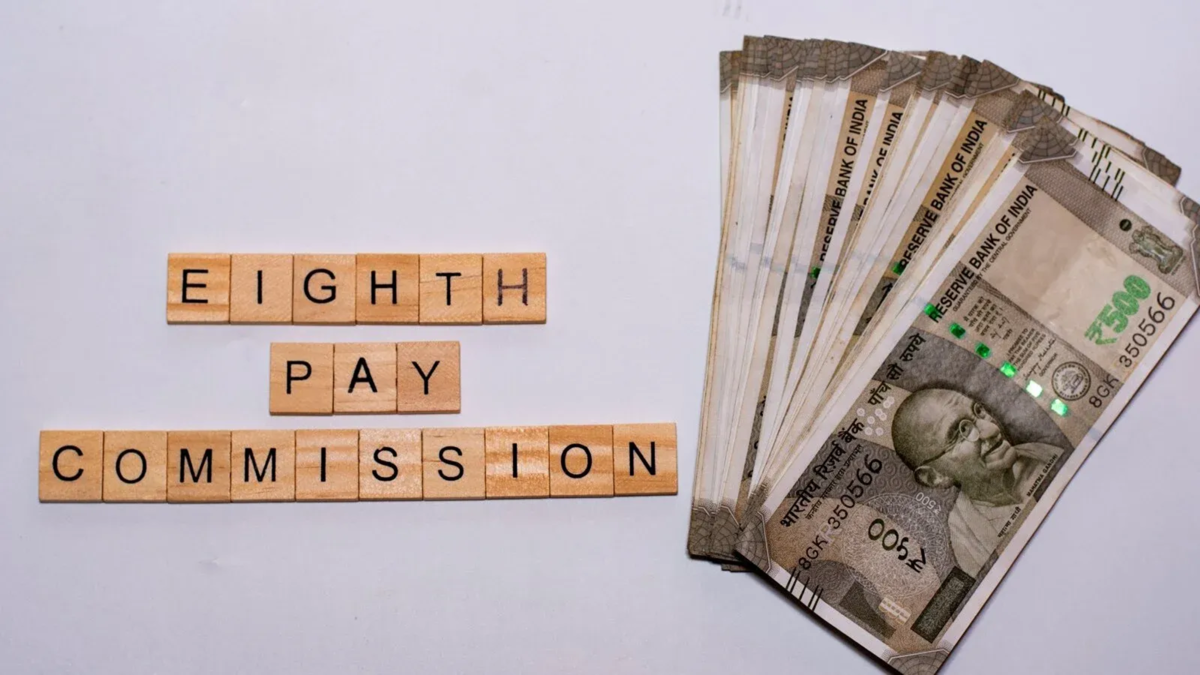
8th Pay Commission News: A full year has passed since the 8th Pay Commission was established, yet central government employees and pensioners are still eagerly awaiting an increase in their salaries and pensions. Central government employees are frequently asking about the potential fitment factor, the extent of the increase in the minimum basic salary, and the expected rise in pensions. While the government has yet to grant final approval, the Commission has accelerated its preparations. Although the government’s final decision on the fitment factor, new basic salary, and pension hikes is still pending, the Commission has taken several significant steps over the past year. Let’s look at the 5 most important updates regarding the 8th Pay Commission so far...
1. Commission to submit report by May 2027
The government constituted the 8th Pay Commission on November 3, 2025. Prior to this, on October 28, 2025, the Union Cabinet had approved the Terms of Reference (ToR) for the Commission. Justice Ranjana Prakash Desai was appointed as the Chairperson, Professor Pulak Ghosh as a part-time member, and Pankaj Jain as the Member Secretary. The Commission has been granted an 18-month timeframe to submit its report—meaning it must be submitted by May 3, 2027.
2. Questionnaire with 18 questions released
On February 5, 2026, the Commission released a questionnaire containing 18 questions. Through this, it sought suggestions from government departments, employees, pensioners, organizations, and researchers regarding issues related to salaries, pensions, and operational matters. The deadline for submission was March 31, 2026.
3. Deadline for submission of memoranda extended
Starting March 5, 2026, the Commission invited memoranda detailing demands from employees, pensioners, unions, and other organizations. These were to be submitted via the Commission’s official website and the MyGov portal. Initially, the deadline was April 30, which was subsequently extended to May 31 and then to June 15, 2026.
4. Demand for a minimum salary of ₹69,000 and a fitment factor of 3.833
In its memorandum, the NC-JCM has demanded a minimum basic salary of ₹69,000 and a fitment factor of 3.833. Furthermore, it has requested a minimum pension equivalent to 67% of the last drawn basic salary, an annual increment of 6%, revisions to HRA (House Rent Allowance) rates, and the merger of the Dearness Allowance (DA) into the basic salary once it reaches 25%.
5. Stakeholder meetings commenced in April
The Commission began holding meetings with stakeholders on April 24, 2026, starting in Dehradun. During these sessions, organizations representing central government employees and pensioners presented their demands and suggestions. The most recent meeting took place in Mumbai on October 22 and 23. The Commission may hold further meetings in the near future.
No decision yet on fitment factor and pension
The fitment factor and the new minimum basic salary are the most critical issues for employees. Under the 7th Pay Commission, a fitment factor of 2.57 was implemented, which raised the minimum basic salary from ₹7,000 to ₹18,000. It is not yet determined what the fitment factor will be this time. Meanwhile, pensioners are also awaiting an increase in their basic pension and family pension. The Commission’s mandate includes matters related to pensions and retirement benefits. However, the government has not yet provided any information regarding the new pension formula or the specific quantum of the pension increase.
Will the new salary structure be effective from January 1, 2026?
According to a government press release dated October 28, 2025, it was indicated that the recommendations of the 8th Pay Commission are expected to come into effect from January 1, 2026. However, no official order for its implementation has been issued. On August 10, 2026, the Ministry of Finance also informed the Lok Sabha that the commission had not yet submitted its recommendations to the government.
It is worth noting that the Pay Commission may submit its report by May 2027 and could also provide an interim report on specific issues, if necessary. Following this, the government will review the recommendations and make a decision. If approval is granted for retrospective implementation—effective from January 1, 2026—employees and pensioners may also receive arrears. At present, a final decision is awaited regarding the fitment factor, new salary structures, pensions, and the effective date of implementation.
Disclaimer: This content has been sourced and edited from NDTV India. While we have made modifications for clarity and presentation, the original content belongs to its respective authors and website. We do not claim ownership of the content.
