
8th Pay Commission: Not 2.28 or 2.86, certainly not 3.25 times... Central employees' fitment factor could be 1.92! How much will their salaries increase?
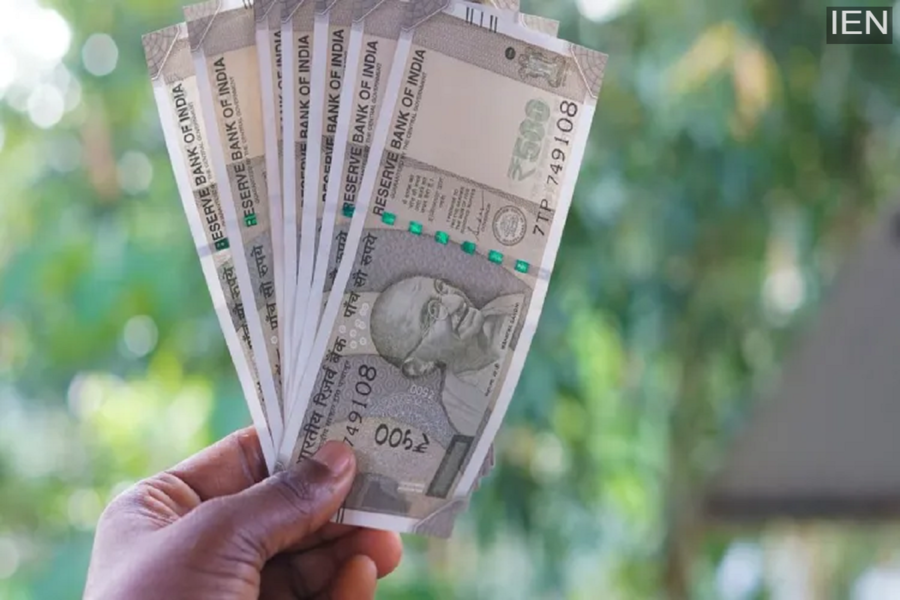
8th Pay Commission fitment factor: If we look at the average from the 2nd Pay Commission to the 7th Pay Commission, there has been a 27% increase. The total salary hike in the 7th Pay Commission was 14.27%. Now that the 8th Pay Commission has been constituted, it will be crucial to see how much the government recommends this time.
8th Pay Commission: Central employees are awaiting the revision of their salaries, the fitment factor in the 8th Pay Commission's recommendations, and what changes the new pay commission will bring for them. Many reports claim that the fitment factor will result in a significant increase in salaries. The fitment factor will be 3.25 times, 2.86 times, or 2.28 times. However, this is not the reality. It will be decided based on the circumstances, inflation, and estimated dearness allowance. Considering the current situation, the fitment factor is likely to be 1.90-1.92. Now, let's understand why this will happen and how much impact it will have on salaries.
8th Pay Commission: How much will salaries increase?
If we look at the average from the 2nd Pay Commission to the 7th Pay Commission, there has been a 27% increase. The total salary hike in the 7th Pay Commission was 14.27%. Now that the 8th Pay Commission has been constituted, it will be crucial to see how much the government recommends this time. Considering the current dearness allowance (DA), the DA could reach 60% by January 1, 2026. Currently, 58% dearness allowance is approved. If this scenario is accepted, central employees are likely to receive a salary hike of only 18% under the 8th Pay Commission. However, if there is a 24% increase in salary, the fitment factor may be higher. However, this is highly unlikely.
8th Pay Commission: What will be the fitment factor?
Now let's discuss the fitment factor. The value of the fitment factor is determined by the current dearness allowance (DA) and the salary increase decided by the government or the Pay Commission. If salary calculations are done this way, the fitment factor will be calculated based on the dearness allowance and salary increase. Let's assume a 60% increase in normal circumstances. Meanwhile, a salary increase of 18% is expected. In this situation, the fitment factor for central employees will remain at 1.90. In such a situation, the new salary will be calculated by multiplying the employee's basic salary by the fitment factor.
8th Pay Commission: Will we have to wait until 2027?
The new pay commission will be implemented from January 1, 2026. However, it will take some time for its recommendations to be finalized and implemented. Only then will it become clear what the fitment factor for central employees has been determined to be and how much the salary revision will be. However, after everything is finalized, employees will be paid from January 1, 2026. This means that employees will receive arrears for the months after the finalization. Sources believe that the recommendations may take 15 to 18 months to be implemented. According to sources, the commission will also submit an interim report before submitting its final report. However, this report is likely to be released by December 2026.
8th Pay Commission: DA calculation to change
According to sources, the government may change the base year for DA calculation when the new pay commission is implemented. Currently, the base year for AICPI-IW is 2016; it was changed in 2016 when the 7th Pay Commission was implemented. Experts also believe that the base year may be changed when the 8th Pay Commission is implemented. The logic behind this is that inflation is rising, and to address this rising inflation, the DA should be adjusted to a new base year. It's likely that the base year for dearness allowance could be 2026.
8th Pay Commission: Will the old DA be merged?
If the 8th Pay Commission is implemented by January 1, 2026, the dearness allowance will be up to 60%, given the current situation. This will already be paid into employees' salaries. However, if the base year changes, the old DA may be merged. However, the government has not yet formally stated this. This will only be decided after the recommendations of the 8th Pay Commission panel. If this happens, the dearness allowance will become zero, and the 60% DA will be merged into the basic salary.
FAQs
Q1. Will the 8th Pay Commission apply to all central employees?
A. Yes, it generally applies to all central employees and pensioners.
Q2. Does the fitment factor change with each Pay Commission?
A. Yes, a new fitment factor is determined with each commission.
Q3. Do state governments also adopt it?
A. Most states adopt it after the central government's decision.
Q4. Will salary increases be taxable?
A. Yes, the increased salary is subject to income tax.
Q5. Will DA be abolished in the 8th Pay Commission?
A. DA will not be abolished, but it can be merged into the basic salary.
Q6. When can the 8th Pay Commission be implemented?
A. It is expected to be implemented around 2027.
