
8th Pay Commission: If the Government Agrees, Employees Will Hit the Jackpot—Salaries Could Rise by Up to 283%..
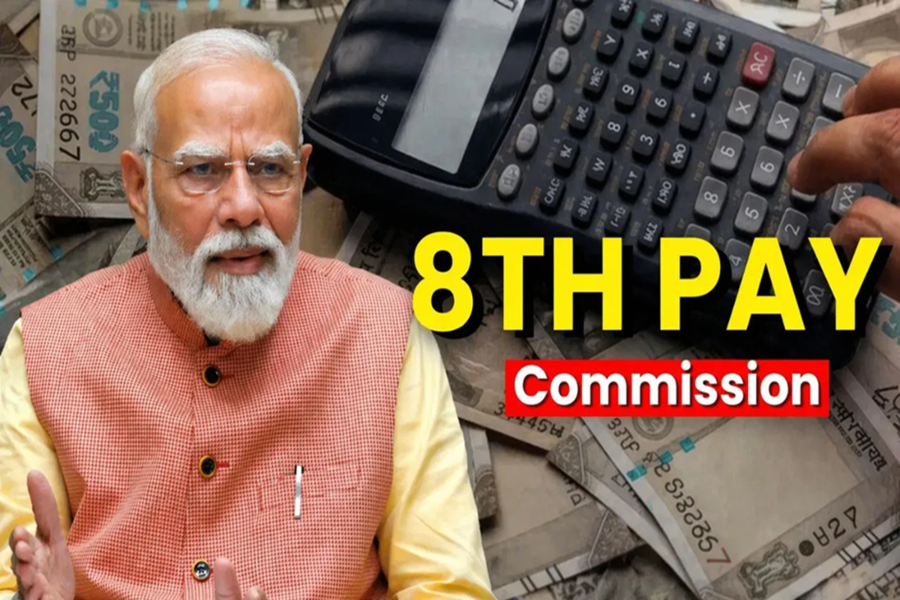
8th Pay Commission: The wait for Central Government employees and pensioners has now taken a highly intriguing turn. The first round of formal discussions between the government and employee unions regarding the 8th Pay Commission has concluded. The demands that have emerged from these talks could fundamentally alter the economic future of millions of families. Employee organizations have proposed to the government that the minimum basic salary be directly hiked from the current ₹18,000 to ₹69,000. This represents a massive one-time increase of 283% compared to the previous Pay Commission. In this era of spiraling inflation, if the government gives the green signal to this demand for a 'fitment factor' of 3.83, the fortunes of approximately 3.6 million employees and hundreds of thousands of pensioners across the country are bound to soar.
How will the Basic Salary reach ₹69,000?
The 'fitment factor' plays a pivotal role behind this historic surge. Under the 7th Pay Commission, this multiplier was fixed at 2.57. This time around, employee organizations (NC-JCM) have strongly demanded that it be raised to 3.83. The underlying math can be understood as follows: if an employee's current minimum salary is ₹18,000, multiplying it by 3.83 results in a new basic salary of ₹68,940 (approximately ₹69,000). Applying this exact same formula, the minimum pension threshold would also rise from ₹9,000 to reach the level of ₹34,470.
Why was such a massive hike deemed necessary?
The demand for this substantial increase in salary has not been made without basis. Employee representatives present a clear argument: the existing salary structure is proving to be woefully inadequate in the face of today's runaway inflation. In the contemporary world, expenses related to the internet, mobile data, and digital services are no longer luxuries but have evolved into necessities. Over the past few years, the costs associated with education, healthcare facilities, and urban living have escalated manifold. According to Shiv Gopal Mishra, Convener of the NC-JCM, employees across the Railways, Defense, Postal, Income Tax, and other civil services have proposed increasing both the basic pay and the annual increment from 3% to 6%.
**Employees Stand Firm on Old Pension Scheme (OPS) and Allowances**
The agenda of this Pay Commission meeting was not limited solely to monthly salaries. Employee unions have included the restoration of the Old Pension Scheme (OPS)—as opposed to the New Pension Scheme, which is subject to market risks—among their primary demands. Furthermore, they have advocated for significant improvements in allowances. Demands have been raised for enhanced compensation, specifically regarding House Rent Allowance (HRA), Transport Allowance, and for employees working in challenging sectors such as the Railways and Defense. The organizations also contend that, in order to effectively counter rising inflation, the Pay Commission should be constituted every five years rather than every ten years.
**When Can Employees Expect This New Salary Package?**
The 8th Pay Commission, constituted in November 2025, has a timeframe of 18 months to submit its recommendations to the government. Currently, the Commission is consulting with all relevant stakeholders, following which a comprehensive report will be prepared. Ultimately, the Union Cabinet will take a final decision on this report. Although no official date has yet been set for its implementation, a reassuring aspect for employees is that whenever the new pay structure is implemented, the associated financial benefits and arrears will be calculated and disbursed retrospectively, effective from January 1, 2026.
Disclaimer: This content has been sourced and edited from TV9. While we have made modifications for clarity and presentation, the original content belongs to its respective authors and website. We do not claim ownership of the content.
