
8th Pay Commission: How much will basic salary and HRA increase based on the fitment factor? Understand the math for Levels 1 to 13.
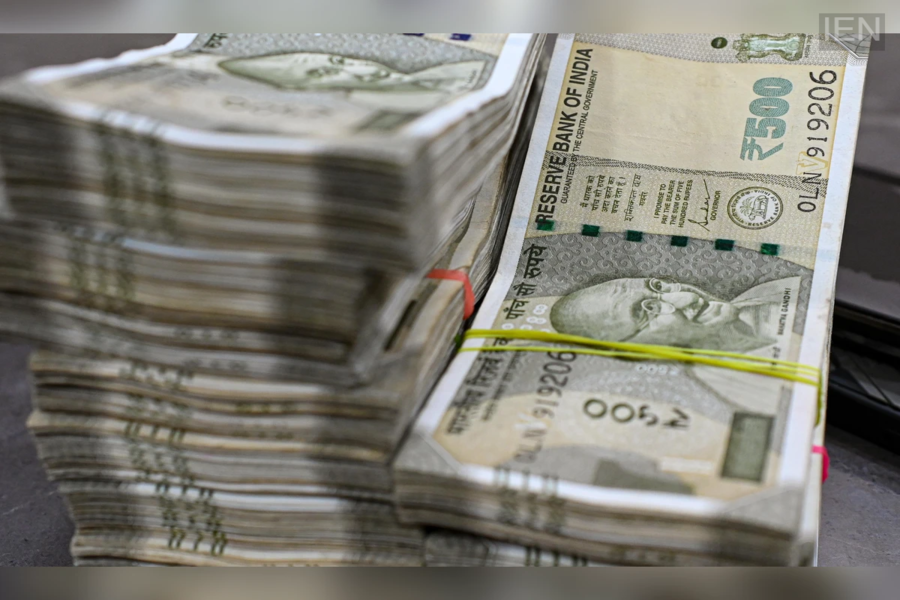
8th Pay Commission: How much will salary and HRA rise if the fitment factor is set at 2.0, 2.5, or 3.0? Learn the full calculations and salary hike projections for Levels 1 through 13.
8th Pay Commission: There is ongoing discussion among central government employees regarding the 8th Pay Commission. The most frequent questions concern the fitment factor, as it determines the extent of the increase in employees' basic salary. The fitment factor is a multiplier used to calculate the new salary by multiplying it with the existing basic pay. Media reports suggest it could range between 2.0 and 3.0. Since HRA is directly linked to the basic salary, a significant difference in the total in-hand salary is likely to be observed.
How does the fitment factor work?
Simply put: New Basic Salary = Old Basic Salary × Fitment Factor. For instance, if someone's basic salary is ₹20,000, a fitment factor of 2.0 would raise it to ₹40,000; a factor of 2.5 would make it ₹50,000; and a factor of 3.0 would bring it to ₹60,000. HRA and other allowances also increase based on this revised basic salary.
Potential salary hike for Levels 1 to 10—
| Level | Current Basic Pay (₹) | At 2.0 Fitment | At 2.5 Fitment | At 3.0 Fitment |
|---|---|---|---|---|
| Level 1 | 18,000 | 36,000 | 45,000 | 54,000 |
| Level 2 | 19,900 | 39,800 | 49,750 | 59,700 |
| Level 3 | 21,700 | 43,400 | 54,250 | 65,100 |
| Level 4 | 25,500 | 51,000 | 63,750 | 76,500 |
| Level 5 | 29,200 | 58,400 | 73,000 | 87,600 |
| Level 6 | 35,400 | 70,800 | 88,500 | 1,06,200 |
| Level 7 | 44,900 | 89,800 | 1,12,250 | 1,34,700 |
| Level 8 | 47,600 | 95,200 | 1,19,000 | 1,42,800 |
| Level 9 | 53,100 | 1,06,200 | 1,32,750 | 1,59,300 |
| Level 10 | 56,100 | 1,12,200 | 1,40,250 | 1,68,300 |
Metro services in Kanpur to remain closed today; find out when operations will resume.
How much will HRA increase?
HRA is directly linked to the basic salary; therefore, as the basic salary rises, the HRA increases as well. For instance, if an employee's HRA is 24%—
HRA on a basic salary of ₹40,000 = ₹9,600
HRA on a basic salary of ₹50,000 = ₹12,000
HRA on a basic salary of ₹60,000 = ₹14,400
In other words, the higher the fitment factor, the greater the increase in HRA.
Will the salary actually increase by this much?
Currently, all these figures are based on estimates. The actual fitment factor will be determined by the government, and that will decide the final salary. Various reports suggest a range of 2.0 to 2.86 for this factor.
