
8th Pay Commission: Have Employee Unions Softened Their Fitment Factor Demand? Here's What It Could Mean
The debate surrounding the 8th Pay Commission has entered a new phase as fresh recommendations from employee organizations have sparked discussions about the future of salary revisions for central government staff. While several employee groups had previously pushed for a significantly higher fitment factor, recent proposals submitted by organizations in Jammu and Kashmir suggest a more moderate approach.
The latest recommendations have raised an important question among government employees: Are unions stepping back from their earlier demands, and what impact could this have on future salary and pension revisions?
New Fitment Factor Proposal Submitted
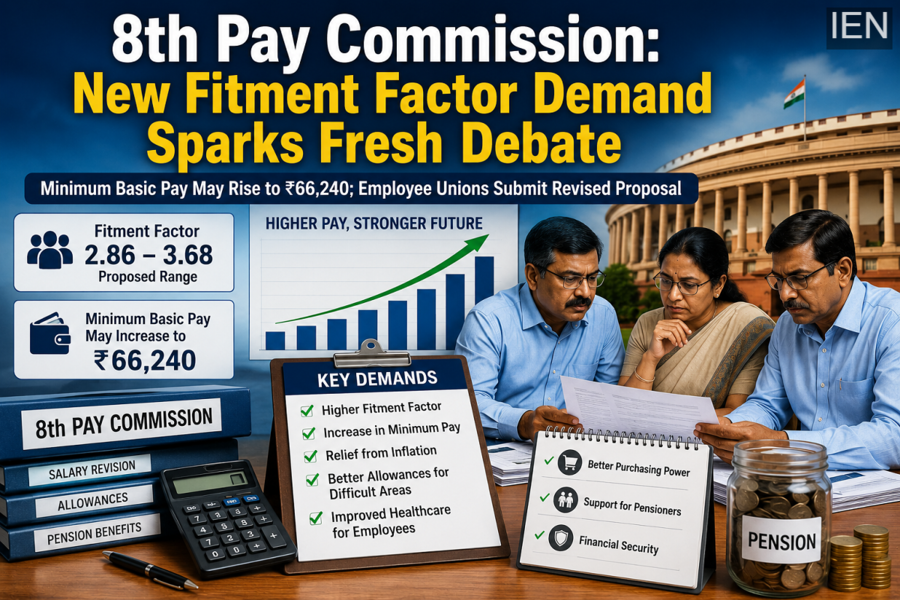
Two employee organizations from Jammu and Kashmir have reportedly presented their suggestions to the 8th Pay Commission, recommending a fitment factor ranging between 2.86 and 3.68.
The fitment factor is one of the most crucial elements of any pay commission because it determines how existing basic pay is converted into the revised salary structure. A higher fitment factor generally results in a larger increase in salaries and pensions.
The proposed range is attracting attention because some employee groups across the country had earlier advocated for even higher fitment factors. The latest recommendations indicate that at least some organizations may now be focusing on a more realistic and achievable revision framework.
How Much Could Basic Pay Increase?
Under the proposal submitted to the Commission, the minimum basic salary could rise substantially from the current ₹18,000 level.
If the lower end of the suggested fitment factor is considered, the minimum basic pay could increase to around ₹51,480. If the higher recommendation is accepted, the revised minimum salary could reach approximately ₹66,240.
Such an increase would represent a major jump in earnings for entry-level government employees and could significantly improve overall compensation structures across departments.
Why Are Employee Groups Seeking a Higher Revision?
Employee representatives argue that salary structures need to be revised to reflect current economic realities. Rising inflation, increasing household expenses, healthcare costs, education spending, and housing expenditures have put pressure on government employees and pensioners alike.
According to the organizations that submitted the proposal, a stronger salary revision would help improve purchasing power and provide meaningful relief from the impact of rising living costs.
They also believe that a higher pay structure would contribute to better employee morale and improve financial security for retired government workers.
Potential Benefits for Pensioners
The recommendations are not limited to serving employees. Pensioners could also benefit significantly if the Commission adopts a higher fitment factor.
Since pension calculations are linked to pay revisions, any increase in the fitment factor is likely to result in higher pension payouts. This is particularly important for retired employees who are facing increasing medical and living expenses.
Pensioner associations across the country have consistently demanded a fair revision mechanism that protects retirees from the effects of inflation and ensures adequate post-retirement income.
Special Demands for Employees in Difficult Areas
Apart from salary revision, employee organizations have also highlighted the challenges faced by personnel working in remote, mountainous, and difficult geographical regions.
The proposals reportedly include demands for enhanced hardship allowances, better compensation packages, and improved healthcare facilities for employees serving in such areas.
Representatives argue that employees posted in challenging locations often face higher living costs and limited access to essential services. As a result, additional support measures are necessary to ensure equitable treatment.
Does This Mean Higher Fitment Factor Demands Are Over?
Not necessarily. The recommendations submitted by organizations from Jammu and Kashmir represent only one set of inputs being examined by the 8th Pay Commission. Employee unions from other states and departments may continue to submit different proposals over the coming months.
The Commission is currently collecting feedback from multiple stakeholders across the country, including employee associations, pensioner groups, government departments, and experts. The final fitment factor will be determined only after detailed consultations and analysis.
Therefore, while the latest proposal may signal a more balanced approach from some organizations, it does not indicate that the debate over the fitment factor has been settled.
What Happens Next?
The 8th Pay Commission is continuing its consultation process and gathering recommendations from various stakeholders before preparing its final report. Employee groups remain hopeful that the Commission will recommend a substantial revision in salaries, pensions, and allowances.
For now, government employees and pensioners will need to wait for further developments. The final decision on the fitment factor, minimum pay, pension revision, and implementation timeline will ultimately shape the financial future of millions of central government employees and retirees across India.
As discussions intensify, the fitment factor is expected to remain one of the most closely watched aspects of the 8th Pay Commission's recommendations.
