
8th Pay Commission: Even with a 2.57 fitment factor, employees' salaries will increase by only this much—here is the calculation..
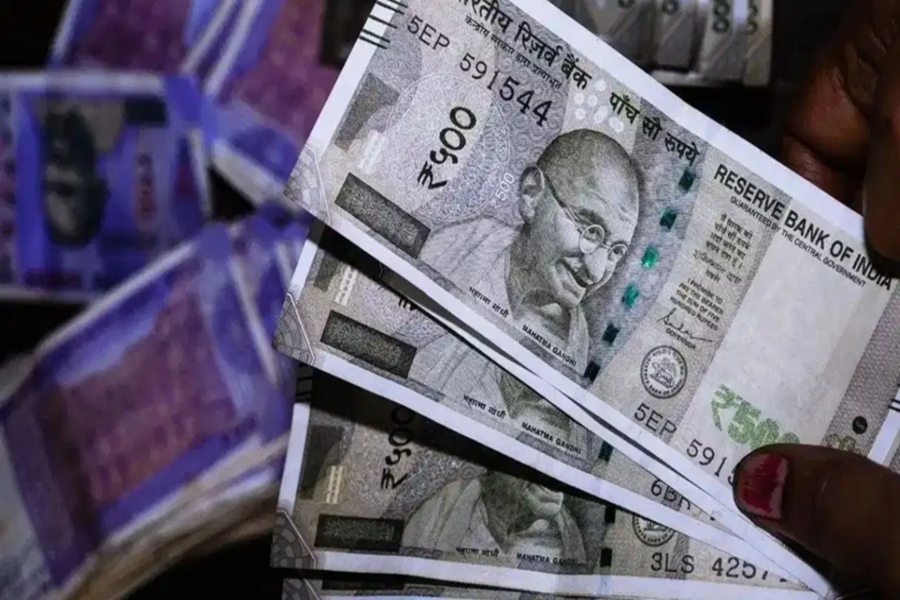
Central government employees across the country are awaiting the recommendations of the 8th Pay Commission, while the Commission itself is busy preparing them. Employee unions are demanding a higher fitment factor; the National Council-Joint Consultative Machinery (NC-JCM) has sought a fitment factor of 3.83. However, many experts believe that securing such a high fitment factor is unlikely, estimating instead that the Commission might set it between 2.0 and 2.25. While there is still considerable time before the recommendations are released, the fitment factor has become a major topic of discussion.
This raises the question: does a higher fitment factor mean a larger salary hike? How does the fitment factor impact the total salary? We will also explore why the salary does not necessarily increase in direct proportion to the fitment factor.
What exactly is a fitment factor?
Simply put, the fitment factor is a mathematical multiplier. It is used by the Pay Commission to transition the basic pay of government employees and the pensions of retirees into the new pay structure. This factor is multiplied by the basic salary; the higher the number, the greater the multiple applied to the basic salary. This method facilitates a uniform salary increase across all employee levels. It is important to note that the fitment factor directly affects only the basic salary. However, since certain allowances—such as House Rent Allowance (HRA)—are determined based on the basic salary, an increase in the basic pay consequently alters these allowances as well. Meanwhile, Dearness Allowance (DA) is calculated based on rates determined by the government.
Does the salary increase in direct proportion to the fitment factor?
The answer is no. Many people mistakenly believe that if the fitment factor is set at 2.57, their salary will increase by 157%. However, that is not the case. The fitment factor primarily impacts the basic salary, whereas an employee's gross salary comprises not only basic pay but also Dearness Allowance (DA), House Rent Allowance (HRA), and other allowances.
What do data from previous Pay Commissions reveal?
Data from past Pay Commissions indicate that a higher fitment factor does not necessarily translate to a proportional increase in total salary. Under the 7th Pay Commission, the fitment factor was 2.57, yet an analysis by BankBazaar showed that the gross salary increased by approximately 14.29%. In contrast, the 6th Pay Commission had a fitment factor of only 1.86, yet gross salaries rose by 54%.
Why did this happen?
According to experts, the primary reason is the Dearness Allowance (DA). When the 7th Pay Commission was implemented, employees were already receiving a DA of 125%; essentially, a substantial DA component was already embedded in the existing salary. Consequently, the overall salary increase remained limited despite the application of the 2.57 fitment factor. According to the All India New Pension Scheme Employees Federation (AINPSEF), the 7th Pay Commission also rationalized the existing salary structure, which is why the average gross salary increase for employees was restricted to 14.29%. Conversely, at the time of the 6th Pay Commission, the DA stood at only 24%. Therefore, the impact of the 1.86 fitment factor was more pronounced, resulting in a 54% increase in employees' total salaries.
How much might salaries increase under the 8th Pay Commission?
According to estimates by the financial website BankBazaar, if the fitment factor for the 8th Pay Commission is set between 2.0 and 2.57, the gross salary of employees ranging from Level-11 to Level-18 could see an increase of approximately 31% to 68%. However, this remains an estimate; the final hike will depend on the fitment factor approved by the government and the prevailing status of DA and other allowances at that time.
Disclaimer: This content has been sourced and edited from TV9. While we have made modifications for clarity and presentation, the original content belongs to its respective authors and website. We do not claim ownership of the content.
