
8th Pay Commission Delay Fears Grow: Will Salary and Pension Hikes Take Longer Than Expected?
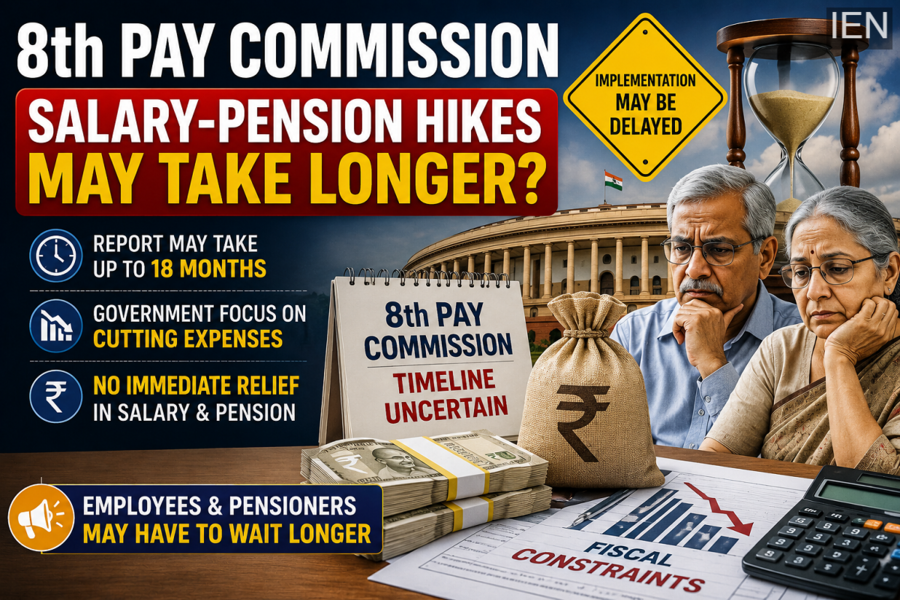
Millions of central government employees and pensioners across India are eagerly waiting for the implementation of the 8th Pay Commission, hoping for a major increase in salaries, pensions, and allowances. However, recent developments suggest that the process may take longer than many expected, raising doubts over how soon revised pay structures could actually become reality.
Discussions surrounding government expenditure control, fiscal discipline, and economic uncertainty are now adding fresh concerns to the timeline of the upcoming pay commission. While employees continue to expect significant financial relief, experts believe the implementation process may face delays due to administrative, economic, and policy-related factors.
Expectations High Among Government Employees
For months, employees’ unions and pensioners’ associations have been demanding clarity regarding the formation and implementation of the 8th Pay Commission. Many government workers are expecting substantial revisions in:
- Basic salary
- Dearness Allowance (DA)
- Pension benefits
- Fitment factor
- Retirement benefits
Speculation regarding a higher fitment factor and possible salary restructuring has already fueled discussions among employees across various departments.
However, despite rising expectations, there is still no official confirmation regarding the final structure, implementation date, or exact recommendations of the commission.
Government Focus Shifts Toward Controlling Expenses
At the same time, several signals from policymakers indicate that expenditure control has become a major priority. Discussions about reducing unnecessary spending have intensified across government departments and financial institutions.
Reports suggest that the Finance Ministry has advised multiple public sector financial institutions and organizations to focus on cost management and rationalization of expenditure. Institutions such as State Bank of India and Life Insurance Corporation of India are among the organizations reportedly being encouraged to review spending patterns carefully.
This broader emphasis on fiscal caution has triggered concerns that large-scale salary revisions under the 8th Pay Commission could take more time than initially anticipated.
Concerns Rise Over Possible Delay
One major reason behind the growing uncertainty is the expected timeline for preparing the commission’s recommendations. Reports indicate that the commission’s report itself could take nearly 18 months to be finalized after the process formally begins.
Even after the report is submitted, implementation usually requires further approvals, budget allocations, cabinet clearances, and administrative preparations. Historically, pay commission recommendations often take considerable time before employees start receiving revised salaries and arrears.
Because of this, many experts believe employees should not expect immediate salary hikes or pension revisions.
Employees Recall Pending DA Arrears Issue
The current concerns are also being linked to memories of the 18-month Dearness Allowance (DA) arrears that remained unpaid during the COVID-19 period.
During the pandemic, the government had frozen DA hikes temporarily as part of expenditure management measures. Although DA increments were later restored, the pending arrears for the freeze period were never fully paid to employees and pensioners.
That experience has made many workers cautious about expecting rapid implementation of large financial commitments under the next pay commission.
Economic and Global Uncertainty Playing a Role
Experts say the overall economic environment may also influence the pace of implementation. Rising global uncertainties, fiscal pressures, defense expenditure requirements, inflation management, and welfare spending obligations are all factors that governments typically consider before approving major salary revisions.
At present, policymakers appear focused on maintaining financial stability while balancing long-term expenditure commitments.
This does not necessarily mean the 8th Pay Commission will be cancelled or abandoned, but it could impact the speed at which recommendations are processed and implemented.
What Employees and Pensioners Are Expecting
Despite the uncertainty, employees continue to hope for meaningful improvements in compensation structures.
Some of the key expectations include:
- Increase in minimum basic pay
- Higher fitment factor
- Better pension calculations
- Revised allowances
- Improved retirement benefits
Many employee groups believe the rising cost of living and inflation make salary revision essential for maintaining purchasing power and financial security.
Final Decision Still Awaited
As of now, no official announcement has been made regarding the final implementation schedule of the 8th Pay Commission. Government employees and pensioners are therefore advised to rely only on verified updates issued through official government channels.
Until concrete announcements are made, discussions regarding exact salary increases, fitment factors, and implementation dates remain largely speculative.
For now, while hopes of a major salary and pension jump remain alive, expectations of immediate implementation appear increasingly uncertain.
