
8 Bank Transactions That Can Trigger an Immediate Income Tax Alert: Know Where to Be Extra Cautious
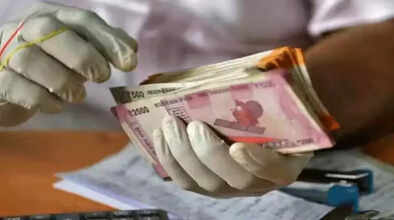
The Income Tax Department keeps a close watch on certain high-value financial activities to curb tax evasion, track suspicious money movement, and ensure transparency in major transactions. While your salary or business income is evaluated through your Income Tax Return (ITR), the department also monitors several financial activities through banks, payment systems, investment platforms, and property registries.
If any transaction exceeds the prescribed threshold or appears inconsistent with your declared income, it may instantly place your account under scrutiny. Here are the eight major banking and financial transactions that can attract questions from the tax authorities — and how you can ensure compliance.
1. Cash Deposits Over ₹10 Lakh in a Savings Account
If you deposit more than ₹10 lakh in cash in a financial year into your savings account, the bank automatically reports it to the Income Tax Department under the Statement of Financial Transactions (SFT) system.
This is not illegal, but the department expects you to clearly explain the source of the large cash amount — whether it came from your salary, business income, property sale, loan repayment, agricultural income, or a legitimate gift.
2. Cash Deposits of ₹10 Lakh or Above in Fixed Deposits
Large cash deposits made into fixed deposits — ₹10 lakh or more — also get flagged as high-value transactions. The tax system matches this information with your declared income and previous returns.
If your income does not justify such a large investment, a mismatch could lead to a notice or scrutiny.
3. High-Value Credit Card Bill Payments
Credit card payments are closely monitored. Two conditions can attract attention:
-
Cash payment above ₹1 lakh in a year, or
-
Payments of ₹10 lakh or more through bank transfer/online mode
These payments reflect your lifestyle and spending pattern. If your spending is significantly higher than your declared income, the department may question the source of funds.
4. Large Transactions in Shares, Mutual Funds, or Bonds
Investments worth ₹10 lakh or more in a financial year — whether buying or selling shares, mutual funds, ETFs, or bonds — are automatically reported to the tax system.
This helps the department cross-check:
-
Capital gains declared in your ITR
-
Losses claimed
-
Discrepancies between reported income and investment behavior
Those who trade actively or earn significant profits must ensure accurate reporting.
5. Property Deals Worth ₹30 Lakh or More
All property purchases or sales exceeding ₹30 lakh are directly reported through the registrar’s office.
If the transaction involves a substantial cash component, the risk of scrutiny increases because authorities check for:
-
Under-reporting of property value
-
Use of unaccounted cash
-
Possible benami (illegal) transactions
6. Jewellery Purchases Above ₹2 Lakh
Buying jewellery worth more than ₹2 lakh requires PAN, and the transaction is reported to the tax authorities.
The department may examine whether the payment source is aligned with your income and whether gold or silver is being used to park unaccounted money.
Even high-value gold stored in lockers can be questioned during assessment if required.
7. Expensive International Travel or Luxury Spending
High-cost international travel packages or major luxury expenses may also lead to scrutiny.
If your lifestyle appears significantly higher than your declared income, the tax department may demand proof of funding for such expenses.
8. Large Digital Payments and UPI Transactions
Business owners who receive or send very high-value UPI or digital payments can also be monitored.
These transactions help cross-verify:
-
Actual business turnover
-
Correctness of GST filings
-
Income reported in ITR
If there is a mismatch between digital receipts and declared earnings, a notice may be issued.
How to Avoid Tax Notices?
To stay safe and avoid unnecessary scrutiny:
-
Maintain documentation for every large transaction
-
Ensure your ITR reflects your real income
-
Keep PAN–Aadhaar linked and updated
-
Avoid unexplained cash movements
-
Use banking channels for transparency
