
7 Rules Changing in December: Direct Impact on Everything from Aadhaar and LPG to EMIs
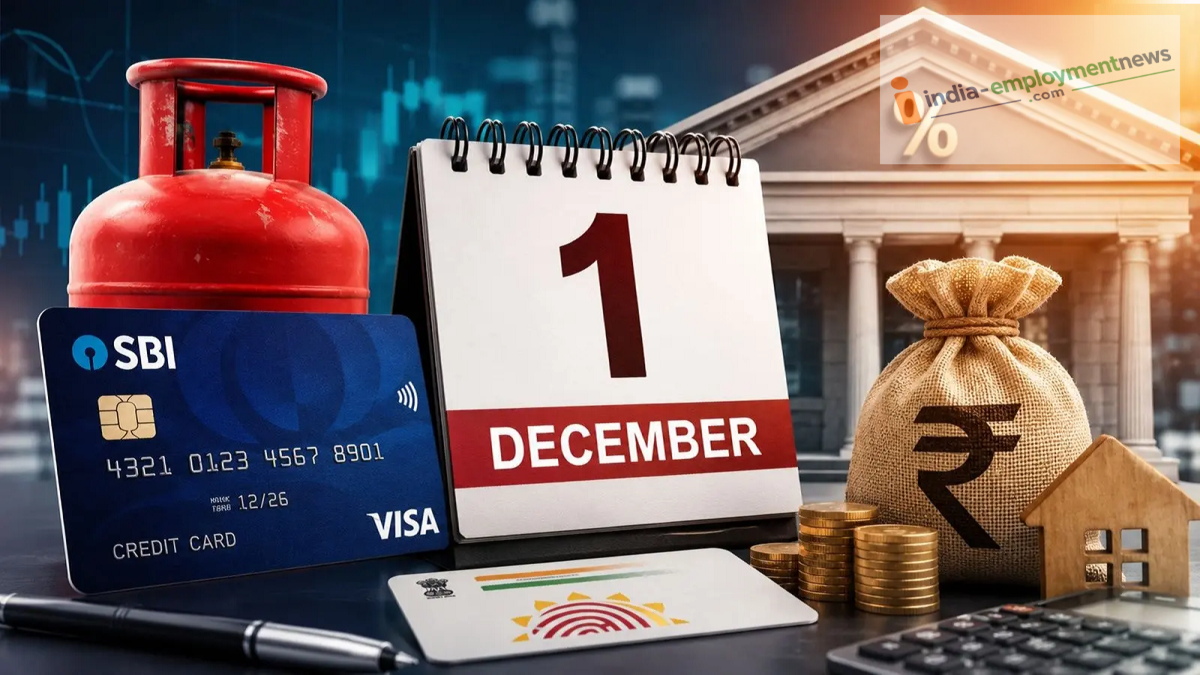
New Rules From December 1, 2026: Seven financial rules are set to change in December. From increased charges on credit cards to free Aadhaar updates—find out what will change for you.
New Rules From December 1, 2026: As November draws to a close, December is set to begin with several new changes. Starting December 1, 2026, various rules affecting your finances, investments, and daily expenses will be updated. These include additional charges for certain credit card transactions and higher margin requirements for those involved in commodity trading. Furthermore, new prices for LPG cylinders may be announced, and the window for updating your email address in your Aadhaar records is also coming to an end this month.
Additionally, the RBI will hold a meeting to decide on interest rates, which could impact home loans and fixed deposits (FDs). Let’s explore how these changes in December might affect your wallet.
1. Will payments made via SBI credit cards become more expensive starting December 1?
For SBI credit cardholders, additional charges will apply to certain types of transactions from December 1. According to an SBI Card notice dated October 27, if a customer makes a transport-related payment exceeding ₹30,000 in a single transaction, a 1% fee—plus applicable taxes—will be charged. A new rule will also apply to payments for petrol, diesel, or other eligible fuels: if the total fuel expenditure within a single billing cycle exceeds ₹50,000, a 1% charge will be levied on the entire amount.
For example, if you spend ₹60,000 on fuel within one billing cycle, you will be required to pay an additional fee of ₹600, along with any applicable taxes. Please note that this charge will not apply to total fuel expenses of up to ₹50,000.
2. Will more funds be required for commodity trading starting December 1st?
SEBI has revised the margin rules for those trading in commodity derivatives. These new rules will come into effect on December 1st. Traders will now be required to maintain an initial margin based on the volatility in commodity prices.
Three categories have been established under this framework:
6% margin for commodities with low volatility.
8% margin for commodities with moderate volatility.
10% margin for commodities with high volatility.
Additionally, the Margin Period of Risk (MPOR) will be two days for low- and medium-risk commodities, and three days for high-risk commodities. These rules will apply to both agricultural and non-agricultural commodities. This arrangement will remain in effect for one year from the date of the circular. However, brokers may demand a higher margin based on the actual level of risk.
3. Are LPG cylinder prices set to change in December?
State-run oil companies review LPG cylinder prices on the first of every month. Consequently, new rates for domestic and commercial gas cylinders may be announced on December 1st. Hotels, restaurants, and business owners will be particularly focused on the price of 19 kg commercial cylinders. Meanwhile, any change in the price of 14.2 kg domestic cylinders will directly impact the household budgets of ordinary families. However, no changes to prices have been confirmed yet.
4. Will the RBI’s decision affect your EMIs and FDs?
The Reserve Bank of India’s (RBI) Monetary Policy Committee (MPC) is scheduled to meet from December 2nd to December 4th, 2026. During this meeting, the repo rate and the country’s economic situation will be reviewed. In October 2026, the RBI raised the repo rate by 0.25% to 5.50%. Borrowers with home loans and other types of credit will now be watching the upcoming decision in December. If the RBI increases the repo rate, floating-rate loans from banks could become more expensive. This could lead to an increase in your EMI or an extension of your loan tenure. On the other hand, those opening new fixed deposits (FDs) might expect to earn higher interest. However, banks will determine their interest rates based on their own requirements and prevailing market conditions.
5. Do NRIs and OCI cardholders need to visit India for KYC?
The KYC process is set to become easier for Indian investors living abroad. According to a decision by SEBI on August 14, 2026, NRIs, OCI cardholders, and foreign nationals residing in countries that comply with FATF regulations will now be able to complete their KYC digitally without having to travel to India.
To do this, they will need to seek assistance from a SEBI-registered broker or other authorized financial institutions. This facility will be available starting December 3. However, applicants must meet specific eligibility criteria and identity verification requirements.
6. Is there no fee for updating an email address in an Aadhaar card until December 31?
If the email ID linked to your Aadhaar card is incorrect or not yet linked, this is a good opportunity to get it corrected. The UIDAI has temporarily waived the ₹75 fee for adding or updating an email address in an Aadhaar card. This facility is available until December 31, 2026. Please note, however, that this fee waiver applies only when updating the email address through the official Aadhaar mobile app. Not all services—such as updating your name, address, or other details in your Aadhaar—are free. The standard fees may resume after December 31.
7. Are pensioners required to submit their life certificate by November 30?
November 30 is the deadline for recipients of Central Government pensions. To ensure the continued disbursement of their pension, it is mandatory to submit a 'Life Certificate' (Jeevan Praman Patra) every year. Pensioners can complete this process online using the 'Digital Life Certificate' facility; alternatively, the certificate can also be submitted through other authorized methods. Failure to submit the Life Certificate by the stipulated deadline may result in a delay or disruption in the receipt of the pension. Please note that this is not a new rule specific to December, but rather a recurring annual requirement.
