
₹10 and ₹20 notes to be made of plastic now! RBI Governor shares major update after government approves the proposal..
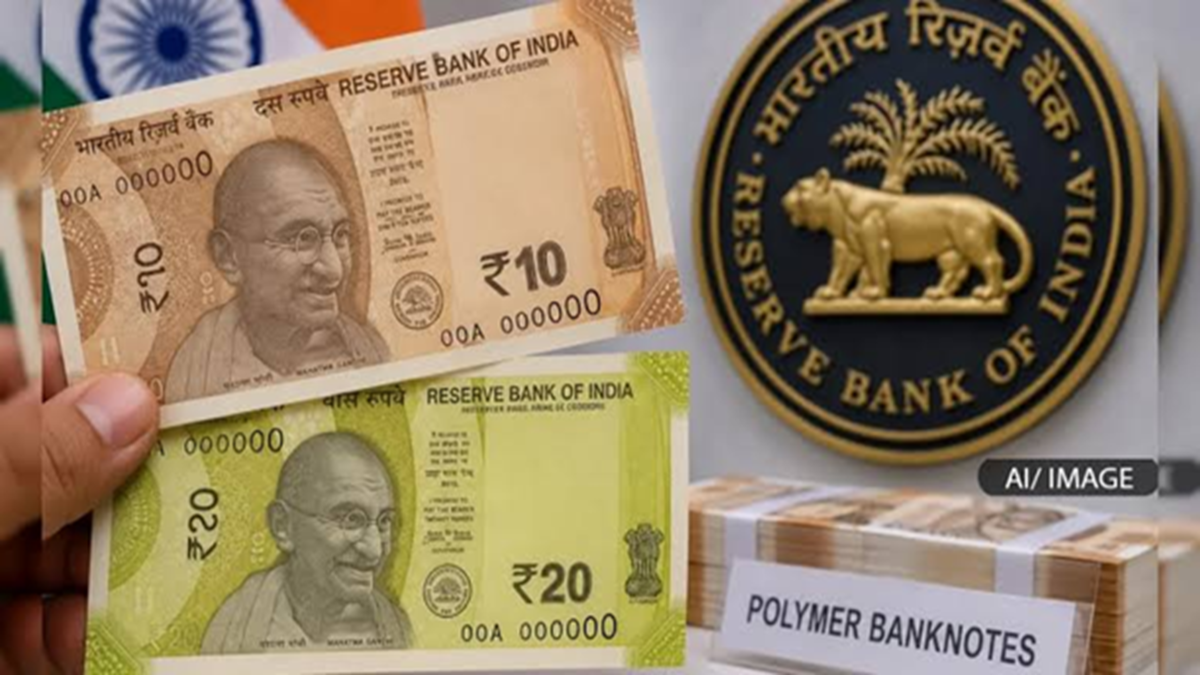
RBI Rs 10 and Rs 20 Polymer Notes: The ₹10 and ₹20 paper notes currently in your pocket may soon appear in a new plastic avatar. The Central Government has approved the Reserve Bank of India's (RBI) proposal to introduce polymer banknotes in the ₹10 and ₹20 denominations for field trials. At the same time, the government has clarified that there are no plans to completely discontinue or replace the existing paper notes; these new polymer notes will circulate in the market alongside the paper ones.
What did the RBI Governor say?
Addressing the media after a recent Monetary Policy Committee (MPC) meeting, RBI Governor Sanjay Malhotra stated that the introduction of polymer notes would take place in a phased manner. The Governor said, "We have currently floated a tender for the polymer substrate on which the banknotes will be printed." Once the substrate is received, it will undergo rigorous testing, security clearance, and a multi-stage process. These notes will feature modern security elements, details of which will be shared at the appropriate time.
Government's response in Lok Sabha: Trials for 1 billion notes each
Responding to a question in the Lok Sabha, Minister of State for Finance Pankaj Chaudhary stated that the RBI's Central Board had recommended introducing 1 billion polymer banknotes each of the ₹10 and ₹20 denominations for field trials, a proposal the government has approved. A final decision regarding the regular issuance of polymer notes in these two denominations (₹10 and ₹20) will be taken only after successful field trials.
Will the old ₹10 and ₹20 paper notes be completely discontinued?
No! The government has clarified that the old paper notes will not be phased out. According to the Minister of State for Finance, the polymer notes will be issued to circulate alongside the paper notes, not as a replacement for them. This means your old paper ₹10 and ₹20 notes will remain fully valid and in circulation.
What makes polymer notes special? Polymer notes are made from a durable plastic film known as Biaxially Oriented Polypropylene (BOPP). They are 2.5 to 4 times more durable than standard cotton-paper notes. These notes are resistant to water damage, do not tear easily, and do not get dirty easily. They incorporate advanced anti-counterfeiting features, making the production of counterfeit notes nearly impossible.
What will be the impact on digital payments and the general public?
The government maintains that banknotes and digital payment systems complement each other. The exact impact of polymer notes on digital payments can only be assessed after their regular issuance. For the average consumer, the direct benefit will be the elimination of concerns regarding notes getting damaged by tearing or water exposure, while ensuring the circulation of cleaner currency in the market.
Disclaimer: This content has been sourced and edited from Money Control. While we have made modifications for clarity and presentation, the original content belongs to its respective authors and website. We do not claim ownership of the content.
