
Wi-Fi Camera: A CCTV security shield for your home or a gateway to spying?
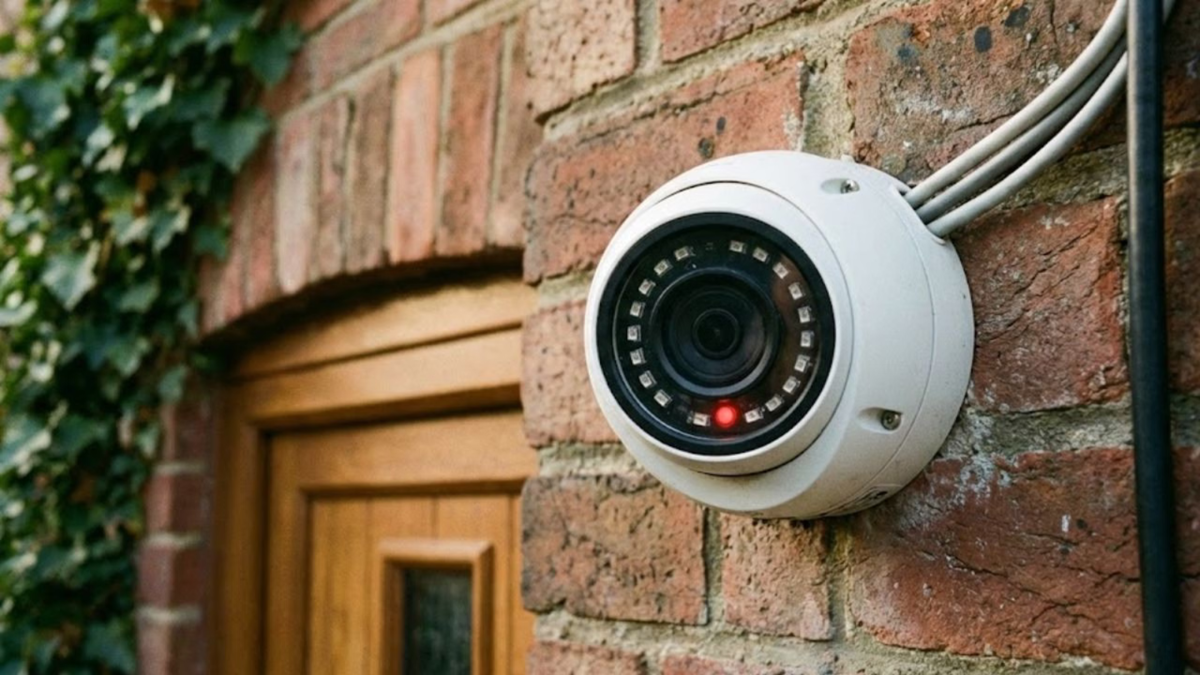
Installing CCTV cameras for home security has become commonplace. Wi-Fi and SIM-enabled cameras have made this process even more convenient, allowing you to check on your home, shop, or office from anywhere via a mobile app. However, could this security feature itself pose a threat to your safety?
If you can access your camera remotely, could someone else track that Wi-Fi-enabled camera? This question arises because, in 2026, investigative agencies encountered several cases where internet- and SIM-enabled cameras were being used to monitor sensitive areas.
**Similar Cases in Punjab**
In Punjab, five cases involving such cameras were registered within a span of six months. In one instance, 22 people were arrested; authorities recovered cameras, SIM cards, mobile phones, routers, and other gadgets, and eight FIRs were filed across various districts.
**Camera in India, Images in Pakistan**
In March 2026, a network was busted in Ghaziabad; they had installed cameras at Delhi Cantt and Sonipat railway station to transmit live footage of army movements, sensitive information, and activities to Pakistan. The plan involved installing around 50 cameras, extending as far as Kashmir. Subsequently, cases involving SIM-enabled cameras also surfaced in Punjab. These cameras were installed near army zones, and the footage was being transmitted across the border.
**What Do Experts Say?**
Cybersecurity expert Mukesh Chaudhary emphasizes that the identity of the person installing the camera is crucial. If you reside in a border area, or if a politician or army officer lives nearby, your camera could become a target.
One should research the company before purchasing a camera, specifically checking whether its founders or directors are from Pakistan or China. Often, Chinese companies operate with headquarters in Singapore to avoid raising suspicion. Therefore, products from friendly nations are generally considered safer from a national security perspective.
A Small Oversight Can Prove Costly
The danger isn't limited to who installed the camera; flaws within the camera's software can also cause trouble. The Indian Computer Emergency Response Team (CERT-In), under the Ministry of Electronics and Information Technology, reported security lapses in several CCTV products in 2026.
In July, a vulnerability was discovered in the IP cameras of a prominent CCTV manufacturer that allowed unauthorized individuals to view live camera feeds. In February, a risk involving unauthorized account access and the viewing of live and recorded footage was identified in CCTV products from another company.
Does Changing the Password Enhance Safety?
Mukesh Chaudhary notes that technicians often leave the system with a default password that users fail to change, making it vulnerable to hacking. Attempts are made to crack passwords using various combinations:
Dictionary attacks: Trying various words and keyword combinations.
Brute-force attacks: Trying different combinations of numbers and words.
Therefore, a password should be at least 12 characters long. It should not consist of a single complete word and must include special characters and numbers.
Government Tightens CCTV Regulations
The government has established security standards for CCTV cameras. Manufacturers must now disclose details regarding the hardware used in the cameras, and security testing must be conducted at certified laboratories. By March 2026, 507 CCTV models had passed these security standards. A ban was imposed on the purchase of cameras that failed to meet the prescribed criteria. The new regulations emphasize camera identification and login security, software updates to protect networks and data, and the use of strong passwords.
Cybersecurity experts advise that it is crucial to know which company developed the camera app—specifically, whether the company is new or well-established. New companies may face the risk of having their entire servers hacked. Small companies often skip security audits, whereas large companies frequently undergo third-party audits.
What should you look for when buying a Wi-Fi camera?
If you are planning to install a camera at home, do not focus solely on picture quality, storage, and price. It is also crucial to consider how often the camera's software is updated, the security of the footage within the mobile app, whether the password can be changed, where the recordings are saved, and—if the camera is connected to the internet—who has access to it.
According to Mukesh Chaudhary, if you are concerned about privacy and do not require online features, you can store recordings on a DVR (Digital Video Recorder), which remains on-site. However, a downside is that in the event of a burglary, thieves might steal the DVR itself. Consequently, many people opt to store recordings on an online cloud service instead of using a DVR.
Considerations for cloud servers
Those unconcerned about the theft of a DVR can opt for offline storage, as internet connectivity increases risk. Regarding live streaming and cloud storage, one should check whether the cloud service is based in India. It is important to verify which server the company uses and the physical location of the cloud server; a server located abroad could pose issues, so a cloud service based in India is preferable.
Policies in the US and UK adhere to cybersecurity compliance standards. Regulations regarding data handling fall under the DPDP (Digital Personal Data Protection) framework.
Disclaimer: This content has been sourced and edited from TV9. While we have made modifications for clarity and presentation, the original content belongs to its respective authors and website. We do not claim ownership of the content.
