
Why was Telegram banned in the paper leak case, but not WhatsApp or Facebook? Government counsel responds..
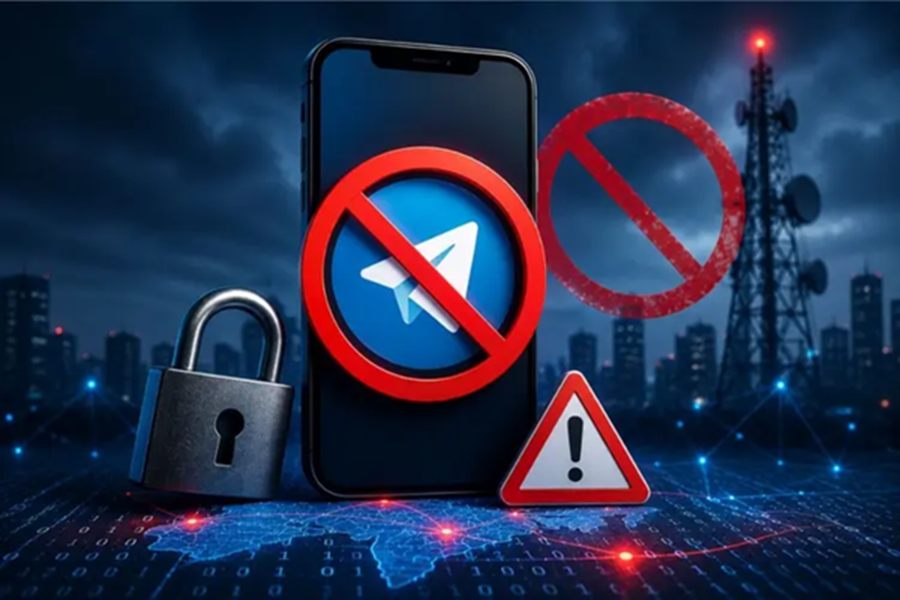
With the ban imposed on Telegram in the country, everyone is wondering: why was this specific app targeted in the NEET paper leak case? People on social media are asking what "crime" Telegram committed, given that WhatsApp and Facebook continue to operate without hindrance. Now, the mystery has been resolved; the government counsel has explained the reason behind the ban in court. It was revealed that the ban stems from the app's cloud architecture—ironically, the very feature that is considered its greatest strength.
The government's lawyer informed the court that the primary reason for banning Telegram is its cloud-based system. Illegal activities—such as paper leaks—and unlawful content spread rapidly on the platform. Since all data resides on cloud servers, curbing or moderating such content presents significant challenges. Whenever the government asks the company to remove content or cooperate with investigations, Telegram often displays a lax attitude. This is why the government was compelled to take strict action against it.
What is Telegram's cloud architecture?
Telegram operates as a cloud service. Messages, photos, and videos from standard private chats, group chats, channels, and public groups are permanently stored on Telegram's servers (the cloud). The company highlights this as a key feature, ensuring that users can instantly access their entire history upon logging in from a new phone or computer, without needing a manual backup. However, from a security standpoint, this represents a compromise on privacy.
Telegram claims its data is secure and that decryption keys are distributed across various data centers. In reality, however, Telegram staff—or legal authorities acting on court or government orders—can access these chats because server-side decryption is possible. While Telegram does offer a ‘Secret Chats’ option—which is end-to-end encrypted and not saved on servers—most users rely on standard cloud-based chats. This cloud storage allows for the easy sharing of large files (up to 2GB), a feature exploited by criminals to brazenly circulate leaked exam papers and pirated content. This key difference has brought Telegram to the brink of a ban, whereas WhatsApp has managed to avoid such scrutiny thanks to its privacy-first policy.
Why isn't WhatsApp banned?
Let’s consider WhatsApp. You might wonder: since fake news and objectionable content are shared on WhatsApp too, why doesn't the government ban it? In reality, the government does pressure WhatsApp to comply with strict regulations regarding traceability (identifying the message's originator) and SIM linking. However, WhatsApp operates on a completely different system.
WhatsApp employs end-to-end encryption (E2EE) by default. This means that a sent message can only be read by the intended recipient. Messages remain on WhatsApp’s servers only briefly and are deleted immediately upon delivery. WhatsApp does not maintain its own cloud storage; instead, all data resides in your phone's local storage. Consequently, it is impossible even for WhatsApp to access a user's content.
Disclaimer: This content has been sourced and edited from News18 Hindi. While we have made modifications for clarity and presentation, the original content belongs to its respective authors and website. We do not claim ownership of the content.
