
Why Does House Wiring Catch Fire? Understand Which Technical Errors Pose a Major Risk..
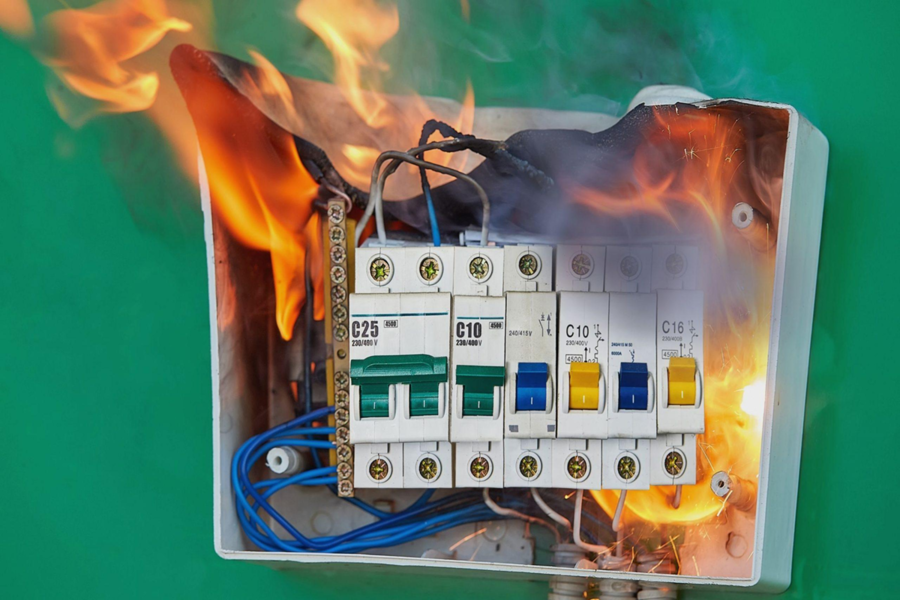
Nowadays, the use of various high-power appliances—such as ACs, geysers, and refrigerators—is rapidly increasing in homes. Consequently, if an existing wiring system is subjected to excessive load, the wires can overheat. Prolonged and continuous heating can cause the wire's insulation to melt, significantly heightening the risk of a fire.
Today, let us explore this very topic: why exactly does house wiring catch fire, and which technical errors eventually evolve into major hazards?
**Substandard Wires and Local-Grade Components**
Many people initially opt for low-cost, local-grade wires and inexpensive electrical fittings, which do not remain safe or reliable over the long term. Such wires tend to heat up quickly and are more prone to issues involving sparking. Sometimes, deteriorating wiring concealed within the walls remains completely invisible, eventually developing into a serious safety threat.
**Loose Connections**
It has also been observed that loose connections within switchboards or plugs can lead to persistent, minor sparking. Over time, this intermittent sparking can escalate into a major short circuit and even trigger a fire. Experts recommend having your electrical fittings inspected periodically to safeguard against such issues.
**Outdated MCBs and Fuses**
Furthermore, older fuse systems sometimes fail to immediately cut off the power supply even when an overload occurs, causing the wiring to continue heating up. In contrast, modern MCBs (Miniature Circuit Breakers) and safety devices are designed to instantly cut off the power supply in such hazardous situations.
**Know the Preventive Measures**
Experts emphasize that one should always utilize high-quality wiring, ensure proper earthing, and install advanced safety devices in the home. Additionally, the wiring system should be inspected every few years to ensure that any potential major accidents can be averted in a timely manner.
Disclaimer: This content has been sourced and edited from Dainik Jagran. While we have made modifications for clarity and presentation, the original content belongs to its respective authors and website. We do not claim ownership of the content.
