
Why Are People Wrapping Their Wallets in Aluminum Foil? Here's the Truth About RFID Card Security
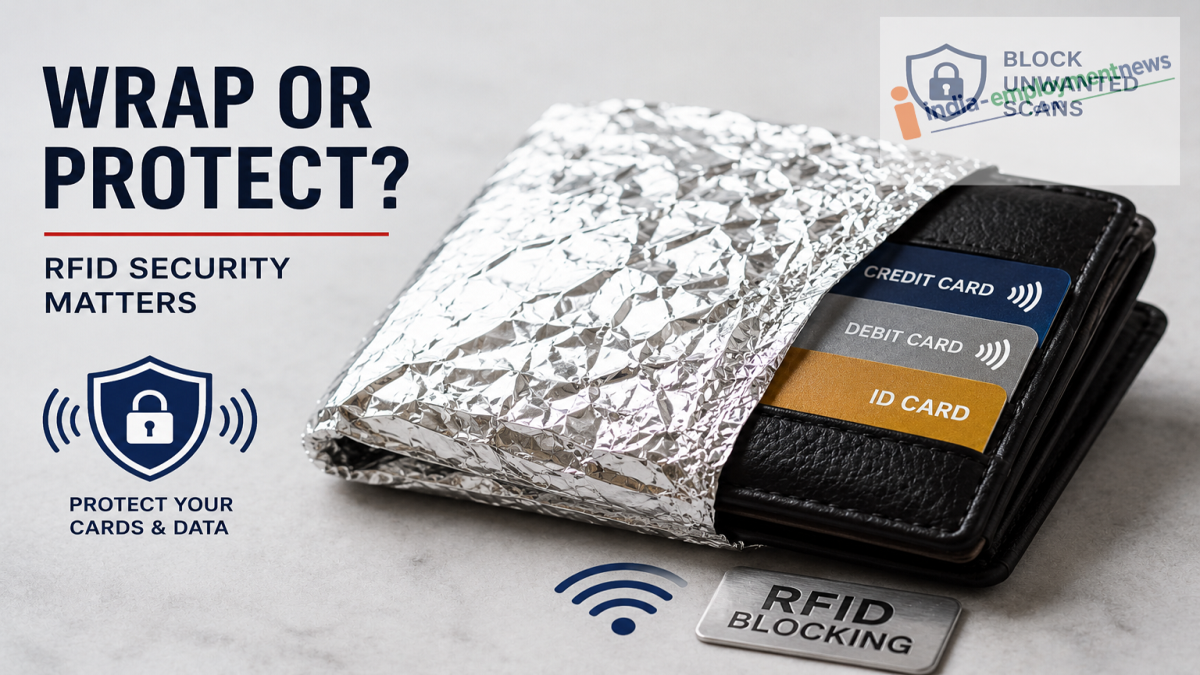
Aluminum foil can block radio signals, but experts say there are more practical ways to protect contactless cards from unauthorized scanning.
A growing trend on social media has people wrapping their wallets in aluminum foil, claiming it protects debit cards, credit cards, office ID cards, and other contactless documents from digital theft. While the idea may sound unusual, it is based on a real scientific principle involving radio signals.
Modern payment cards and access cards often contain RFID (Radio Frequency Identification) or NFC (Near Field Communication) chips that enable tap-to-pay transactions and quick identity verification. These technologies have raised questions about whether someone could read card information without the owner's knowledge.
Here's why the aluminum foil trend exists and what security experts actually recommend.
Why Are People Wrapping Wallets in Foil?
The trend is linked to concerns about wireless scanning of contactless cards.
Many modern cards use embedded RFID or NFC chips that communicate with compatible readers over short distances. Because these chips transmit data wirelessly, some people worry that criminals could use portable scanners to access card information or identify the presence of certain cards.
As a result, some users have begun wrapping their wallets in aluminum foil, hoping to block radio signals and prevent unauthorized scans.
Does Aluminum Foil Really Work?
To some extent, yes.
Aluminum foil is a good electrical conductor and can act similarly to a Faraday shield, which helps block certain electromagnetic signals.
If a contactless card is completely enclosed by conductive material without significant gaps, radio communication between the card and an external reader can be reduced or blocked.
However, wrapping a wallet in household foil is not considered a reliable or practical long-term security solution. Small tears, gaps, or incomplete coverage can reduce its effectiveness, and the foil can easily become damaged during everyday use.
How Real Is the Risk?
Security experts generally note that the risk of large-scale theft through RFID or NFC skimming is relatively low because modern contactless payment systems include multiple security protections.
Payment cards typically use safeguards such as:
-
Transaction limits for contactless payments.
-
Dynamic security codes instead of transmitting the same payment credentials every time.
-
Bank fraud monitoring systems.
-
Tokenization for many digital payment services.
Although unauthorized scanning has been demonstrated in controlled situations, it does not necessarily allow someone to directly withdraw money from a bank account.
Better Ways to Protect Your Cards
Instead of wrapping your wallet in aluminum foil, experts recommend using products specifically designed for RFID protection.
Some practical options include:
-
RFID-blocking wallets.
-
RFID-protective card sleeves.
-
RFID card holders.
-
Digital wallets on supported smartphones.
These products are designed to reduce unwanted wireless communication while remaining convenient for everyday use.
Consider Using Digital Wallets
Many smartphones allow users to store payment cards digitally.
Services such as Samsung Wallet, Google Wallet, and Apple Wallet (where available) use tokenization and additional authentication methods, making them more secure than carrying multiple physical payment cards in some situations.
Digital wallets also reduce the need to expose your physical cards during payments.
Additional Safety Tips
To improve payment security:
-
Enable transaction alerts for every card.
-
Regularly review bank statements.
-
Lock or freeze your card immediately if it is lost.
-
Avoid sharing card details unnecessarily.
-
Use strong authentication features available through your banking app.
Final Thoughts
Wrapping a wallet in aluminum foil is based on a genuine scientific concept of blocking radio signals, but it is not the most practical solution for everyday use. While contactless cards do communicate wirelessly, modern payment systems include several layers of security to reduce fraud risks. For most users, an RFID-blocking wallet or sleeve, combined with good banking security practices, offers a more convenient and dependable way to protect contactless cards.
