
WhatsApp Status and Channels: What Data the App Collects and How It Is Used
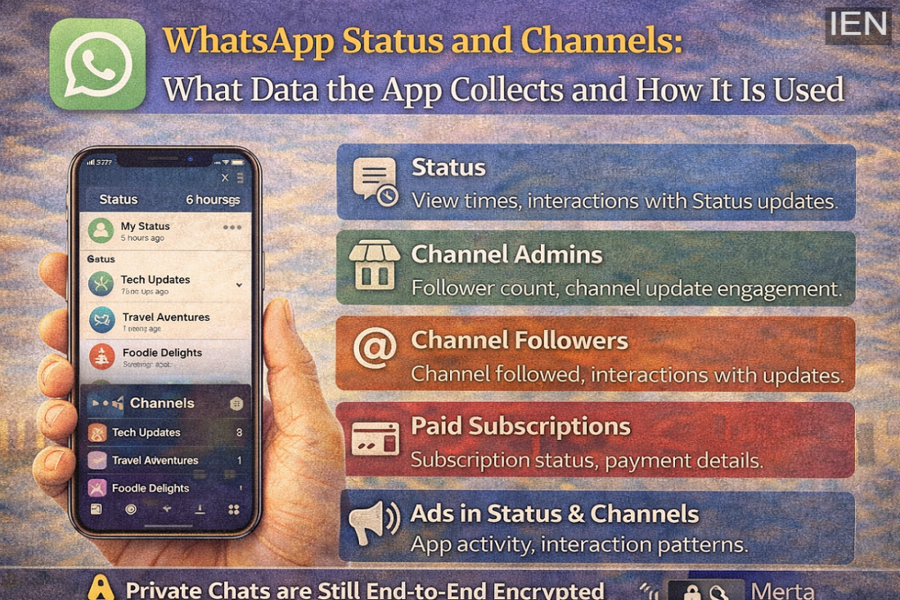
WhatsApp, owned by Meta, is one of the most widely used messaging platforms in the world, connecting billions of users through chats, voice calls, video calls, Status updates, and Channels. While the platform has long emphasised that personal conversations are protected through end-to-end encryption, questions about data collection have recently come into focus.
The discussion intensified after a group of international plaintiffs filed a class-action lawsuit, claiming the platform maintains backdoor access to communications it says are encrypted. WhatsApp, however, maintains that private messages and calls remain fully encrypted, meaning only the sender and receiver can access them.
At the same time, WhatsApp has clarified that activity on the Updates tab — which includes Status and Channels — works differently and may involve limited data collection. According to the company’s published FAQ and privacy explanations, certain information is gathered when users interact with these features.
Here is a simple breakdown of what information may be collected and how it is used.
Data Collected When You Use WhatsApp Status
When users post a Status update or view someone else's Status, WhatsApp may collect basic activity-related information to operate the feature effectively.
This can include:
-
The time when a Status update is posted
-
Information about who viewed the Status
-
Which Status updates a user has viewed
-
Reactions or interactions with Status content
This information helps WhatsApp maintain the feature and improve user experience, such as showing view counts or managing visibility settings.
Data Collected From Channel Administrators
For users who manage a WhatsApp Channel, the platform may collect additional information to support channel functionality.
Examples include:
-
The number of followers on a channel
-
Engagement metrics such as views or reactions to updates
-
Posting activity within the channel
These insights help channel administrators understand how their content is performing and how audiences interact with updates.
Data Collected From Channel Followers
If you follow or view updates from a WhatsApp Channel, the platform may record certain interaction details.
This may include:
-
Which channels you follow
-
Which updates you view
-
Your interactions with channel posts
Such information helps WhatsApp recommend relevant channels and improve how content is delivered to users.
Data Collected for Paid Channel Subscriptions
WhatsApp has also introduced paid channel subscription options in some regions. If a user subscribes to a paid channel, certain subscription-related data may be recorded.
This can include:
-
Subscription status
-
Payment confirmation information
-
Duration of the subscription
This information is primarily used to manage subscriptions and ensure access to paid content.
Data Used for Ads in Status and Channels
WhatsApp is also exploring advertising within the Updates tab, including Status and Channels. In such cases, limited activity data may be used to deliver relevant ads.
Examples include:
-
App engagement activity
-
Channels followed
-
Interaction patterns with updates
The goal is to show advertisements that are more relevant to users based on their interests and usage patterns.
How WhatsApp Uses This Information
According to WhatsApp’s privacy policy, the collected information may be used for several purposes, including:
-
Providing and improving services
-
Enhancing user experience on the platform
-
Maintaining security and preventing misuse
-
Meeting legal or regulatory obligations
-
Supporting features like recommendations and subscriptions
WhatsApp says it processes this information only when required to provide its services, when users give consent, or when there is a legitimate business reason.
Are Your Personal Chats Still Private?
Despite these data collection practices for the Updates tab, WhatsApp continues to emphasise that personal chats, calls, photos, and videos shared in conversations remain end-to-end encrypted.
This means:
-
WhatsApp cannot read or listen to private messages or calls
-
Only the sender and receiver have access to the content
-
Encryption protects conversations from third-party access
However, features such as Status and Channels are designed for broader interaction, which means limited activity data may be processed to support those services.
Final Thoughts
WhatsApp’s Status and Channels features introduce new ways for users to share updates and follow content. While these features involve limited data collection related to usage and engagement, the company maintains that private conversations remain protected by end-to-end encryption.
For better privacy control, users are advised to regularly review their privacy settings, manage who can see their Status updates, and stay informed about how platform features handle data.
