
What is the difference between Desert, Personal, and Tower Coolers? Which one consumes the most electricity?
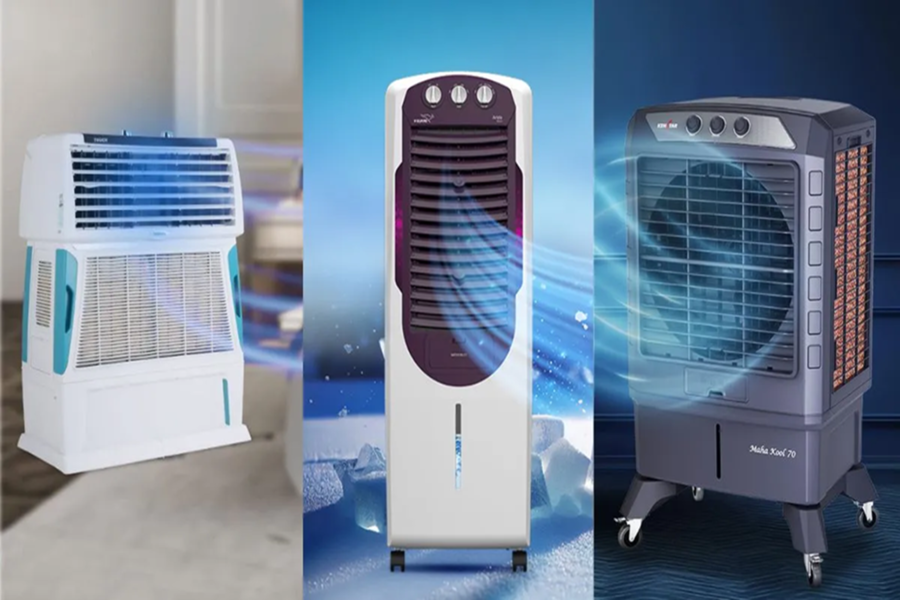
Desert Cooler vs. Personal Cooler vs. Tower Cooler: As the summer heat intensifies, the demand for air coolers surges rapidly. However, the market offers a wide variety of coolers, with Desert, Personal, and Tower coolers being the most widely used types. Yet, people often find themselves confused when choosing between them. While all three may appear similar in appearance, their cooling performance, power consumption, and intended usage differ significantly. Choosing the wrong cooler can result in inadequate cooling and may even lead to higher electricity bills. Therefore, it is essential to understand the fundamental differences between them before making a purchase.
**What is a Desert Cooler?**
The Desert Cooler is considered the most powerful type of air cooler available. It is designed for large rooms and halls where substantial cooling is required. It features a large water tank and a powerful fan capable of delivering a high volume of airflow. This type of cooler performs most effectively in hot and arid regions. However, its power consumption is higher than that of the other two types, as it utilizes a larger motor and a high-velocity air-throw system. If you live in a large room or reside in a region with extreme heat, this is an excellent option—though it does come with higher electricity usage.
**What is a Personal Cooler?**
A Personal Cooler is designed for use in small rooms or for cooling a single individual. It offers a limited cooling range and consumes very little electricity. It is equipped with a smaller water tank and a lower-power fan. This makes it an ideal choice for those seeking mild cooling on a limited budget. However, it is not considered suitable for large rooms; if used in a spacious area, it will fail to cool the air effectively. Its most significant advantages are its energy efficiency and its portability, allowing it to be moved around with ease.
**What is a Tower Cooler?**
The Tower Cooler is regarded as a modernly designed cooling appliance that occupies minimal floor space. It features a slim profile and blends seamlessly with a home's interior decor. It is considered an excellent option for homes with limited space or for rental accommodations where space constraints are a concern. Its cooling capacity is moderate, making it well-suited for small to medium-sized rooms. Electricity consumption remains comparable to that of a personal cooler, though it is lower than that of a desert cooler. It features superior air distribution, ensuring that cool air circulates throughout the entire room. This makes it an excellent choice for those who prioritize both design and performance.
**Which Cooler Consumes the Most Electricity?**
In terms of electricity consumption, the desert cooler consumes the most power, as it is equipped with a larger motor and a high-power fan. It is followed by the tower cooler, which draws a moderate amount of electricity. The personal cooler consumes the least amount of power. Therefore, the choice of a cooler should be made based on the size of the room and specific requirements. Selecting the wrong cooler can result in either excessive electricity consumption or insufficient cooling.
**What to Look for Before Buying**
Before purchasing a cooler, one must carefully consider the room size, the intensity of the heat, and electricity consumption. A desert cooler is best suited for large rooms, whereas a personal or tower cooler is ideal for smaller spaces. The water tank capacity is also a crucial factor, as it determines how long the cooler can operate continuously. Additionally, one should check the air throw distance and motor power. Choosing the right cooler not only ensures superior cooling but also helps keep electricity bills under control.
Disclaimer: This content has been sourced and edited from TV9. While we have made modifications for clarity and presentation, the original content belongs to its respective authors and website. We do not claim ownership of the content.
