
Urgent Warning for Google Chrome Users: Hackers Target Browser Vulnerabilities — Update Immediately to Stay Safe
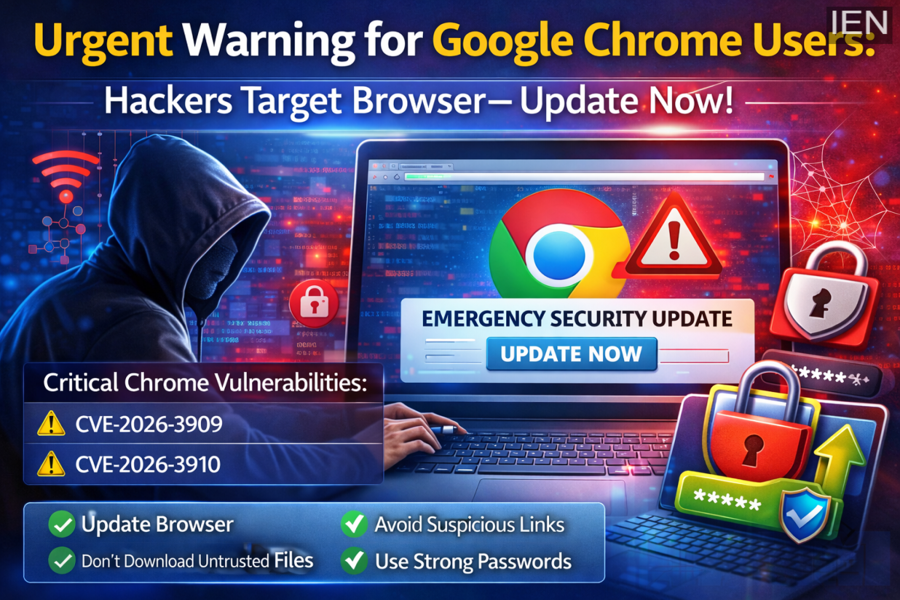
Major Cybersecurity Alert Issued for Chrome Users
A serious cybersecurity alert has been issued for users of Google Chrome, one of the most widely used web browsers worldwide. Reports indicate that two critical security vulnerabilities have been discovered in the browser that could allow hackers to gain access to users’ devices and sensitive data.
Considering the potential risk, Google has already released an emergency security update and advised users to update their browsers immediately to stay protected.
Critical Security Flaws Found in Chrome
According to cybersecurity reports, two major vulnerabilities have been identified in the Chrome browser. These flaws fall under the “zero-day vulnerability” category, meaning attackers could exploit them before developers fully address the issue.
The vulnerabilities are being tracked under the following identifiers:
-
CVE-2026-3909
-
CVE-2026-3910
To prevent hackers from misusing these weaknesses, detailed technical information about the vulnerabilities has not been publicly disclosed yet.
Google Releases Emergency Security Update
In response to the threat, Google has released an urgent security patch for the Chrome browser. The company is urging users across the globe to update their browsers as soon as possible.
Updating Chrome helps fix the detected vulnerabilities and protects devices from potential cyberattacks that could compromise personal data, passwords, or other sensitive information.
Why Hackers Often Target Web Browsers
Web browsers are central to almost every online activity today. From checking emails and accessing social media to performing online banking and web searches, browsers handle a massive amount of sensitive information.
Because of this, browsers have become a prime target for cybercriminals.
According to a report by cybersecurity research firm Omdia, nearly 95% of organizations experienced at least one cyberattack within a year, many of which started through employee devices and browser-based vulnerabilities.
How Browser Hacking Is Becoming a Growing Threat
Cybersecurity experts say that hackers are increasingly targeting browsers using advanced attack methods such as:
-
Session hijacking through stolen authentication tokens
-
Sophisticated phishing attacks
-
Techniques that can even bypass multi-factor authentication (MFA)
These methods allow attackers to gain unauthorized access to user accounts and sensitive data.
Important Safety Tips for Users
Experts recommend several precautions to stay safe online:
-
Update your browser regularly to install the latest security patches.
-
Avoid clicking on suspicious links in emails or messages.
-
Do not download files from unknown or untrusted websites.
-
Use strong and unique passwords for online accounts.
-
Enable two-factor authentication whenever possible.
Final Advice
Keeping your browser updated is one of the simplest yet most effective ways to protect yourself from cyber threats. With millions of users relying on Google Chrome every day, installing the latest update can help safeguard your device, personal data, and online accounts from potential hacking attempts.
