
These People Should Not Buy an Induction Cooktop! Otherwise, They Will Regret It Later..
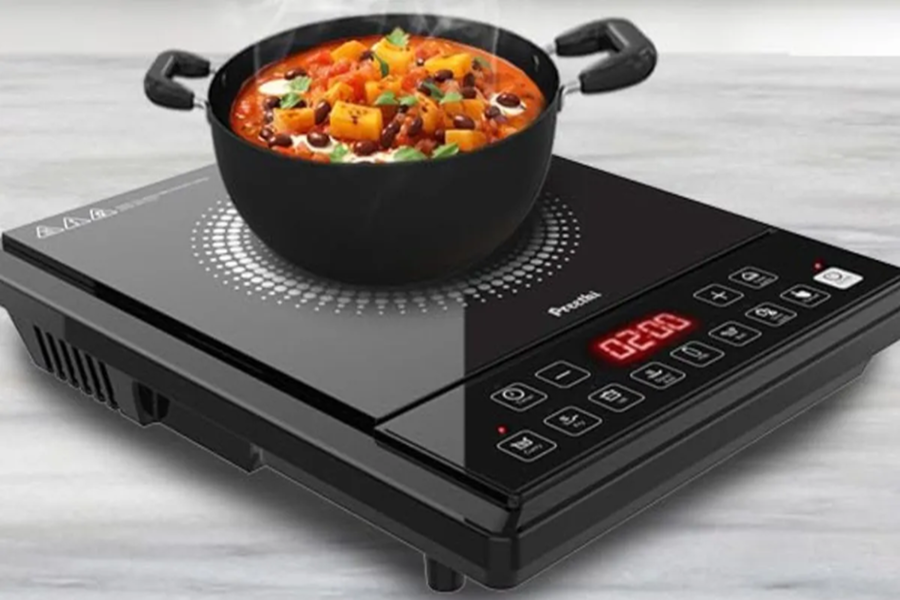
Induction Cooktop Pros and Cons: The induction cooktop is fast becoming an integral part of the modern kitchen. Furthermore, its demand has surged significantly due to the hassles associated with gas cylinders; however, an induction cooktop is not the right choice for everyone. Many people purchase one, only to find themselves frustrated later on due to its limitations. It proves particularly less useful in areas plagued by power supply issues or for those with specific cooking styles. Let's explore who should refrain from buying an induction cooktop.
**Where Electricity Supply is Unreliable**
An induction cooktop relies entirely on electricity; therefore, its usage becomes challenging in areas prone to frequent power outages or voltage fluctuations. Unlike a gas stove, it offers no backup mechanism, meaning that cooking can come to an abrupt halt if the power suddenly goes out. In villages and smaller towns—where the electricity supply is often unstable—an induction cooktop can disrupt daily kitchen routines. Consequently, it is not the ideal choice for those who require an uninterrupted cooking experience.
**Not a Practical Option for Large Families**
If you have a large household and need to cook meals in large quantities simultaneously, an induction cooktop may not prove very efficient. Its cooking speed and capacity are limited, making it difficult to prepare multiple dishes at the same time. While a gas stove typically features two or three burners, an induction cooktop usually consists of just a single cooking plate. This results in longer cooking times and slows down the overall workflow. For large families, this can create significant inconvenience in their daily kitchen operations.
**For Those Who Prefer Traditional Cooking**
For those who enjoy making *rotis*, preparing *tadkas* (tempering), or cooking dishes over a high flame, an induction cooktop may not offer the most satisfying experience. Unlike traditional stoves, it does not utilize a direct flame; instead, its heating technology operates in a fundamentally different manner. Consequently, this can alter both the flavor profile and the cooking technique. This limitation is particularly noticeable in Indian kitchens, where many dishes are traditionally prepared over intense heat. Therefore, those accustomed to traditional cooking methods should carefully consider these factors before purchasing an induction cooktop.
**The Need for Specialized Cookware: Potential for Increased Costs**
Not all types of cookware can be used on an induction stove. It requires specific induction-compatible vessels—specifically those featuring a magnetic base. If you do not already own such cookware, you will need to purchase it separately, which inevitably increases your overall expenditure. People often overlook this detail, only to encounter difficulties later on. Therefore, before making a purchase, it is crucial to verify whether your existing cookware is compatible with an induction stove.
**Choose Based on Your Specific Needs**
An induction cooktop is an excellent choice for individuals living in small families, those who prepare light meals in a short amount of time, and those residing in areas with a reliable electricity supply. However, every user's requirements are unique; therefore, purchasing one without careful consideration is ill-advised. If your lifestyle, kitchen requirements, or local electricity conditions are not conducive to its use, what is intended as a convenience could easily turn into a source of frustration. Consequently, it is essential to thoroughly assess your specific needs and intended usage before making a purchase.
Disclaimer: This content has been sourced and edited from TV9. While we have made modifications for clarity and presentation, the original content belongs to its respective authors and website. We do not claim ownership of the content.
