
These Mistakes Shorten Your Fridge's Lifespan—and Cause Its Cooling to Fade Away..
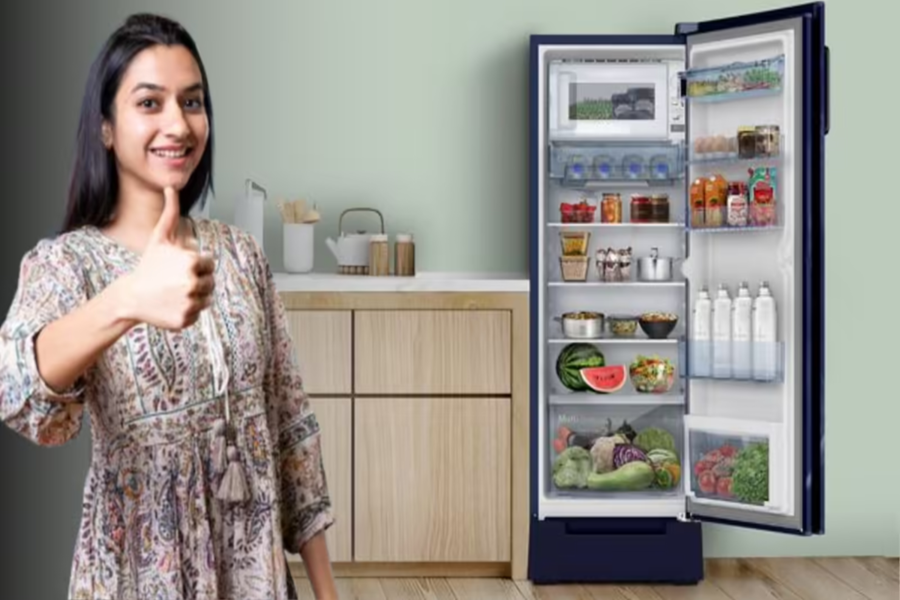
Refrigerator Cooling Tips: The refrigerator has become a necessity in every household today; however, many people inadvertently compromise both its cooling efficiency and lifespan due to small, everyday mistakes. Initially, this issue may seem trivial, but gradually, the refrigerator ceases to cool properly. Subsequently, electricity bills begin to rise, and repair costs place a heavy burden on one's finances. Often, people reach a point where they feel compelled to purchase a new appliance, whereas the root cause lies in their own habits.
**Placing Hot Food Directly into the Refrigerator**
In their haste, many people place hot lentils, vegetables, or other cooked food directly into the refrigerator. This habit places undue strain on the refrigerator's compressor. When a hot item is introduced, the appliance is forced to work much harder to lower the internal temperature. This leads to increased electricity consumption and causes the machine to overheat more rapidly. Persisting in this practice can weaken the cooling system and significantly reduce the refrigerator's overall lifespan. Experts advise allowing any hot food to cool down to room temperature before placing it in the refrigerator. This helps maintain a stable internal temperature and prevents unnecessary strain on the compressor.
**Placing the Refrigerator Flush Against a Wall**
In many households, the refrigerator is positioned flush against a wall to save space. Doing so prevents airflow to the condenser located at the back of the unit. Consequently, the heat generated by the machine cannot dissipate effectively, causing the refrigerator to remain constantly warm. When ventilation is inadequate, the cooling efficiency gradually begins to diminish. Furthermore, this negatively impacts the motor and results in increased electricity consumption. Experts recommend maintaining a minimum clearance of 6 inches between the refrigerator and the wall to ensure proper air circulation. Adequate airflow helps sustain the refrigerator's optimal performance over the long term.
**Frequently Opening the Door**
Many people have a habit of repeatedly opening the refrigerator door to check its contents. Some individuals even leave the door open for extended periods. This allows the cold air inside to escape, forcing the refrigerator to work harder once again to restore the internal temperature to the desired level. This habit gradually weakens the cooling system. Its effects are particularly noticeable during the summer months. Frequent temperature fluctuations can also cause food and beverages to spoil more quickly. Therefore, it is essential to open the refrigerator only when necessary and to close the door immediately after use.
**Overstocking**
Many people tend to cram their refrigerators with an excessive amount of items—far more than necessary. This prevents the cold air inside from circulating properly. When airflow is obstructed, certain sections become excessively cold while others remain insufficiently cool. This negatively impacts the refrigerator's overall cooling efficiency. Due to this overload, the compressor is forced to work continuously and harder than usual, which can lead to premature mechanical failure. Experts advise arranging items in the refrigerator in such a way that the air circulation pathways remain unobstructed. Proper organization not only ensures better cooling but also helps preserve the freshness of food for longer periods.
**Neglecting Regular Cleaning**
Failure to clean the refrigerator regularly also compromises its performance. Dust and grime tend to accumulate on the coils located at the back and on the internal shelves, thereby diminishing the machine's cooling capacity. Often, people neglect to clean their refrigerators for months on end, leading to the proliferation of bacteria and the development of foul odors. The accumulation of dirt forces the motor to work harder, resulting in increased electricity consumption. Experts recommend thoroughly cleaning both the interior and exterior of the refrigerator at least once a month. This helps maintain optimal cooling performance and ensures that the appliance remains in good working condition for a longer duration.
**Setting the Wrong Temperature**
Many people do not consider it necessary to adjust their refrigerator's temperature according to the changing seasons. Some individuals set the temperature to an excessively low level, while others opt for a setting that provides insufficient cooling. Both scenarios can be detrimental. An excessively low temperature increases electricity consumption and places undue strain on the appliance, whereas insufficient cooling can cause food to spoil rapidly. It is crucial to set the temperature appropriately based on the prevailing weather conditions and specific requirements. According to experts, a "balanced setting" is generally considered the most optimal choice for standard household use. This ensures proper cooling and also extends the lifespan of the refrigerator.
**Ignoring Voltage Fluctuations**
In many regions, power voltage remains unstable; yet, people continue to operate their refrigerators without using a voltage stabilizer. Sudden surges or drops in voltage can adversely affect the compressor and other electronic components. Over time, the refrigerator's cooling efficiency begins to deteriorate, and the risk of mechanical failure increases. This issue can be particularly damaging to high-end and smart refrigerators. Experts recommend using a high-quality voltage stabilizer to safeguard the appliance against power fluctuations. Taking this simple precaution can significantly extend the lifespan of the refrigerator.
Disclaimer: This content has been sourced and edited from TV9. While we have made modifications for clarity and presentation, the original content belongs to its respective authors and website. We do not claim ownership of the content.
